Jailed for a Post, Spared for a Speech: The Farooq Abdullah Test
 Editor-in-Chief of indiacommentary.com. Current Affairs analyst and political commentator. Author of Cyber Scams in India, Digital Arrest, The Money Trap and The Human Hack
View all posts by this Author
By Sunil Garodia
First publised on 2026-10-24 16:05:36
About the Author
Editor-in-Chief of indiacommentary.com. Current Affairs analyst and political commentator. Author of Cyber Scams in India, Digital Arrest, The Money Trap and The Human Hack
View all posts by this Author
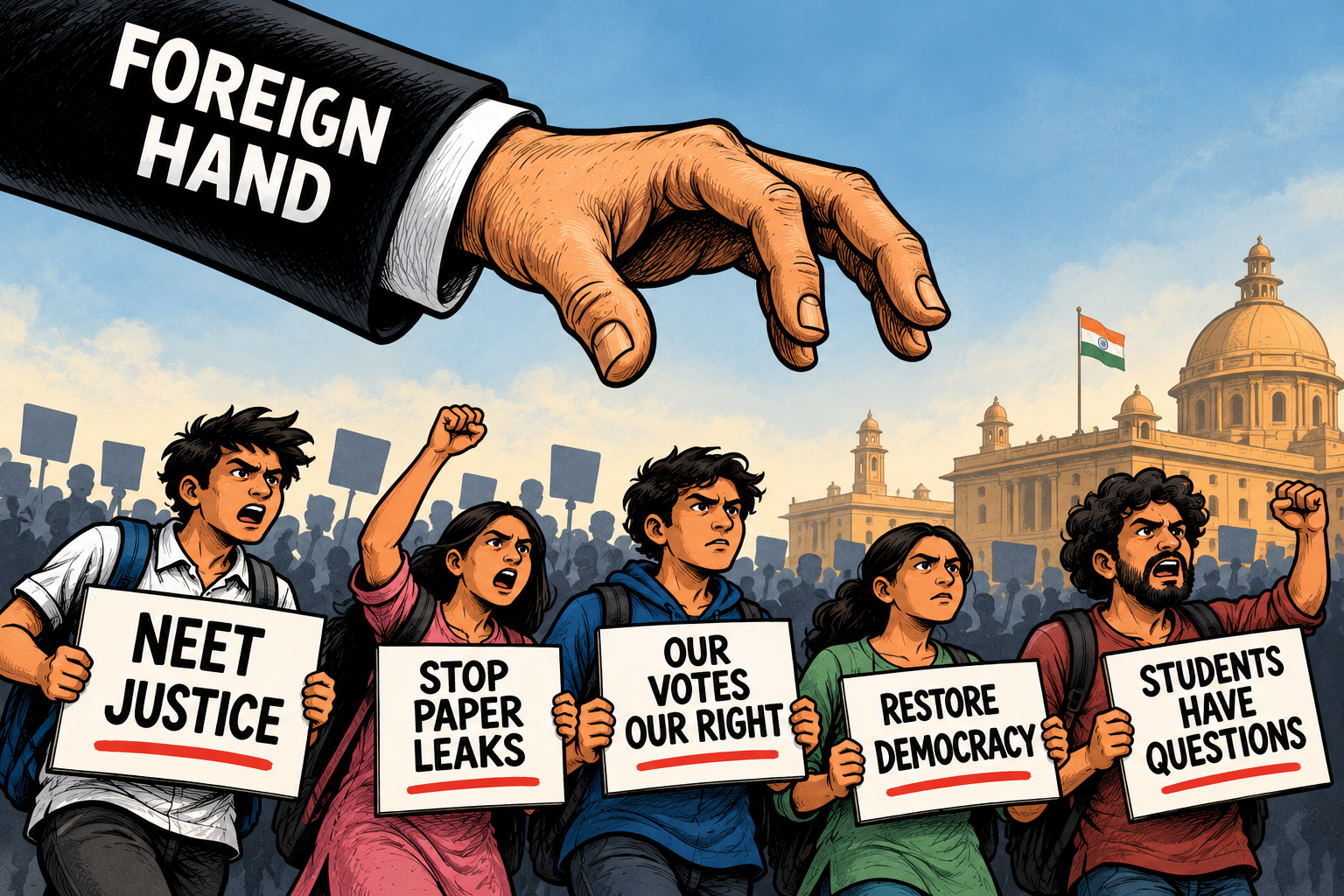
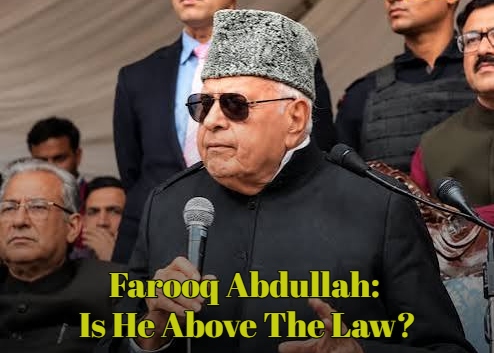
In India, a social media post on Kashmir can get you branded anti-national, arrested and thrown into jail under the Unlawful Activities (Prevention) Act. You may spend months, even years, behind bars before a court examines whether you committed any crime at all. But when a three-time chief minister says Pakistan is protecting Kashmiris and questions whether India can deliver justice to them, the response, so far, is political condemnation. No FIR has been reported. Farooq Abdullah's remarks in Baramulla on Saturday have brought this contradiction into sharp focus.
What was said
Addressing a National Conference workers' convention, Abdullah credited Pakistan with protecting the people of Jammu and Kashmir by repeatedly raising the Kashmir issue at international forums. He suggested that international pressure and Pakistan's intervention had forced Delhi to remain restrained. He also questioned whether Kashmiris could expect justice from Delhi.
BJP leaders were quick to react. Ravinder Raina called the remarks an act of treason and demanded sedition charges. Others wanted police action or an apology. But as of Saturday evening, there were no reports of an FIR.
Now compare this with what has happened to people who do not enjoy Abdullah's political standing.
What does the law say?
In Kedar Nath Singh (1962), the Supreme Court restricted the application of the old sedition law to speech involving incitement to violence or a tendency to create public disorder. In Balwant Singh (1995), the Court held that merely raising controversial slogans, without the necessary circumstances or consequences, did not amount to sedition. In Shreya Singhal (2015), it distinguished between discussion, advocacy and incitement while examining restrictions on online speech.
These judgments do not mean that anything short of an open call to violence is automatically lawful. Other statutory provisions may apply depending on the words used and their context. But they do establish that the government cannot simply equate offensive or unpopular opinions with criminal conduct.
Nothing reported about Abdullah's speech so far establishes incitement to violence. Whether any other offence is made out requires a proper legal examination. That is precisely the examination every accused citizen deserves.
Those who were not so fortunate
Consider journalist Fahad Shah, editor of The Kashmir Walla. He was arrested in February 2022 and spent 21 months in jail in connection with multiple cases, including one concerning an article published years earlier. In November 2023, the Jammu and Kashmir and Ladakh High Court granted him bail and quashed major charges, including the UAPA charge of terror conspiracy. Other proceedings remained, but 21 months of his life had already been spent behind bars.
Journalists Gowhar Geelani and Masrat Zahra were booked under the UAPA in April 2020 over their online content. Whatever the police allegations, invoking a law designed to deal with unlawful activities and terrorism against journalists demands strong evidence, not merely official displeasure with what they publish.
Then there is Arundhati Roy. In June 2024, the Delhi Lieutenant Governor sanctioned her prosecution, along with former professor Sheikh Showkat Hussain, under the UAPA for speeches delivered at a conference in 2010. Fourteen years had passed. A prosecution sanction does not establish guilt, but it is extraordinary that speeches delivered so long ago could still expose their speakers to proceedings under such a stringent law.
Interestingly, the National Conference had criticised the move, arguing that the speech had not disturbed the atmosphere in Jammu and Kashmir. It was defending a principle that must apply to Abdullah as much as to Roy.
Look also at Assam. Following Operation Sindoor in 2025, The Quint reported that at least 90 people had been arrested over social media posts, including alleged pro-Pakistan content and other material considered offensive or communal. Reports described action under Section 152 of the Bharatiya Nyaya Sanhita, the provision that replaced the old sedition law, and other offences. Chief Minister Himanta Biswa Sarma publicly described those arrested as Pakistani sympathisers.
Not every case involved the same words or charges. But how many of those arrested had the influence, resources or political connections to fight their cases? How many had to seek bail while their families struggled outside?
AIUDF legislator Aminul Islam was also arrested in May 2025 over remarks concerning the Pahalgam terror attack. Even an elected representative was not beyond the reach of criminal proceedings.
The question is whether the police had evidence of a specific offence in each case, or whether words considered offensive were enough to trigger a criminal case. In Fahad Shah's case, a High Court subsequently quashed major charges. That should make us pause before assuming that the invocation of a stringent law is proof that the law was rightly invoked.
Will the same standards apply?
There is another aspect that cannot be ignored. In Jammu and Kashmir, police and public order remain outside the elected government's control. They fall within the Union Territory's administrative structure under the Lieutenant Governor, appointed by the Centre. The decision to register an FIR must be based on law and evidence, not political instructions. But the Centre cannot pretend that it has no responsibility for how policing is conducted in the Union Territory.
Abdullah is not an ordinary political worker. He has been chief minister three times and remains one of Kashmir's most influential politicians. His words carry weight. His suggestion that Pakistan has protected Kashmiris deserves serious challenge, particularly given Pakistan's record of supporting cross-border terrorism.
But demanding Abdullah's arrest because other people have been arrested for their words would only perpetuate the same injustice. The issue is whether the restraint that ought to govern action against him has also been shown to journalists, students, activists and ordinary social media users.
If Abdullah's remarks do not constitute an offence, let that be said clearly. Apply the same standards to everyone else. Review cases built on nothing more than unpopular opinions. Withdraw prosecutions where the law has been stretched beyond its limits. Where there is evidence of a genuine offence, proceed according to law, regardless of who the accused happens to be.
Political stature cannot determine the threshold for criminal liability.
Abdullah's remarks can be challenged in public debate. His claims about Pakistan can be questioned, and his criticism of Delhi can be answered. But the law cannot become a weapon against the powerless while the powerful are left to exchange accusations at press conferences.
The question is not whether Farooq Abdullah should be arrested. It is why so many others were arrested for their words, and whether the same restraint will ever be shown to those who cannot afford a press conference.