

Boycott Of India Match By Pakistan Is Selective And Politically-Convenient
 Editor-in-Chief of indiacommentary.com. Current Affairs analyst and political commentator. Author of Cyber Scams in India, Digital Arrest, The Money Trap and The Human Hack
View all posts by this Author
Editor-in-Chief of indiacommentary.com. Current Affairs analyst and political commentator. Author of Cyber Scams in India, Digital Arrest, The Money Trap and The Human Hack
View all posts by this Author
By Sunil Garodia
First publised on 2026-02-02 14:09:19
About the Author
Editor-in-Chief of indiacommentary.com. Current Affairs analyst and political commentator. Author of Cyber Scams in India, Digital Arrest, The Money Trap and The Human Hack
View all posts by this Author
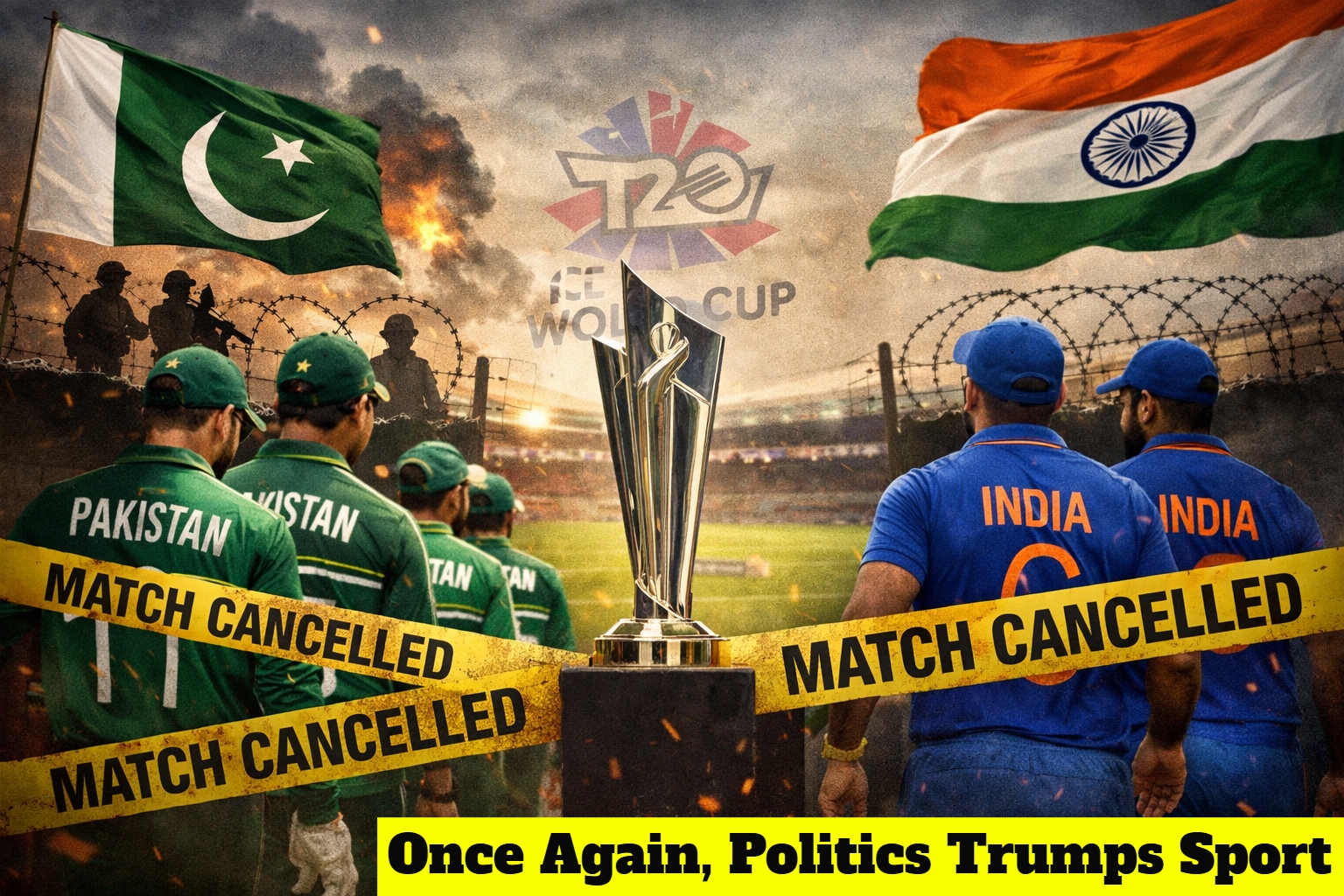
The Government of Pakistan has taken a strange decision. It has allowed its team to participate in the T20 World Cup but has asked it not to take the field against India on February 15 at Colombo in Sri Lanka. Perplexing as the decision is, it lays to rest all speculation about whether Pakistan will play in the World Cup. The announcement, however, came on a day Pakistan's Under-19 team was playing India in the Under-19 World Cup in Zimbabwe, underscoring the selective and politically convenient nature of the boycott.
At the same time, this decision of not playing India puts the Pakistan Cricket Board (PCB) in a precarious position, both financially and in terms of its relations with the ICC. Financially, it is likely to lose close to Rs 200 crore in broadcast and sponsorship-linked revenue, as will India, for no fault of its own. Further, PCB's relations with the ICC are set to deteriorate sharply. The world governing body has already issued a diplomatically worded statement which, when decoded, makes it clear that security concerns raised unilaterally and without host-nation concurrence will invite consequences under ICC event participation rules.
There were murmurs in Pakistan about a tournament boycott in support of Bangladesh ever since Dhaka denied its team permission to travel to India following the BCCI's advisory to IPL franchise Kolkata Knight Riders to release Mustafizur Rahman, citing law and order concerns. That argument, however, was always tenuous. A bilateral or league-level administrative advisory cannot be conflated with a multilateral ICC event hosted at a neutral venue under ICC security protocols. Yet that distinction appears to have been sacrificed at the altar of domestic political messaging.
The latest justification offered by Islamabad, violence in Balochistan allegedly backed by India, takes the matter out of the sporting realm altogether. By linking an ICC fixture in Sri Lanka to internal security challenges within Pakistan, the government has effectively weaponised cricket as an extension of its diplomatic posture. This is not unprecedented in Pakistan's political history, but it is reckless in the current global cricketing ecosystem where commercial contracts, broadcast commitments and host assurances are legally binding.
The immediate fallout will not be symbolic. It will be contractual. The ICC's revenue model is disproportionately dependent on India-Pakistan fixtures. A deliberate walkover or refusal to play damages not just this tournament but the economic logic of future ICC events. It also sets a dangerous precedent. If internal unrest, alleged or real, becomes a legitimate ground to opt out of specific opponents, international sport becomes hostage to political convenience.
For the PCB, the dilemma is sharper. It is already financially fragile, dependent on ICC distributions and bilateral series to stay solvent. A punitive response from the ICC, ranging from fines to points forfeiture or even suspension from future hosting rights, would compound its problems. Worse, it risks isolating Pakistan cricket administratively at a time when it has only recently regained partial trust as a host nation.
India, notably, emerges as a collateral loser without having taken a single provocative step. The match was scheduled at a neutral venue, security concerns were not raised by the host nation or the ICC, and no reciprocal action was contemplated. Yet India will bear revenue losses and competitive disruption purely because of a political decision taken elsewhere.
Cricket has long survived India-Pakistan tensions because administrators, however reluctantly, recognised that the sport could not function as a proxy battlefield. This decision signals a departure from that uneasy but necessary understanding. By choosing selective participation, Pakistan has not just complicated a World Cup. It has reopened a question the cricketing world believed had been settled, whether international cricket can survive being subordinated to domestic political compulsions.
The ICC will now have to decide whether to accommodate this exception or draw a hard institutional line. Either way, the damage is already done. What was once a cricketing rivalry has now been formally converted into a diplomatic statement, and cricket, once again, is poorer for it.
Note: The lead image is AI-generated but the caption is ours