

India And Russia: Cementing Old Ties And Making New Beginnings
 Linus tackles things head-on. He takes sides in his analysis and it fits excellently with our editorial policy. No 'maybe's' and 'allegedly' for him, only things in black and white.
View all posts by this Author
Linus tackles things head-on. He takes sides in his analysis and it fits excellently with our editorial policy. No 'maybe's' and 'allegedly' for him, only things in black and white.
View all posts by this Author
By Linus Garg
First publised on 2025-12-06 13:47:08
About the Author
Linus tackles things head-on. He takes sides in his analysis and it fits excellently with our editorial policy. No 'maybe's' and 'allegedly' for him, only things in black and white.
View all posts by this Author
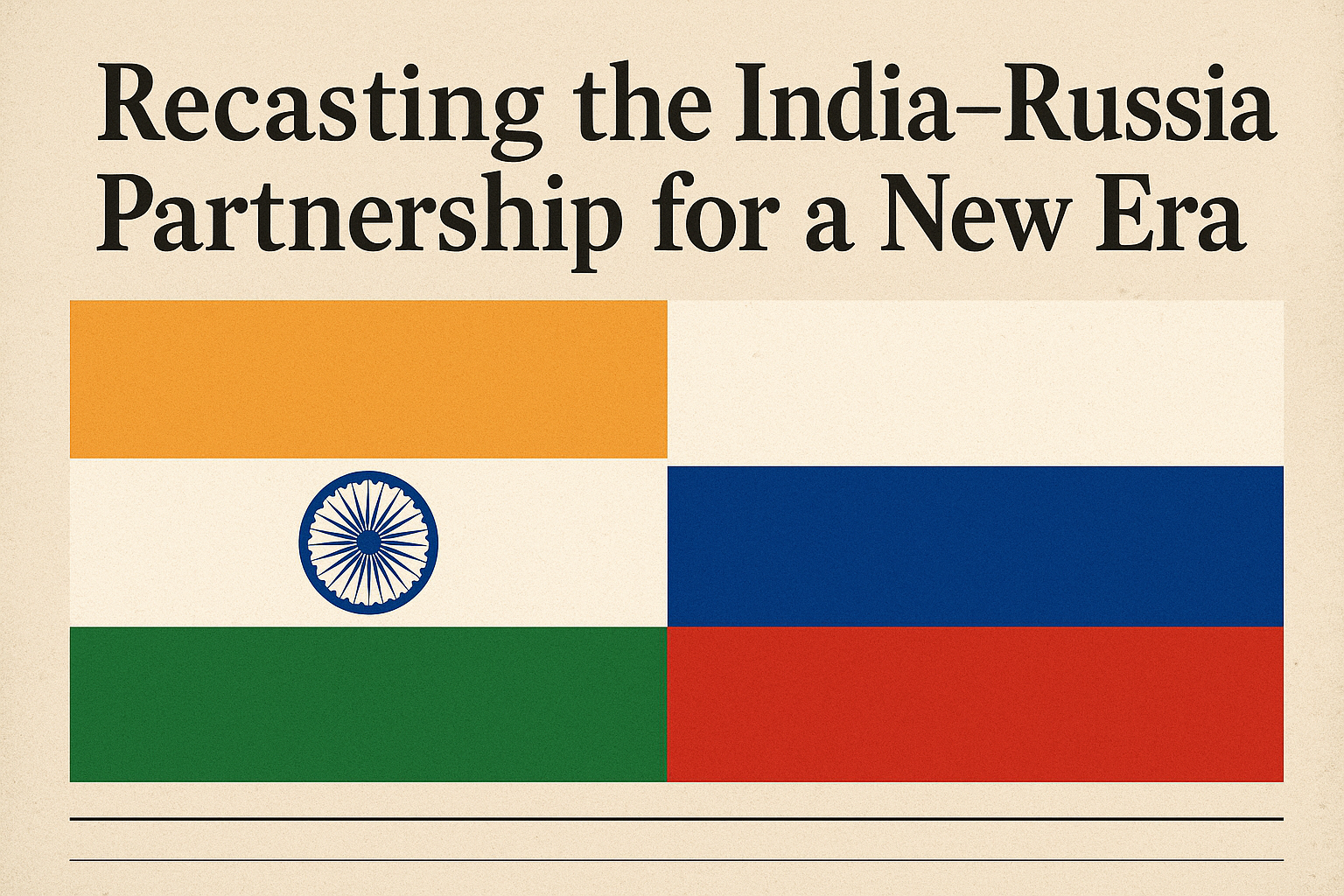
For decades, the India-Russia relationship rested comfortably on the solidity of defence cooperation. It worked well enough: Moscow shared technologies when others hesitated, localised production long before it became fashionable, and stood by India when Western embargoes narrowed our choices. But partnerships that remain trapped in their own nostalgia tend to atrophy. The real story emerging from President Vladimir Putin's December 4-5 visit is that both sides know this - and are finally willing to redraw the contours.
The transformation is driven, ironically, by a problem. Our trade relationship has grown enormously but unevenly. Imports - especially discounted Russian crude - have pushed bilateral trade close to $69 billion, an astonishing jump from the modest $8 billion figure just five years ago. Exports from India, though, are stubbornly stuck at around $5 billion. Even friends cannot indefinitely run on such imbalance. The new strategic economic roadmap appears to recognise this, placing unusual emphasis on removing trade barriers, rationalising payments, and pushing the Eurasian FTA that has drifted for too long.
India has space here. Pharmaceuticals, textiles, marine products, agricultural goods - all have a natural market in a Russia that is short of labour, short of imports, and increasingly looking eastward. The labour mobility pact, quietly one of the most consequential announcements, could reshape the relationship in a way defence deals never could. If it is implemented with care, India may find in Russia a labour corridor similar to the Gulf, though slower and less dramatic. A resident Indian community gives any relationship a new centre of gravity - softer, perhaps, but more enduring.
Economic geography will matter just as much. The Chennai - Vladivostok corridor, if it finally moves from presentation slides to shipping logs, could tilt the trade equation. So might deeper involvement in the Russian Far East, where energy, minerals and fertilisers converge with India's long-term needs. None of this is glamorous work; it is the slow stitching that creates resilience.
Defence will, of course, stay where it is - an anchor. Too many of India's platforms, from the Su-30MKI to the S-400, rely on Russian lineage for anyone to imagine a clean break. But the more interesting development is the shift from procuring hardware to co-developing it. BrahMos is already a symbol of that maturation. The nuclear partnership at Kudankulam adds another layer, and conversations on small modular reactors hint at a willingness to think beyond legacy formulas.
All this unfolds against a rather unsettled global backdrop. The US, Europe and Russia are circling each other uneasily as the Ukraine war drags into its next phase under Washington's renewed diplomatic push. India will have to walk its usual tightrope - strengthening ties with the US and Europe without allowing the Russian leg of the triangle to weaken. Fortunately, New Delhi's multi-alignment is no longer a theoretical idea but a lived habit.
Putin's visit, then, is not about warmth or optics. It is about repositioning a time-tested partnership for a world that has stopped waiting for old loyalties. India and Russia are choosing to adapt - and that, more than sentiment, is what keeps a relationship relevant.
Note: Lead image created with AI