
oppn parties Controlling Population Is Important But Is At Odds With The Delimitation Exercise
News Snippets

  • Supreme Court questions the continuing relevance of two-child norms. The Court observed that falling fertility rates have weakened the population-control rationale behind laws disqualifying people with more than two children from contesting local body elections. It referred the issue to a larger Bench for consideration
  • Supreme Court declines to shift Tirupati laddu case outside Andhra Pradesh. The Court rejected a plea seeking transfer of the trial, despite arguments that political statements by Andhra Pradesh's Chief Minister and Deputy Chief Minister could affect the fairness of proceedings
  • Supreme Court transfers Azam Khan's fresh ED bail plea to Allahabad High Court. The apex court declined to consider the Samajwadi Party leader's bail request in a fresh Enforcement Directorate case and directed that it be listed before a division Bench of the High Court on November 16
  • Two killed in Delhi building collapse; contractor booked. Two bodies were recovered after a building collapsed in Chawri Bazaar. Delhi Chief Minister Rekha Gupta said the contractor had been booked and the concerned junior and assistant engineers suspended
  • Uttar Pradesh voter rolls show a 2.4-crore discrepancy. A difference of approximately 2.4 crore names has been reported between the state's panchayat and rural Assembly voter lists. The Election Commission has ordered the two sets of rolls to be matched
  • Gujarat announces 3% dearness allowance hike. The state government announced a three-percentage-point increase in dearness allowance for government employees and pensioners ahead of Diwali
  • Sensex and Nifty post their strongest single-day gains in months. The Sensex surged 2,008.61 points, or 2.60%, to close at 79,310.01, while the Nifty 50 climbed 576 points, or 2.40%, to 24,536.60. Financial and automobile stocks led the rally, supported by falling crude prices and renewed foreign investor buying
  • Maaya Rajeshwaran reaches WTA-level quarter-final. The 17-year-old Indian defeated Poland's Weronika Falkowska 6-4, 6-3, becoming the first Indian woman since Sania Mirza in 2012 to reach a quarter-final at a WTA Tour-level singles event
  • Tanvi Patri reaches Youth Olympics badminton final. The 15-year-old defeated Japan's Yuzuno Watanabe in the semi-final, assuring India of a medal and becoming the first Indian badminton player to reach the girls' singles final at the Youth Olympics
  • India beat Pakistan 3-2 in SAFF Championship. India defeated Pakistan in a closely contested match, having led 3-0 before conceding two late goals. The victory was reported as a significant result for India's second-string side
  • India beat Japan 4-1 to win a record sixth Asian Champions Trophy. India recovered from an early deficit to defeat Japan in the final at Mohali, extending its record as the tournament's most successful men's team
  • The Supreme Court issued notice to the Centre and the Election Commission on a petition challenging Section 16 of the Chief Election Commissioner and Other Election Commissioners Act, 2023, which grants the CEC and Election Commissioners protection from legal proceedings for acts performed in their official duties. The petition argues that such blanket immunity could leave citizens without an effective remedy for alleged wrongdoing by the Commission
  • The Supreme Court told voters whose names were deleted from Delhi's draft electoral rolls not to be apprehensive about seeking re-enrolment through Form 6, after the Election Commission assured it that such applicants would not be prosecuted merely because their names had appeared in earlier rolls
  • Congress leader Rahul Gandhi opened the party's campaign for the 2027 Punjab Assembly elections with an Insaaf rally in Sangrur, Chief Minister Bhagwant Mann's home district, accusing the AAP government of failing to control drugs, gangster violence and corruption. Congress president Mallikarjun Kharge outlined six commitments, including a drug-free Punjab, protection of farmers, employment for young people and action against corruption
  • Rahul Gandhi accused the AAP government of running Punjab through a remote control from Delhi and questioned Bhagwant Mann's ability to tackle drug abuse, making personal allegations about the Chief Minister's conduct during their time together in Parliament
Stock markets on fire due to US results, Sensex gains 2008 points to reach its highest level in 8 months
oppn parties
Controlling Population Is Important But Is At Odds With The Delimitation Exercise

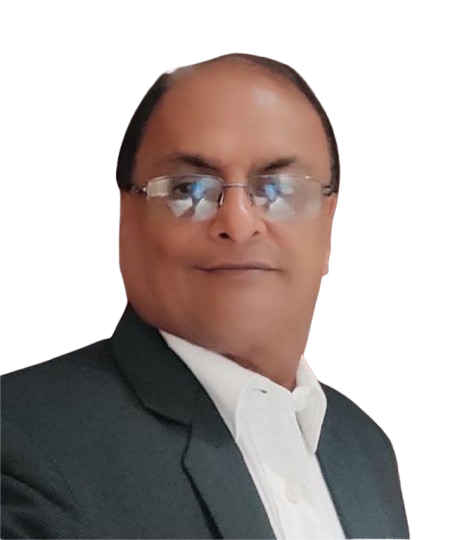
By Sunil Garodia

About the Author

Sunil Garodia Editor-in-Chief of indiacommentary.com. Current Affairs analyst and political commentator. Author of Cyber Scams in India, Digital Arrest, The Money Trap and The Human Hack

It was very good on part of Prime Minister Modi to highlight the perils of population explosion in his Independence Day address to the nation. He was the first Prime Minister in decades to talk about the fact that the Indian population is still expanding at a much faster rate than is desirable. This was something most governments had forgotten after the 'hum do hamare do' movement, although Sanjay Gandhi had gained notoriety with his forced sterilization scheme to control population during the dreaded Emergency.   

India's land mass is too small to support its population. India has just 3.287 million square kilometers of land mass and its population stands at 1.370 billion people. China has more people at 1.420 billion but its land mass at 9.597 million square kilometers is almost three times that of India. The US, on the other hand, has a population of just 327 million people who live on 9.834 million square kilometers. This makes India the most overcrowded place on earth. This leads to too many complications with unremunerative agricultural land holdings, crowded towns and cities, squalor, too many people to feed and growth that always looks miniscule when compared to the number of mouth to feed. It also puts groaning pressure on all public utilities and the health and education system.

People who do not plan their families are often unable to bring up their children in the desired manner as they have limited resources. With the cost of bringing up a child going up substantially and increasing by leaps and bounds every year, it is impossible for middle class families to provide the best of health care, food and nourishment and education to more than one or two children. Modi was spot on when he said that "if the population is not educated, not healthy then neither the home nor the country can be happy". He also said that "in our society, there is a section which is very well aware of the consequences of uncontrolled population growth. They deserve our accolades and respect." He added that "not only do they contribute to the welfare of their family but also to the good of the nation. People who have played this huge role need to be honoured, and by setting them as examples we need to inspire the segment of society still not thinking on these lines." The Prime Minister promised schemes from both the Centre and the states to control population and incentivize those with small families.

But there is a genuine concern which needs to be addressed before drawing up schemes to control the population. Why should states that perform exceedingly well on controlling population growth suffer in the delimitation exercise? Rewarding states who do little to control population (read UP and Bihar) with greater political power by adding Lok Sabha seats in their tally during delimitation is something that is at odds with any population control policy. It penalizes states that have population growth below the national average and much below that of UP and Bihar. For any population control scheme to succeed hereafter, the concerns of these well-performing states need to be addressed otherwise the fear of reduction of political power through reduced representation in the Lok Sabha will make them contribute half-heartedly to the initiative.

pic courtesy: dailypioneer.com