 Gig Workers Are The Backbone Of Digital Platforms, Solve Their Problems



 The India Commentary view
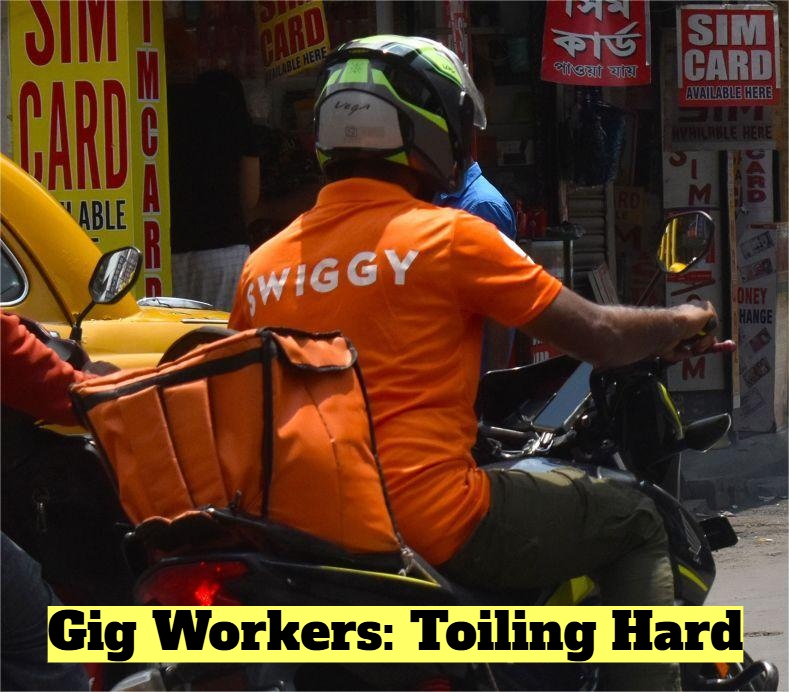
India's gig economy has expanded rapidly over the last decade, reshaping urban employment. Estimates by NITI Aayog suggest that gig and platform workers could number over 23 million by the end of this decade, up from 7.7 million in 2020-21. Platforms such as Zomato, Swiggy, Big Basket, Blinkit, Zepto, Ola and Uber now engage millions, offering non-farm work to a large pool of labour.
This growth, however, has been accompanied by persistent concerns over income volatility, opaque pay structures, long hours and unsafe working conditions. Recent strikes by delivery workers opposing 10-minute delivery promises highlight the risks workers bear to meet aggressive timelines, often with little improvement in earnings.
The Union government has begun addressing these gaps. The new labour codes formally recognise gig workers and mandate aggregator contributions towards social security, including accident and health cover, with registration through e-Shram and linkage to schemes such as Ayushman Bharat. Draft rules propose minimum engagement thresholds to access benefits, while allowing cumulative counting of work across platforms.
Even so, there are limits to regulatory intervention. In a labour-abundant economy, wage pressures are unlikely to ease through rules alone, and micromanaging platform operations may prove counterproductive. The greater responsibility lies with companies, for whom gig workers are central to operations. Transparent pay systems and realistic delivery expectations would reduce risk without materially hurting demand.
States have also shown the way. Rajasthan's 2023 law on gig worker welfare set an important precedent, with former chief minister Ashok Gehlot urging a national framework on similar lines. As gig work becomes a permanent feature of Indiaâs labour market, a balanced approach - basic regulation, responsible corporate practices and worker dialogue - is essential to prevent flexibility from turning into insecurity.