

Trade Breakthroughs, Reform Test
 The India Commentary view
View all posts by this Author
The India Commentary view
View all posts by this Author
By Our Editorial Team
First publised on 2026-02-04 02:52:58
About the Author
The India Commentary view
View all posts by this Author
India's trade policy has pivoted with unusual speed at a time when the multilateral trading system itself is losing relevance. With the World Trade Organization effectively paralysed and its dispute settlement mechanism defunct, countries are increasingly turning to bilateral and bloc-based agreements to secure markets and supply chains. Against this backdrop, New Delhi's near-simultaneous conclusion of trade negotiations with the European Union and the United States is not incremental diplomacy. It is a strategic recalibration that signals deeper integration with the Western economic system.
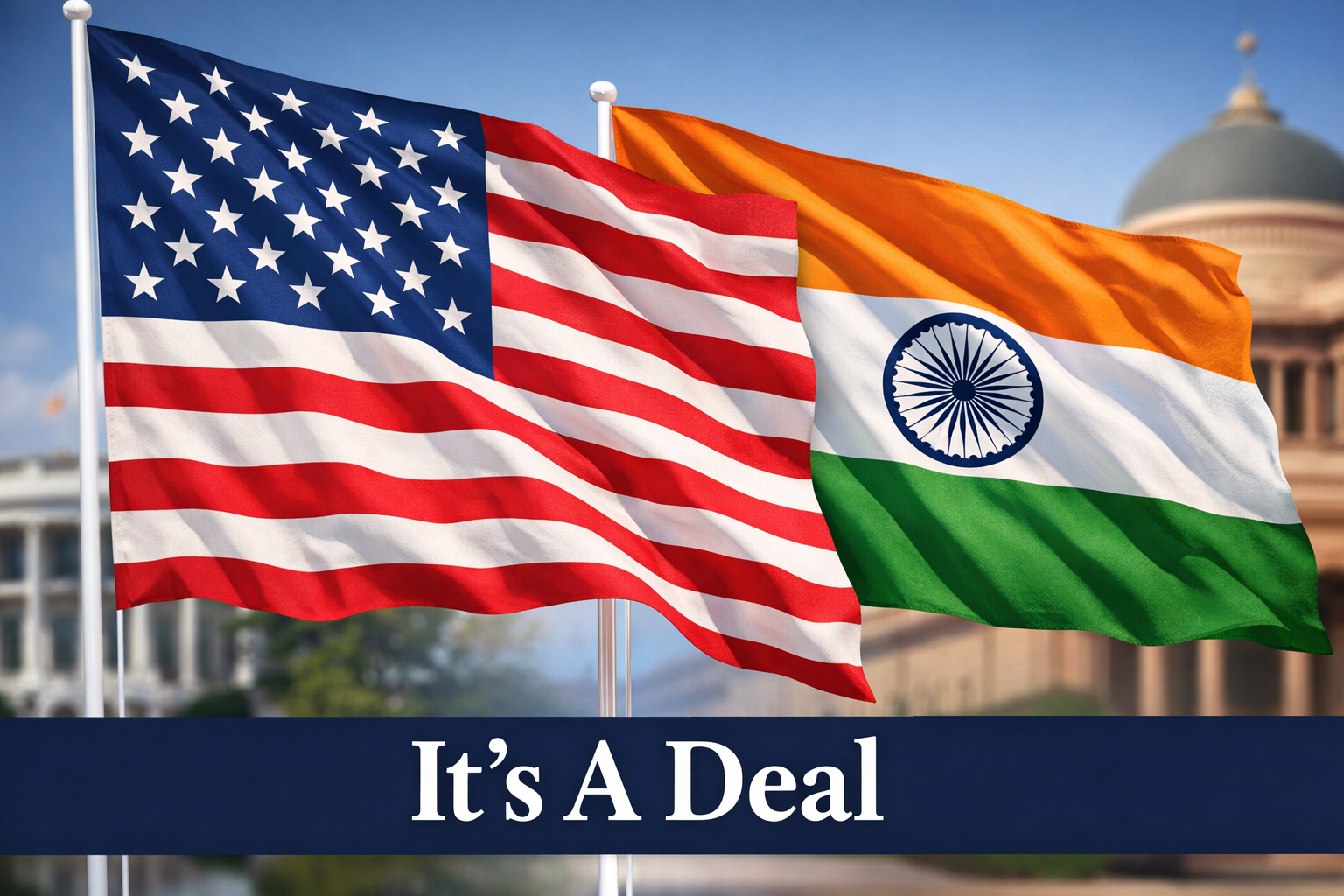
The India-US deal matters beyond its headline numbers. A reduction in US tariffs on Indian exports from 50 per cent to 18 per cent improves India's position against competitors such as Vietnam, Bangladesh and China. Markets responded swiftly, with equities rising and the rupee strengthening. For foreign capital unnerved by policy uncertainty, the signal was clear. India is back on the investment map.
The agreement also carries strategic weight. Trade today is inseparable from geopolitics. As the United States and its partners seek to reconfigure supply chains away from China, India's claim to be a credible alternative had been weakened by fears of tariffs and an inward-looking trade stance. Progress with Washington, reinforced by the EU deal, restores India's standing in the China plus one strategy and aligns economic engagement with broader strategic convergence.
Yet significant uncertainty remains, and it is already feeding domestic anxiety. Agriculture and dairy are politically sensitive fault lines. Statements by the US agriculture secretary claiming that American farmers will gain near-unrestricted access to the Indian market have alarmed Indian producers and cooperatives. Opposition leaders like Rahul Gandhi have alleged that PM Modi has "sold" the nation under pressure from President Trump. Indian agriculture, dominated by small and marginal farmers, cannot compete on equal terms with heavily subsidised US agribusiness. Without clear safeguards, phased liberalisation and transparent communication, the government risks trading external credibility for internal unease.
Energy trade presents another challenge. India's calibrated engagement with Russian oil continues to attract scrutiny. While New Delhi has reduced Russian imports and increased crude purchases from the United States, sustaining this balance will become harder as geopolitical pressures intensify. Managing energy security without compromising strategic autonomy will demand steady diplomacy.
More fundamentally, trade agreements can open doors, but they cannot compensate for domestic weaknesses. High logistics costs, regulatory unpredictability and tariff distortions continue to blunt Indiaâs export competitiveness. Without sustained reform, lower tariffs abroad will expose inefficiencies at home. The reflex to retreat into protectionism when domestic resistance surfaces remains real.
This is not a moment for self-congratulation. Having shown diplomatic agility, the government must now demonstrate reformist resolve. Deeper engagement with frameworks such as the Comprehensive and Progressive Agreement for Trans-Pacific Partnership deserves serious consideration. At home, reforms must move from intent to execution.
The direction is right. But direction alone is not destiny. Trade diplomacy has opened a window. Domestic reform must determine whether India can climb through it.
Note: The lead image is AI-generated. The caption is ours