

Lawrence Bishnoi: Locked Up, Not Locked Down
 The India Commentary view
View all posts by this Author
By Our Editorial Team
First publised on 2026-10-20 08:13:16
About the Author
The India Commentary view
View all posts by this Author
Mumbai Police deserve genuine credit in the Tiger Shroff firing case. Men on a motorcycle allegedly fired at the actor's car in Juhu on 18 October, injuring his driver and a passerby, and within fifteen hours three suspects were in custody in Kota. Tracing shooters across state lines that fast is what the public expects of its police, and the crime branch, with Kota's police beside it, delivered.
But quick arrests are not the same as safety. Individuals claiming links to the Lawrence Bishnoi gang have reportedly taken responsibility for the attack, and a purported audio message demanded that Salman Khan apologise to the Bishnoi community. The claim is unverified and the accused are only alleged shooters, though police say one of them was in touch with an alleged Bishnoi associate. The name, however, is a familiar one. After the 2024 firing outside Salman Khan's home, Mumbai Police declared Bishnoi and his brother wanted, saying the shooters took instructions from them. Months later the gang claimed the murder of Baba Siddique. The faces change, but the pattern stays the same.
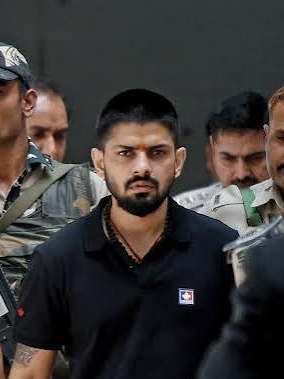
What makes this more than a story of repeat offending is where the man at the centre sits. His own lawyer says Bishnoi has been in solitary confinement at Sabarmati jail under round-the-clock CCTV since 2023. Yet the chargesheet against him says he runs the gang's entire operations from inside jail, and the US Department of Justice has alleged he extorted about five million dollars through encrypted apps as recently as January 2026. Bishnoi denies many of the charges, and none of this has been tested in court. But if even part of it is true, the cameras have watched a man while his orders went out. Punjab has been here before: he once gave television interviews from Bathinda jail, and seven officers were suspended.
The questions are plain. How does a prisoner in solitary confinement keep instructing his network, and who is carrying the messages, whether through phones, visitors, lawyers or staff? Has anyone been held accountable, or does each attack bring only the arrest of foot soldiers? Why have trials moved so slowly that many of his cases have barely begun? Opposition leaders have gone further and accused governments of protecting him. Those are political charges and nothing has been proven, but official silence feeds them.
Mumbai's detectives have done their part. But a police force that must race to Kota after every attack is reacting, not preventing. What is needed is an independent audit of communication security at Sabarmati, accountability for whatever lapses it finds, trials measured in years rather than decades, and a clear public answer on how a jailed man's orders reach the street. Until they stop, the arrests will continue, and so will the shootings.