

Clean Air Cannot Be Achieved Through Political Blame-Shifting
 The India Commentary view
View all posts by this Author
By Our Editorial Team
First publised on 2026-11-11 03:30:05
About the Author
The India Commentary view
View all posts by this Author
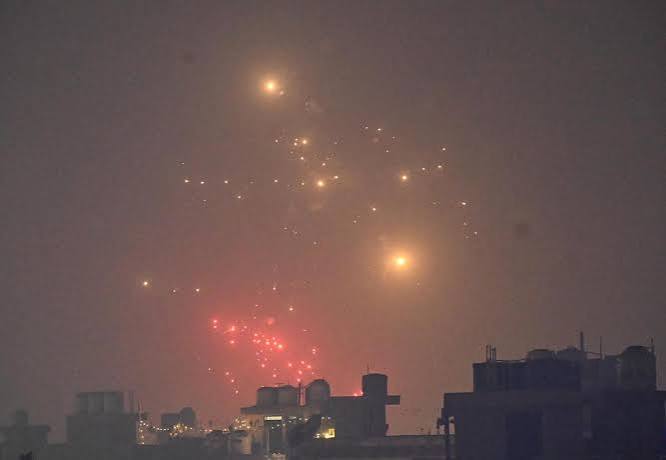
Delhi's annual pollution crisis has once again become an occasion for political sparring. This time, the argument centres on whether smoke from Punjab reaches the national capital while smoke from Haryana apparently takes a different route, perhaps towards Pakistan, as Punjab Finance Minister Harpal Singh Cheema sarcastically suggested.
The remark may have political appeal, but it does not change the facts. Smoke travels according to atmospheric conditions, not state boundaries. Punjab's stubble burning can contribute to Delhi's pollution despite Haryana lying between the two. Equally, Punjab cannot be made the sole culprit for a crisis involving multiple sources of emissions across the National Capital Region.
The BJP is justified in demanding answers from the AAP government over the 1,152 farm fires recorded in Punjab on Diwali. A sudden spike of this magnitude requires investigation and an explanation. But allegations that fields were deliberately set on fire must be established through evidence, not political statements. The Delhi government must also demonstrate that it applies the same standards of accountability to Haryana and other neighbouring jurisdictions.
AAP, meanwhile, cannot escape responsibility for agricultural fires in a state it governs. Its claims of substantial reductions in stubble burning must be supported by comparable official data. Pointing towards Haryana does not absolve Punjab of its obligations.
More importantly, Delhi's pollution cannot be explained away through farm fires alone. Vehicular emissions, industrial pollution, construction dust, waste burning and other sources contribute to the crisis. The Supreme Court's recent observations on traffic-related pollution underline the need to address these sources with the same urgency.
The farmer, too, cannot be reduced to a convenient target in an annual political confrontation. Unless crop residue management becomes economically viable through accessible machinery, organised collection, procurement and assured markets, enforcement alone will have limited results.
India needs coordinated action by the Centre and the governments of Delhi, Punjab, Haryana and Uttar Pradesh. Responsibilities must be clearly assigned, performance independently monitored and failures publicly accounted for.
Clean air is not a BJP achievement, an AAP achievement or a political concession. It is a basic public necessity. Governments should stop debating where the smoke goes and start demonstrating how they intend to prevent it.