

Marathi vs Hindi in Mumbai: Identity Politics On A Linguistic Fault Line
 Linus tackles things head-on. He takes sides in his analysis and it fits excellently with our editorial policy. No 'maybe's' and 'allegedly' for him, only things in black and white.
View all posts by this Author
Linus tackles things head-on. He takes sides in his analysis and it fits excellently with our editorial policy. No 'maybe's' and 'allegedly' for him, only things in black and white.
View all posts by this Author
By Linus Garg
First publised on 2025-12-09 04:31:32
About the Author
Linus tackles things head-on. He takes sides in his analysis and it fits excellently with our editorial policy. No 'maybe's' and 'allegedly' for him, only things in black and white.
View all posts by this Author
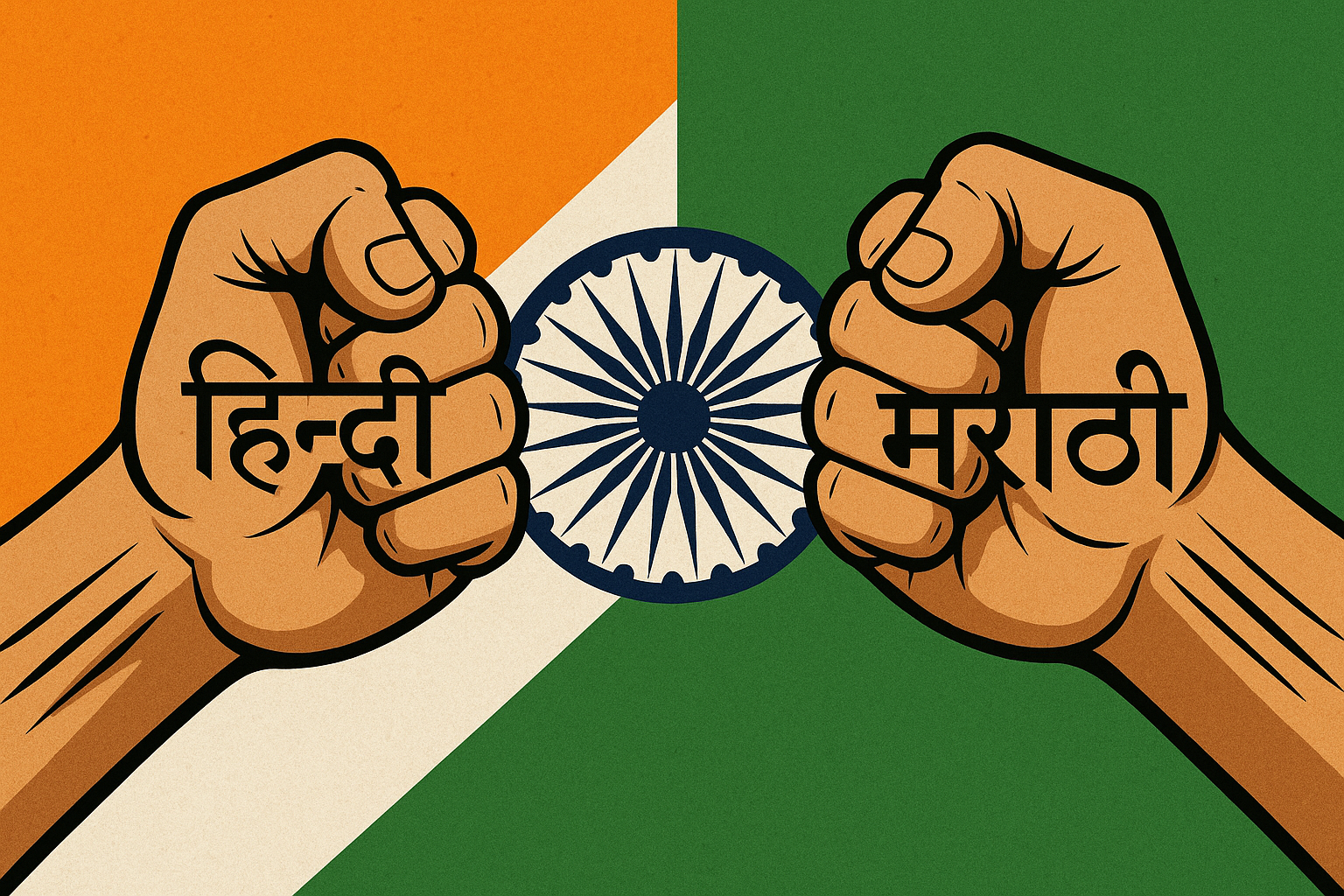
Once again, Mumbai is caught in an old but volatile argument - language as political weapon. The latest trigger was the Maharashtra government's brief attempt to make Hindi a compulsory third language in schools under the National Education Policy, followed by an embarrassed rollback after statewide protests. The government now insists Hindi was never meant to be "imposed". Few are convinced.
Raj Thackeray's Maharashtra Navnirman Sena has predictably seized the moment to revive its role as custodian of Marathi pride. Protests against "Hindi imposition" are back. Chief Minister Devendra Fadnavis is attempting a familiar tightrope walk: praising Marathi identity while warning against coercion in the name of language. Constitutionally correct, politically fragile.
What this debate consistently avoids is Mumbai's actual linguistic reality. Census data shows that the city is neither a Hindi city pretending to be Marathi nor a Marathi city under siege. It is structurally multilingual. Marathi remains the single largest mother tongue with about 44 lakh speakers - just over 35 per cent of the population. Hindi follows at roughly 36 lakh, around 29 per cent. Urdu, Gujarati, Tamil and several other languages form substantial blocs. Even English as a mother tongue remains marginal.
These numbers puncture myths on both sides. Marathi is not vanishing from Mumbai. Nor do Hindi speakers form an overwhelming majority that justifies panic about domination. The city does not belong to one language - it runs on many.
Yet Maharashtra's language politics has never followed demographic logic. From the 1960s, resistance to Hindi as a "national" language has shaped street politics. The "sons of the soil" movements that once targeted South Indians later shifted to North Indians. In 2008, the MNS gave that resentment violent expression. The idiom may have softened, but the underlying message remains: outsiders must keep proving their legitimacy.
The current flare-up has clear political arithmetic. The BJP must juggle Marathi identity locally with a national narrative where Hindi is often projected as a cultural adhesive. For the Shiv Sena (UBT) and the MNS, language remains one of the few emotive levers left to mobilise urban voters. Casting the BJP as the vehicle of "Hindi imposition" helps reclaim lost Marathi space.
The deeper danger lies not in a withdrawn government circular but in what this rhetoric does to daily life. Mumbai's unwritten social contract has always been linguistic flexibility: Marathi as the language of the land and administration, Hindi as the bridge language, English as the aspirational currency. People switch between all three without thinking. Turning that fluidity into a political loyalty test corrodes the city's social glue.
There are real Marathi anxieties about cultural and economic marginalisation in their own capital. Protecting Marathi in education, signage and official work is a legitimate federal demand. But when that protection is enforced through street intimidation and televised outrage, it alienates the very communities that keep Mumbai functional.
If this trajectory continues, the damage will not arrive through riots but through quieter decay - bias in housing, distrust at workplaces, permanent suspicion of migrants, growing frustration among Marathi youth. Mumbai survives because no single language claims absolute ownership. Language pride is natural. Language policing is destructive. In a city built on coexistence, turning identity into a battlefield is the most reckless politics of all.
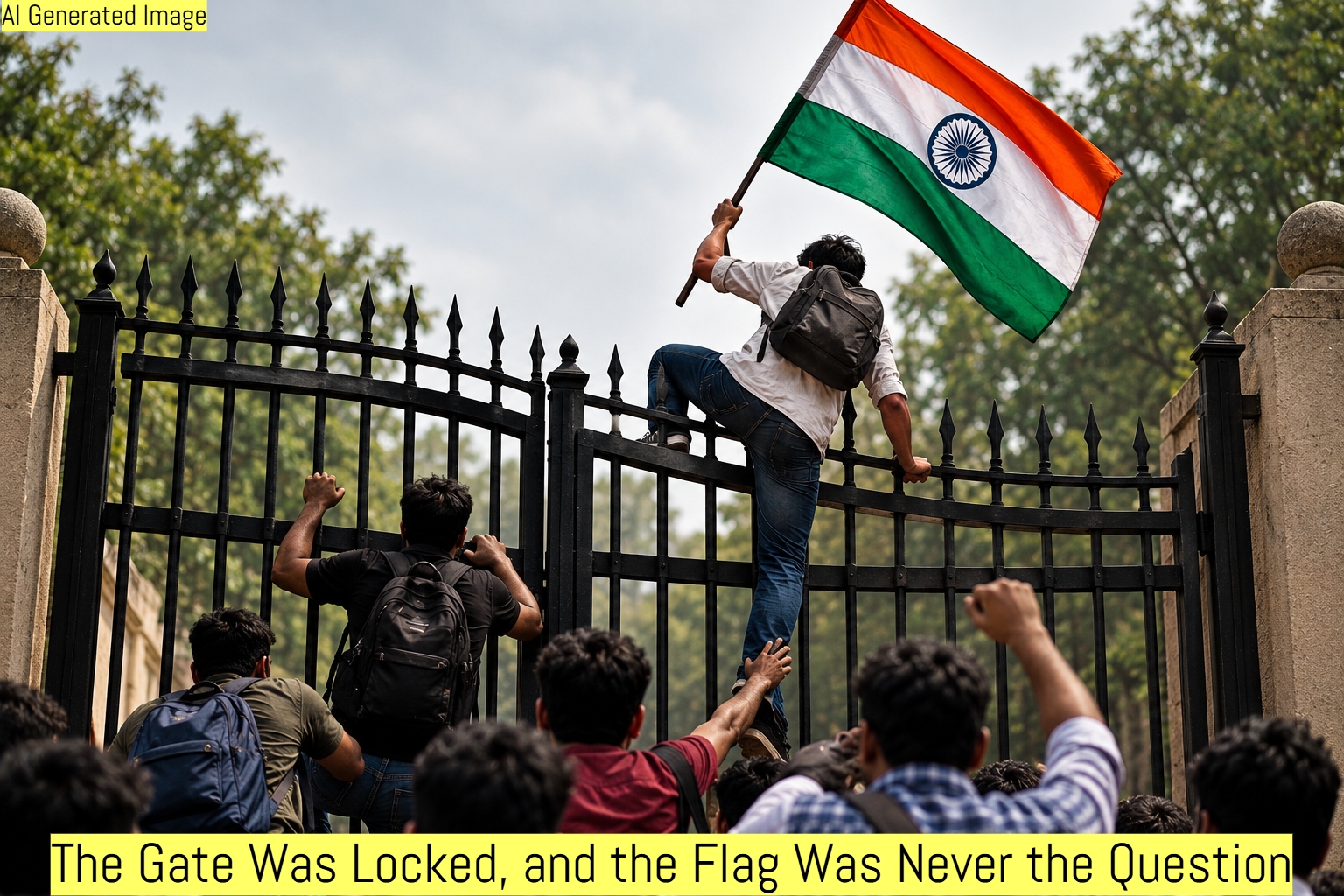
Note: The lead image is generated with AI