
oppn parties NCERT: Rewriting History

News Snippets

  • The Opposition INDIA bloc stepped up efforts to formulate a common response to the Centre's proposed delimitation legislation ahead of Parliament's special sitting beginning November 30. At a meeting convened by Congress president Mallikarjun Kharge, participating parties questioned the proposed 50 per cent increase in parliamentary and Assembly seats
  • The DMK formally resolved to support the Centre's two proposed delimitation-related Bills, reversing expectations that it would oppose the legislation alongside other southern parties. Chief Minister M K Stalin's party argued that supporting the proposed increase in seats was preferable to allowing a future population-based exercise to proceed without safeguards for southern states
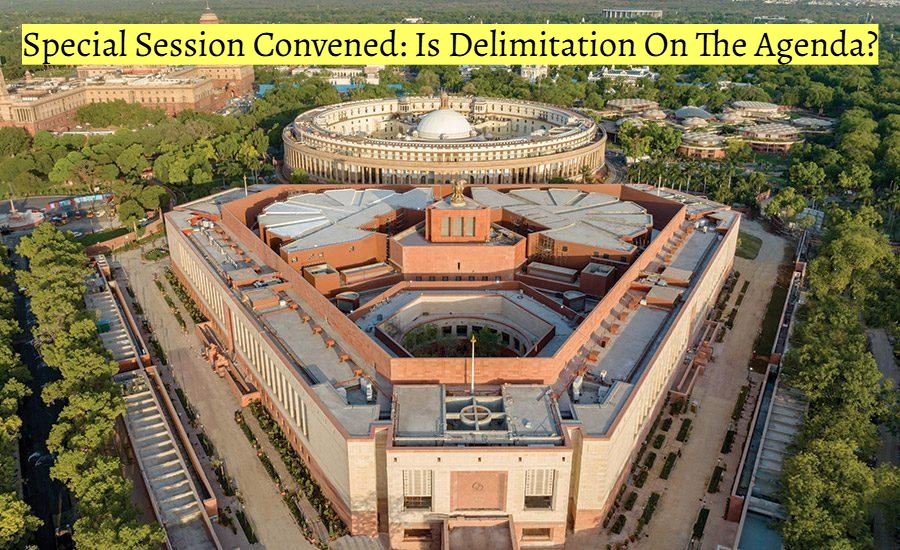
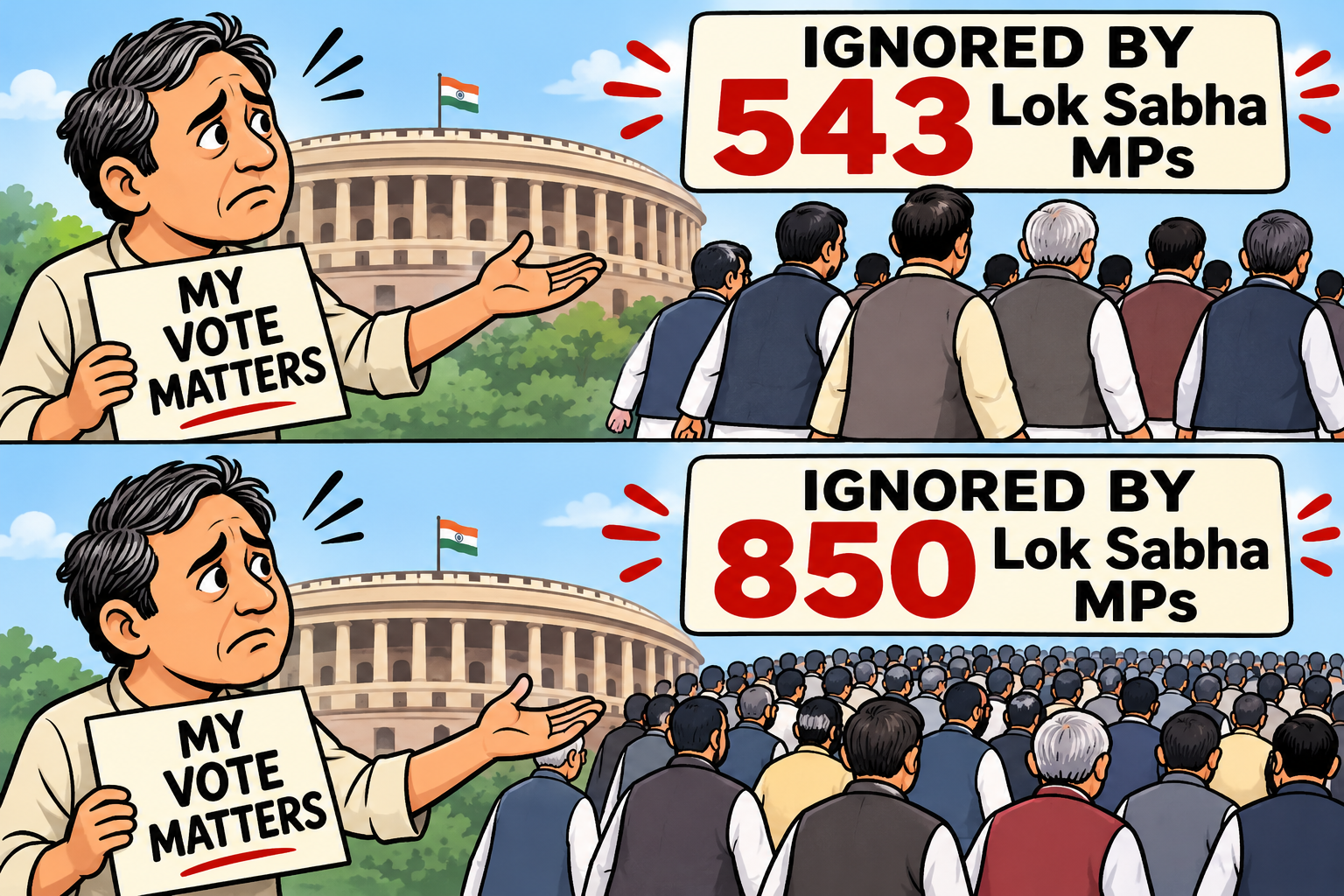
  • The government confirmed that three Bills will be introduced in the Lok Sabha during the special parliamentary sitting beginning November 30: the Constitution (132nd Amendment) Bill, 2026, the Delimitation (Second) Bill, 2026, and the Union Territories Laws (Amendment) Second Bill, 2026. The proposals seek to facilitate 33 per cent reservation for women by increasing the maximum strength of the Lok Sabha to 850 and state Assemblies to 650. The legislation also proposes a 50 per cent increase in seats across states and Union Territories, with the inter-state allocation ratio protected until 2051
  • The Supreme Court declined to issue further directions in a public-interest petition concerning the recovery of unclaimed financial assets, observing that existing regulatory mechanisms had substantially addressed the concerns raised. The Court clarified that transferring unclaimed money to statutory funds does not extinguish the legal rights of its rightful owners, which remain protected under Article 300A.
  • The Lok Sabha Secretariat revised the seating arrangements of 97 MPs ahead of the special session, moving 22 DMK members and eight NCP (Sharadchandra Pawar) members closer to the Treasury benches. DMK MP Kanimozhi and NCP(SP) working president Supriya Sule were allotted adjacent seats. The changes followed the DMK's request after its political relationship with Congress deteriorated and came amid growing speculation over support for the government's delimitation legislation
  • A five-judge Bench of the Rajasthan High Court ruled that an unregistered association is not automatically barred from approaching the High Court under Article 226 to protect the fundamental rights of its members. The Bench read down three conditions imposed by an earlier 1995 ruling, holding that registration alone cannot determine whether a representative petition is maintainable. The judgment has implications for community organisations, social action groups and informal associations seeking constitutional remedies.
  • Indian Railways completed excavation of all 14 tunnels on the Sivok-Rangpo new railway line project after achieving a breakthrough in Tunnel No. 10, the route's longest tunnel at 5.3 km. The milestone brings Sikkim closer to its first railway connection
  • India is unlikely to meet the WHO's 2026 regional target for eliminating measles and rubella despite substantial improvements in childhood immunisation, according to WHO experts. India recorded 17,995 measles cases in 2025, down from 65,150 in 2023, while vaccination coverage has improved considerably
  • A committee appointed by the Union Education Ministry has recommended fundamental changes to hostel environments and academic practices in higher educational institutions to address student suicides. Headed by National Educational Technology Forum chairman Anil Sahasrabudhe, the panel has proposed recreation and social spaces in hostels, regular interaction between wardens and students, reduced emphasis on academic grading and closer monitoring of supervisor-student relationships
  • The Finance Ministry's November Monthly Economic Review projected continued expansion in economic activity through the October-December quarter but warned of rising inflationary risks from the West Asia conflict, possible disruption around the Strait of Hormuz, El NiƱo conditions and stronger festive and wedding-season demand. It also noted that India's retail inflation had crossed 6 per cent in October, while the RBI's next policy decision is expected to be influenced by persistent price pressures.
  • India's data-centre development pipeline expanded 14.3 per cent to 80 proposed facilities across seven major markets in the third quarter of 2026, according to a Knight Frank India study
  • India's women's hockey team defeated China 3-1 in Bhopal to win the Women's Asian Champions Trophy for a record fourth time. Trailing 0-1 at half-time, India scored three goals in the third quarter through Deepika Sehrawat, who struck twice, and Ishika Sambharwal
  • India achieved a historic double at the FIDE World Junior Chess Championships in Caracas, with 15-year-old Ethan Vaz winning the Open Under-20 title and 19-year-old B Savitha Shri claiming the Girls' crown
  • India's Under-19 women's cricket team crushed England by 106 runs in the second Youth T20 International at Vadodara, posting 230 for six before bowling England out for 124 in 15.3 overs. India now leads the five-match series 2-0 after also winning the opening match by 36 runs
  • India's teenage badminton player Tanvi Sharma reached the women's singles final of the Syed Modi India International Super 300 in Lucknow after recovering from a game down to defeat compatriot Unnati Hooda 11-21, 21-10, 21-13. Defending champions Treesa Jolly and Gayatri Gopichand also advanced to the women's doubles final
Lamp lit at Deepathoon at Tamil Nadu's Arulmigu Subramaniaswamy temple after Supreme Court order /////// After DMK and NCP(SP) support delimitation, the government is closer to the magic figure
oppn parties
NCERT: Rewriting History

By Our Editorial Team
First publised on 2022-06-22 14:29:55

About the Author

Sunil Garodia The India Commentary view

NCERT has embarked on a 'cleansing' and 'sensitizing' project, ostensibly to reduce the curriculum to give relief to the students who have fallen behind in learning due to Covid related disruptions for the last two years. It has removed paragraphs and entire chapters from several social sciences books and has attempted to rewrite or even obliterate history. That is not all. An attempt is also being made to rewrite several chapters with a biased perspective. This is not going to lessen the burden of students but keep them ignorant of several important events in Indian history or provide them with a biased version of events.

For instance, students will not learn about the Narmada Bachao Andolan or the Chipko movement. Similarly, students henceforth will not be taught about the 2002 Gujarat riots or the Emergency. They will also be given only a brief account of the Muslim rulers in India. The idea is to let future generations believe that India was always a Hindu nation comprised of several Hindu kingdoms whose rulers were powerful and benevolent. They will not be taught about the Jaichands who helped Muslim rulers consolidate their rule in the country. Neither will they know the excesses committed under the Emergency by a despotic ruler bent on prolonging her rule, for the BJP can see itself doing the same, subtly now and more openly in the near future.

Rewriting history as per the myopic or agenda-based view of the ruling dispensation does not change the history of a nation. In fact, today's rulers are not going to be there forever and if any future government reinstates the removed paragraphs and chapters, it will mean that students now in classes VI to XII will forever be unaware of these important events in Indian history. In the name of 'rationalization' what NCERT is doing is not correct. It has claimed that it has consulted outside 'experts' before taking up the exercise without disclosing their names. Such opaqueness is not good, especially in educational matters.