
oppn parties Rushing Bills Through Parliament Not Good For Democracy

News Snippets

  • Allahabad HC said that the UP Police is acting as law unto themselves as they detained a person unlawfully even before his arrest
  • Kolkata witnesses traffic snarls on the first day of the Durga Puja festival as revellers start pnadal-hopping
  • Neha Bora was subsequently released and Dipke is to appear before a magistrate today at noon
  • Delhi Police detained Cockroach Janta Party founder Abhijeet Dipke, Neha Bora of AISA, student leaders and supporters ahead of a rally in Connaught Place demanding Chief Election Commissioner Gyanesh Kumar's resignation. The protest followed the detention and jailing of two CJP leaders earlier in the week over demonstrations at Jantar Mantar
  • The Reserve Bank of India is considering further monetary tightening to counter capital outflows and increase the cost of betting against the rupee, according to bankers and analysts cited by Reuters. The measures follow recent rate increases and steps to drain liquidity as pressure on the currency and inflation concerns persist
  • India directed oil marketing companies to stop diverting sugar-based feedstocks for ethanol production in the 2026–27 supply year, according to a new tender issued on Friday. The companies have invited bids for 11 billion litres of ethanol made from alternatives including corn and broken rice, amid concerns about domestic sugar supplies and prices
  • Finance Minister Nirmala Sitharaman said India's trade imbalance with China was growing sharply and attributed the problem partly to restrictions on Indian goods and services entering the Chinese market. China subsequently said it was ready to work with India to address mutual economic and trade concerns; India's trade deficit with China reached $69 billion in the first half of FY2026–27, up 27% year-on-year
  • Indian equity benchmarks extended their recovery on Friday, with the Sensex rising 413.66 points to close at 74,729.27 and the Nifty 50 gaining 148.80 points to settle at 23,146.15. Information technology shares, including Tech Mahindra, Infosys and TCS, helped lift the indices
  • India defeated Zimbabwe by four wickets in the opening women's T20 International in Raipur, taking a 1–0 lead in the three-match series. Deepti Sharma and Niki Prasad combined in an 82-run stand after India's top order collapsed, helping the hosts chase down Zimbabwe's total of 114 for five
  • Indian wrestler Komal won bronze in the women's 59 kg category at the Under-23 World Wrestling Championships in Las Vegas, defeating Kazakhstan's Viktoriia Khusainova 7–2. Fellow Indian Amruta Pujari advanced to the women's 72 kg final after recording two pinfall victories
  • Indian shuttler Jagsher Singh Khangurra secured a bronze medal at the BWF World Junior Badminton Championships in Cairo
  • The Supreme Court of India upheld the Bombay High Court's decision quashing the 2020 write-off of ₹8,415 crore in additional tier-1 bonds issued by Yes Bank (Yes Bank). The court ruled that the bank's administrator lacked the authority to extinguish the bonds under the final reconstruction scheme, strengthening bondholders' claims
  • The Supreme Court issued notices to the Election Commission of India, Delhi Police and opposition leaders, including Rahul Gandhi and Akhilesh Yadav, in separate petitions concerning electoral-roll revision and protests held in Delhi on October 10–12. The court also directed the preservation of CCTV footage linked to allegations of police excesses
  • The Supreme Court ruled that a person converting from Hinduism to Islam cannot automatically claim backward-class reservation benefits in the new religious community solely on the basis of their previous caste status. The judgment upheld the Madras High Court's decision striking down a 2024 Tamil Nadu government order that permitted such certification for specified communities
  • The Election Commission of India ordered a Special Summary Revision of electoral rolls in 14 states and three Union Territories, using January 1, 2027, as the qualifying date for voter eligibility. The draft rolls are scheduled for publication on November 12, claims and objections will be accepted until December 11, and the final rolls are due on January 4, 2027
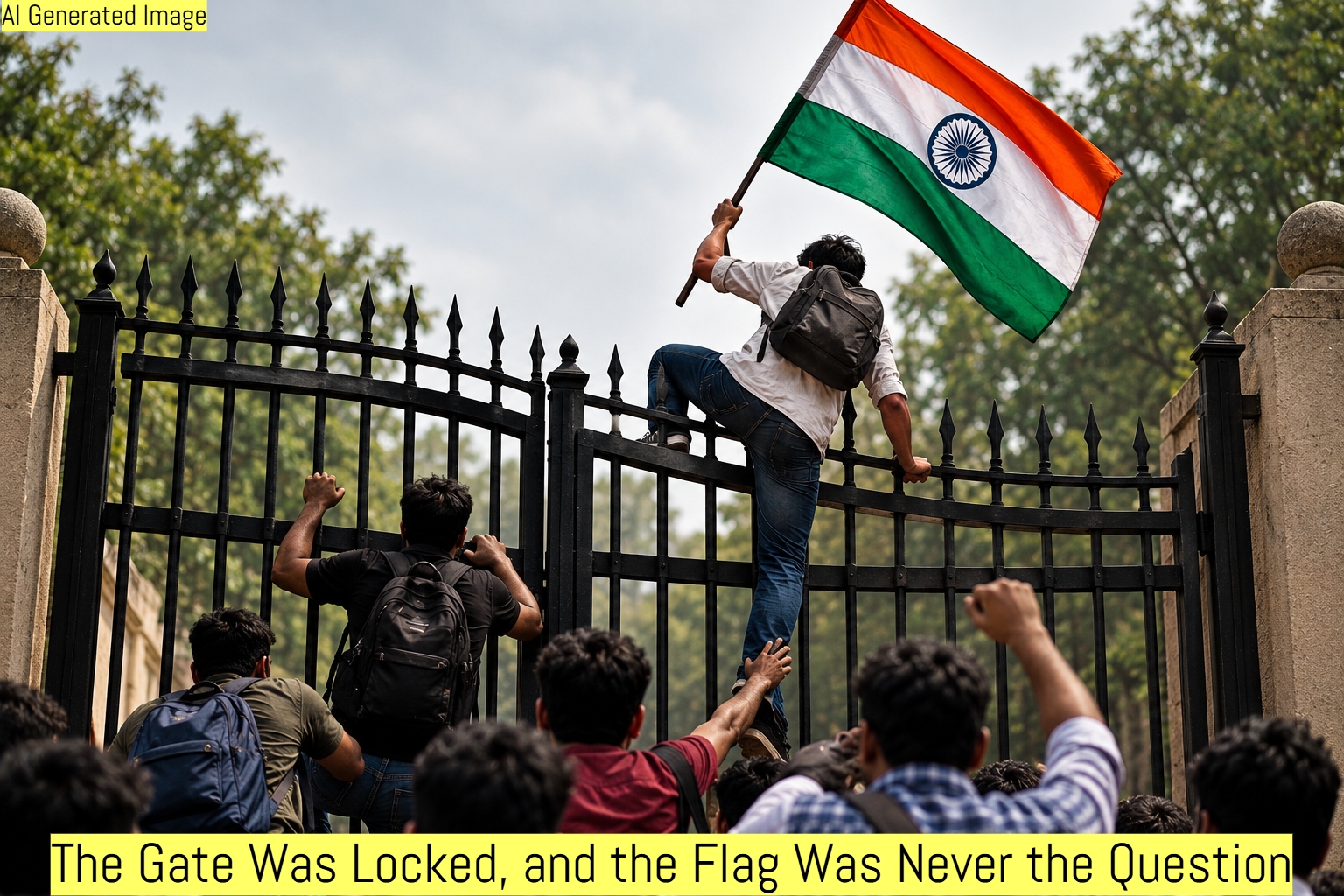
Delhi HC refuses to ban CJP's Tiranga rally at Central Park in Connaught Place today /////// Police says will control and regulate it /////// NDMC closes the park for the public on Friday and Saturday
oppn parties
Rushing Bills Through Parliament Not Good For Democracy

By Sunil Garodia

About the Author

Sunil Garodia Editor-in-Chief of indiacommentary.com. Current Affairs analyst and political commentator. Author of Cyber Scams in India, Digital Arrest, The Money Trap and The Human Hack

Faced with a Duckworth-Lewis moment in the Rajya Sabha, the NDA managed to score victory in two successive events. It got the RTI and the Triple Talaq bills passed in the upper house by deftly managing numbers. But was it good for democracy? We used to hear about such kind of things in cricket betting, where they grandiosely call it setting. In betting, any kind of setting is illegal but what the government did in the Rajya Sabha, though not illegal, was definitely immoral. There was no harm in sending the bills to the House select committee. The worst that could have happened was that they would have been delayed by a few months. But once vetted, the bills would have perhaps been better, stronger and more widely acceptable. But more than anything else, it would have been a victory for democracy. But the NDA chose to rush them through.

The Opposition parties also did not cover themselves with glory in the whole episode. They indulged in all kinds of legal parliamentary procedures to help the government get the bills passed. Walkouts, absenteeism, abstaining and cross-voting were all used as no-balls to ensure that the government did not get out. MPs of parties like Mehbooba Mufti's PDP abstained from voting during the vote for the Triple Talaq bill despite their party's vehement opposition to it. Even before the debate began, several Opposition heavyweights like Sharad Pawar were absent from the house. Many MPs of BSP, Telugu Desam, Samajwadi and NCP were similarly absent. Many other MPs, including a good number from the Congress, did the disappearing act as the debate progressed. Finally, when it came to voting, the bill was passed by 99-84.

What happened to the much-touted Opposition unity? Is the head-less and direction-less Congress to blame? Parties like the YSRCP and the TRS have a huge aversion against the Congress and if the choice is between seen to be siding with the BJP or aligning with the Congress, they are likely to choose the former. This is what happened. The BSP MPs staged a walkout to reduce the majority required and it was a big help to the NDA. Faced with such a tricky situation, most other parties completely lost the plot and their MPs followed their own paths, deserting the parties at the crucial moment. The NDA craftily punctured the Opposition unity and got the bills passed.

Further, what happened to the individual conscience of each of those MPs, let alone the whips issued by the respective parties? When speaking before the public, they lose no occasion to paint Modi as an autocrat and the BJP as a divisive force. They say that the BJP will ruin the country with its policies. But when the time comes to prevent the BJP from doing so in the Rajya Sabha (the one house where it is still in minority), do these MPs sell their conscience?