

When the State Fears Its Own Youth
 The India Commentary view
View all posts by this Author
The India Commentary view
View all posts by this Author
By Our Editorial Team
First publised on 2026-07-23 13:31:36
About the Author
The India Commentary view
View all posts by this Author
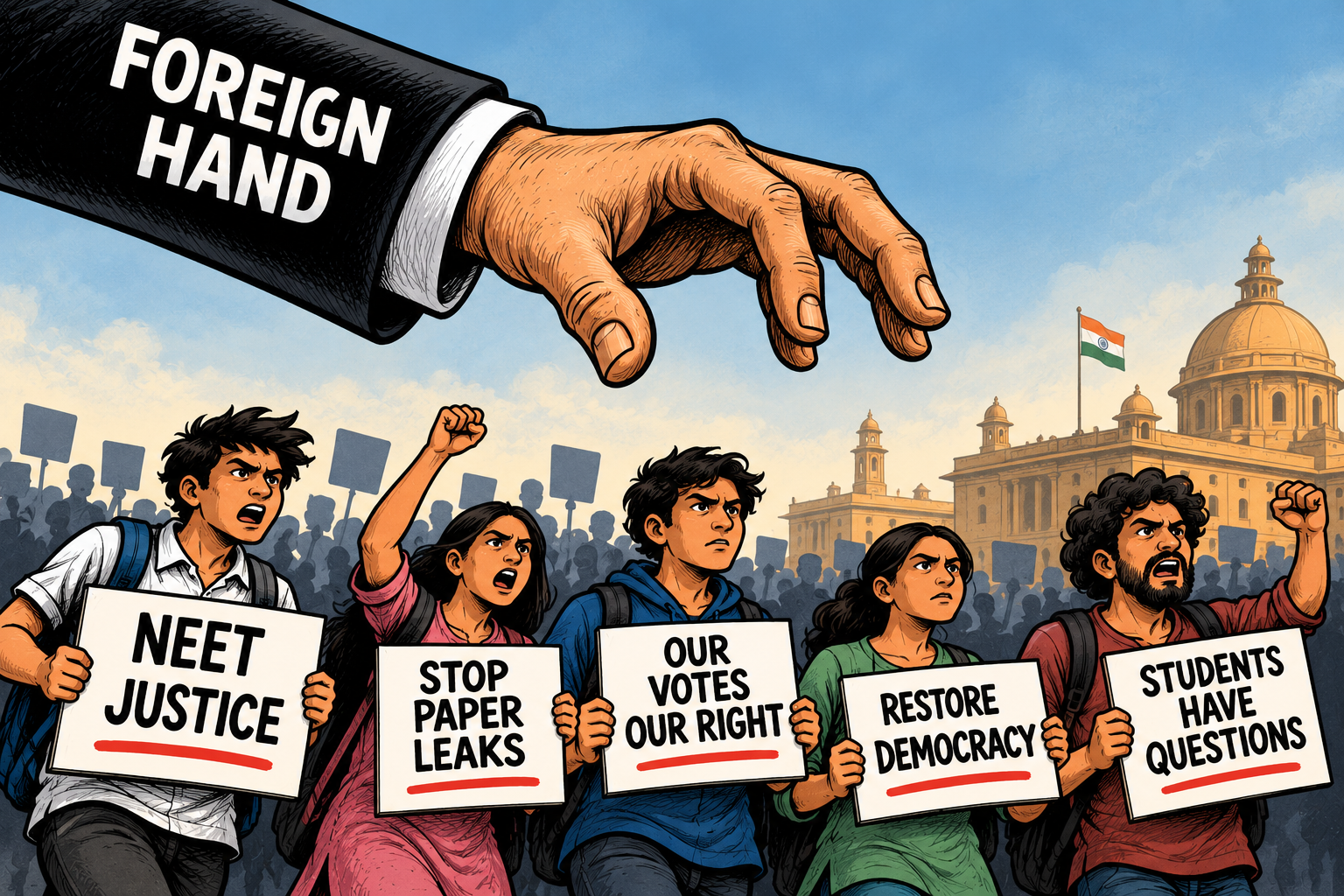
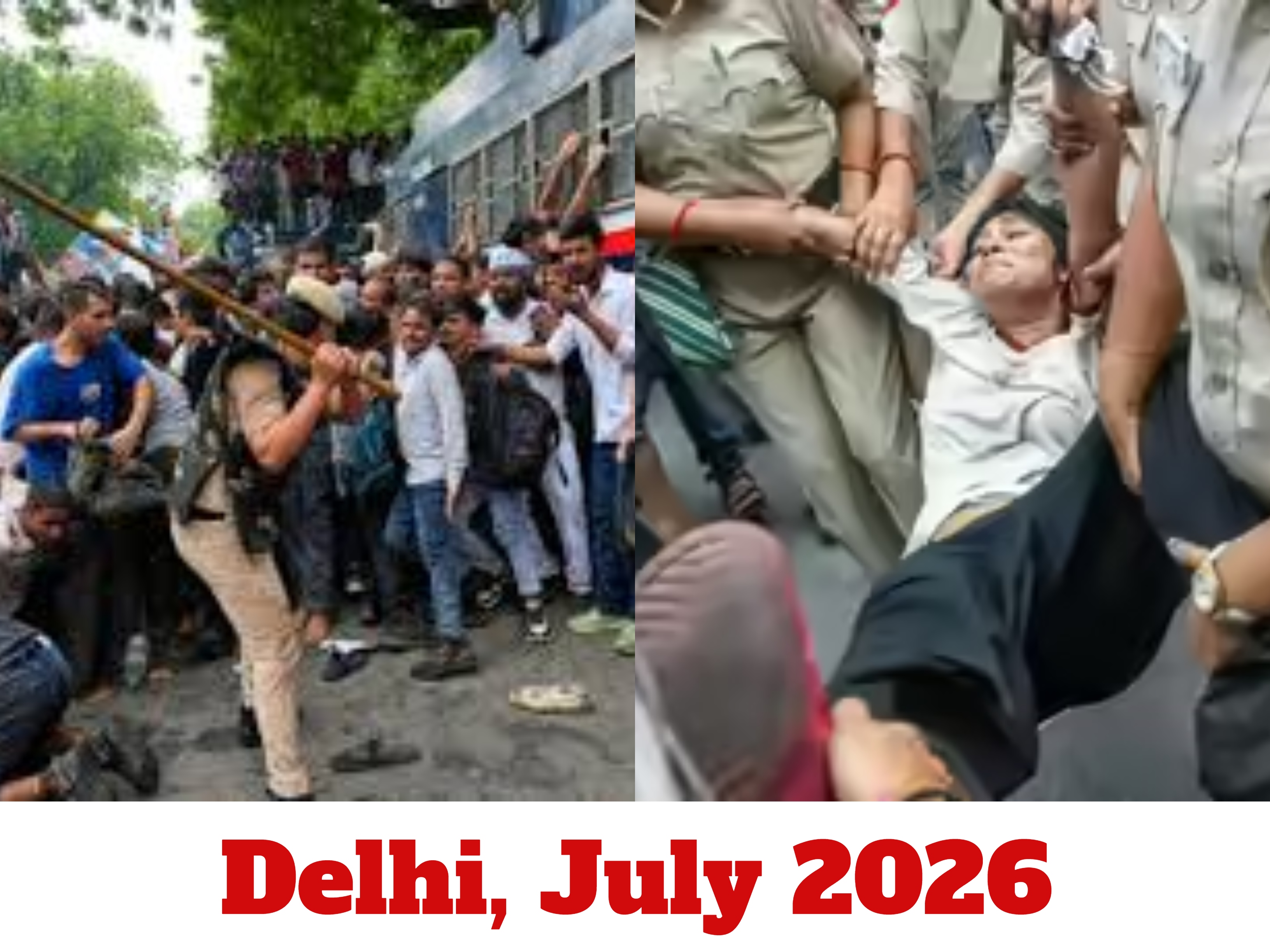
A government confident of its legitimacy does not fear peaceful protesters. It engages them, argues with them, and where necessary concedes the point. When its first instinct instead is barricades, shuttered metro stations, suspended internet and tear gas on crowds where many demonstrators appeared to be protesting peacefully, the message is unambiguous: dissent has stopped being a democratic right and has become a law-and-order problem to be managed off the streets. The police have alleged that sections of the crowd turned violent. Even so, events in Delhi over the past few days suggest this drift has already begun.
The irony is difficult to miss. Their demand was not the government's overthrow. Nor were they asking for secession. The grievance was far more fundamental, and far more legitimate, than that: repeated examination paper leaks, little visible accountability for those responsible, and no credible reform of a system millions of young Indians stake their careers on. When the exam is compromised, so is the dream that came with it. That anger is owed a hearing, not a lathi.
The Constitution does not treat peaceful protest as a concession the government of the day can withdraw at will. It is a safeguard against arbitrary power, and it outlasts whichever party happens to be in power. Every government, regardless of ideology, owes citizens the facilitation of peaceful assembly and, in the same breath, firm action against actual violence. The two obligations do not cancel each other out. Anyone attacking police or damaging property should face the law. Any security personnel using excessive force against peaceful demonstrators should face the same scrutiny. Accountability that only points one way is not accountability; it is theatre.
The government's version is that some protesters turned violent, ignored prohibitory orders, and attacked police, leaving the administration no option but to respond. Officers were injured; property was damaged. Those allegations deserve an impartial investigation. But isolated violence is not a blank cheque to treat every placard-carrier as a suspect, nor a justification for restrictions that fall on thousands who did nothing but show up and object.
Democracy reveals itself in how a government treats its critics, not its cheerleaders. An administration with a comfortable majority in Parliament has no business behaving as though it is under siege from students with cardboard signs. Images of young people running from batons and tear gas do not signal strength. They signal a State that has mistaken control for confidence, and the two are not the same thing.
India has built its self-image on being a noisy democracy. Parliament is noisy, television is noisier, election season is one long shouting match, and the street has traditionally been allowed to join in. Suppressing that noise does not make the republic stronger. It merely drives public anger underground, where it has time to compound.
The government's choices were straightforward . Meet the protesters. Publish a time-bound plan for examination reform. Order an independent probe into the leak networks. Hold the guilty accountable regardless of rank or connection. Instead, the headlines became about clashes, detentions and allegations of disproportionate force, when dialogue should have been the government's first response.
Criticism is the entry fee for governing a democracy, and today's sign-holders are tomorrow's voters, taxpayers and, inconveniently for anyone in power, the professionals who will eventually be running the country themselves. A government that treats the right to dissent with the same seriousness it reserves for its own authority can call itself a democracy in substance rather than merely in the fine print.