

Bihar Without Nitish
 The India Commentary view
View all posts by this Author
The India Commentary view
View all posts by this Author
By Our Editorial Team
First publised on 2026-03-06 12:43:54
About the Author
The India Commentary view
View all posts by this Author
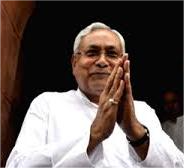
Nitish Kumar's decision to move to the Rajya Sabha brings to a close an unusually long chapter in Bihar's politics. For nearly two decades, he occupied the centre of the state's political stage, shaping alliances, recalibrating social coalitions and attempting to shift the discourse from identity alone to governance. His exit from the chief minister's office therefore represents more than a routine leadership transition. It signals a structural change in the political equilibrium that had defined Bihar since 2005.
When Mr Kumar first assumed office, Bihar was struggling with weak institutions, fragile law and order and a deeply pessimistic development narrative. His early years in government sought to restore administrative authority and rebuild public confidence in the state. Improvements in roads, expansion of welfare programmes and targeted initiatives aimed at girls' education and women's participation in public life helped alter Bihar's political conversation. Governance, which had receded from public debate, returned as a central theme.
Mr Kumar also succeeded in crafting a social coalition that proved politically resilient for several electoral cycles. Drawing support from extremely backward castes, sections of Dalits and women voters while maintaining an alliance with the Bharatiya Janata Party that ensured upper-caste backing, he created a broad electoral platform that allowed him to remain the pivot of Bihar's politics.
Yet the durability of this arrangement depended heavily on Mr Kumar's personal authority. Over the past decade, repeated shifts in alliances gradually diluted the image of stability that had once been associated with his leadership. While these realignments allowed him to retain office, they also altered the internal balance within the ruling coalition.
The present transition reflects that changed equation. The BJP has expanded its organisational presence and electoral strength in the state, while the Janata Dal (United) has struggled to retain the dominance it once enjoyed within the alliance. Mr Kumar's departure therefore leaves the JD(U) facing an uncertain future, with questions about leadership succession and organisational cohesion likely to assume greater urgency.
For Bihar, the larger concern lies in how the political space shaped by Mr Kumar will evolve. His tenure created a measure of stability in a state where social divisions have often translated into political volatility. Without his balancing role, the task of maintaining that equilibrium will fall on the parties that now occupy the political arena.
The BJP, whose influence in the state has steadily grown, may find itself carrying a larger share of responsibility for governance. At the same time, the opposition, led by the Rashtriya Janata Dal, will attempt to expand its political space in what may become a more competitive landscape.
Transitions of this kind inevitably test the resilience of political institutions. Bihar's politics has often revolved around dominant personalities. The departure of one such figure therefore places the focus back on parties and institutions rather than individuals. Whether this moment leads to renewed political stability or to a period of uncertainty will depend on how effectively the state's political actors respond to the challenges of the post-Nitish era.
For now, one reality is clear: a defining phase in Bihar's politics has come to an end. What replaces it will shape the state's political trajectory in the years ahead.