

Congress wants 200 seats in Uttar Pradesh. Its record supports far fewer.
 Linus tackles things head-on. He takes sides in his analysis and it fits excellently with our editorial policy. No 'maybe's' and 'allegedly' for him, only things in black and white.
View all posts by this Author
By Linus Garg
First publised on 2026-10-25 10:45:21
About the Author
Linus tackles things head-on. He takes sides in his analysis and it fits excellently with our editorial policy. No 'maybe's' and 'allegedly' for him, only things in black and white.
View all posts by this Author
Congress is asking the Samajwadi Party for nearly half of Uttar Pradesh's 403 assembly seats. The record does not support that figure, and the party's own arguments point to a smaller one. The alliance will probably survive the posters, but the public bargaining has a cost for both sides.
The demand and the posters
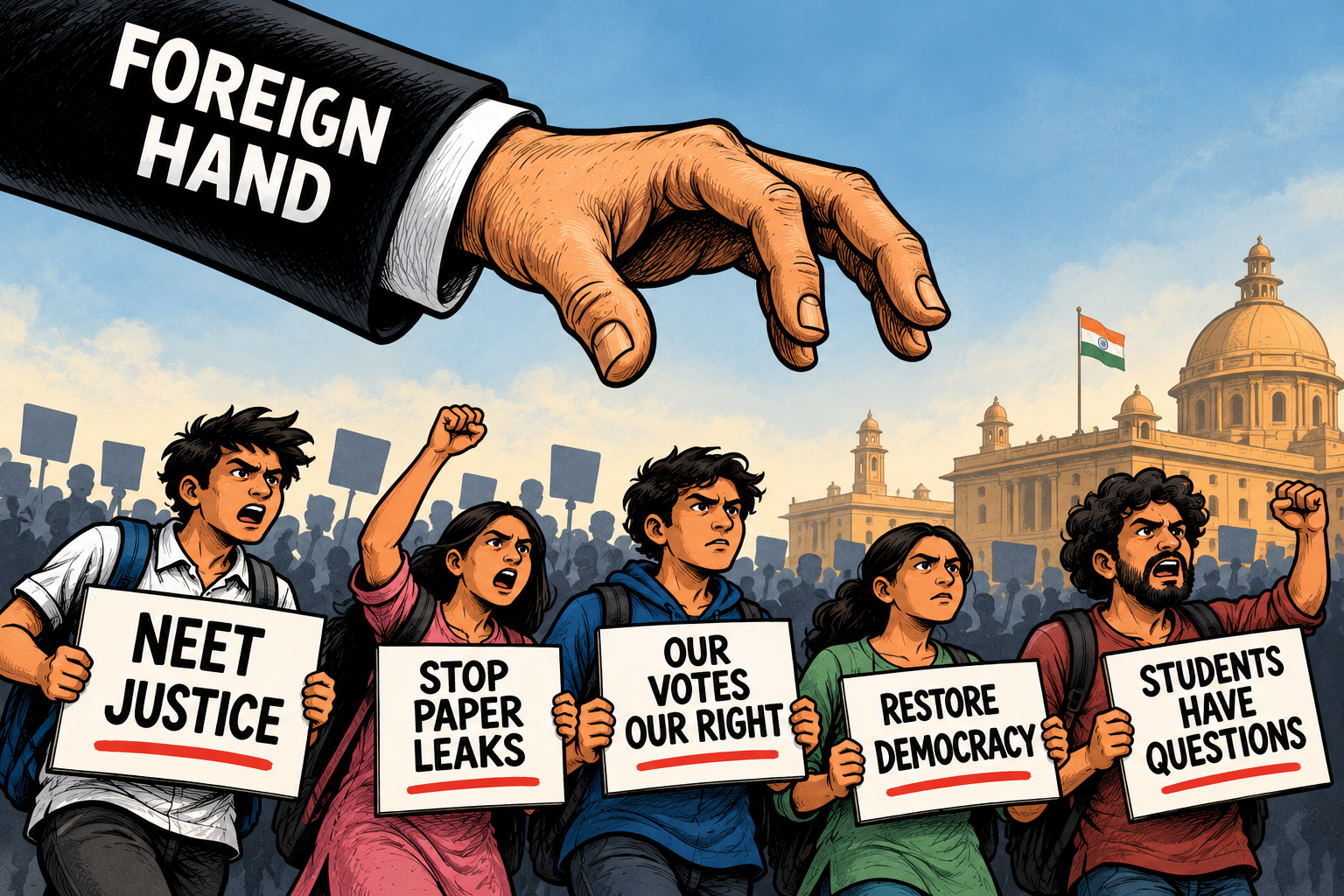
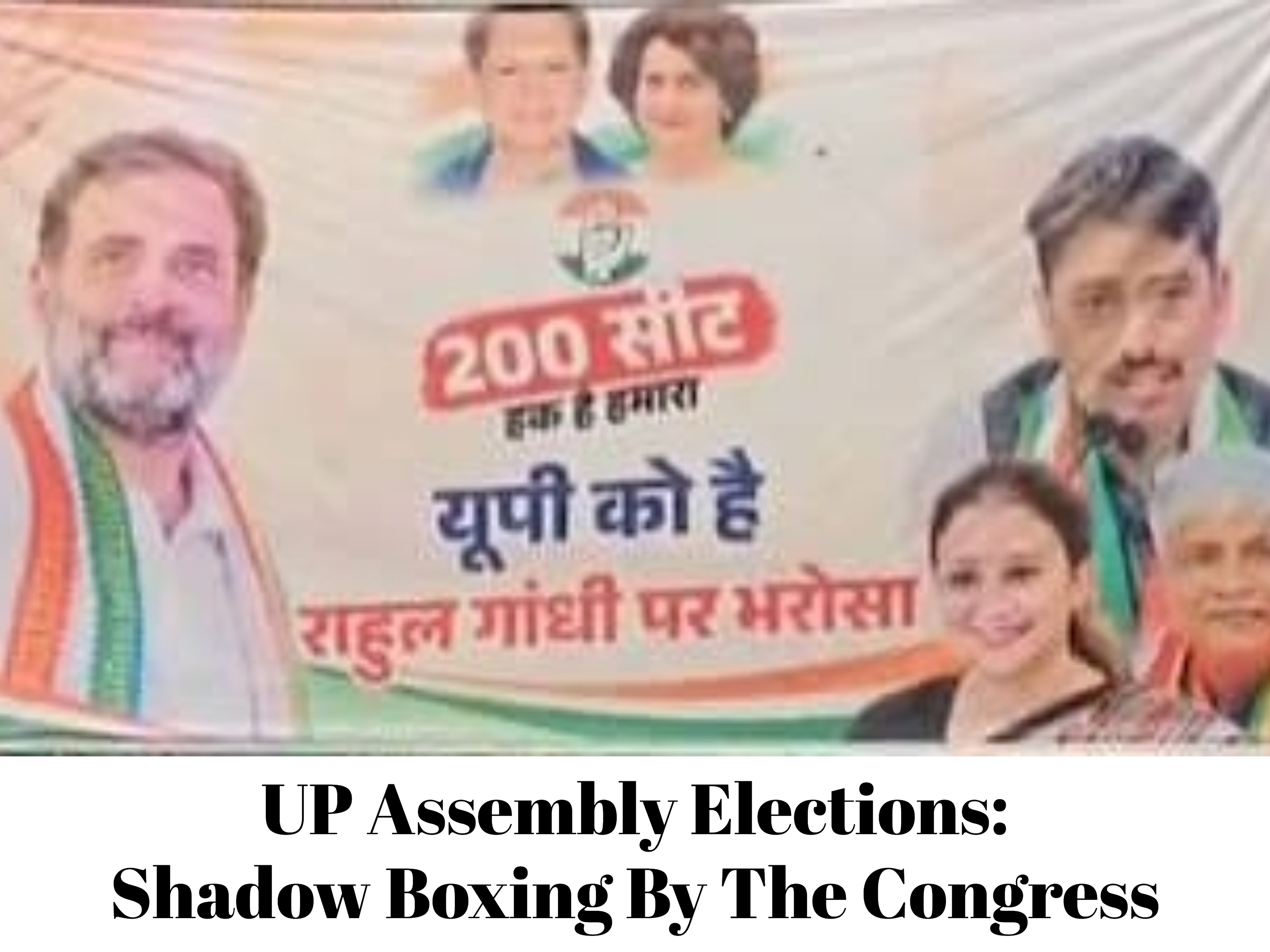
Posters reading "200 seat haq hamara" have appeared outside the Uttar Pradesh Congress Committee headquarters in Lucknow, carrying photographs of Rahul Gandhi, Priyanka Gandhi Vadra and Sonia Gandhi. The slogan matches what the party's state in-charge, Rajendra Pal Gautam, has said in public. He has asked for an equal share and equal respect in seat-sharing, and has said he spoke of 200 seats, not 150.
Gautam also wanted the deal settled in October so that candidates get time to work their constituencies. The month is almost over and the two sides are still trading figures through the press. Party sources have said Congress will seek 150 to 200 seats and will prepare to contest all 403 if the talks fail. A poster outside the party's own office speaks to the ally as much as it speaks to the workers.
The record
The arithmetic is not kind to the demand. In 2022 Congress contested almost every seat and won two. The Samajwadi Party won 111 seats with 32.06 per cent of the vote, and the BJP won 255 with 41.29 per cent. In 2017, when the two parties were allies, Congress was given 106 seats and won seven.
The 2024 Lok Sabha result is the strongest card Congress holds, and it is a Lok Sabha result. Congress won six of the 17 seats it contested, a strike rate of about 35 per cent. The SP won 37 of the 62 it fought, nearly 60 per cent. Together they took 43 of 80 seats and cut the BJP to 33. SP leaders say the six Congress wins came because of the alliance, and one has claimed that Rahul Gandhi might not have won Rae Bareli without SP support. The results show that the alliance worked, but they do not establish how many of those seats either party could have won without the other.
Two hundred seats would put Congress two short of the assembly majority mark of 202. That is not merely a demand for a larger share of the alliance's opportunities. It would give Congress a claim to contest almost half the state and, potentially, to lead the government. A party that won just two seats in the 2022 assembly election must demonstrate an organisational and electoral presence that it has yet to establish.
What Congress can fairly claim
Congress is not arguing from nothing. It points to its six Lok Sabha wins in 2024 and to a lead in more than 30 assembly segments, and its leaders cite Rahul Gandhi's outreach to Dalit and Muslim voters as a reason for a bigger share. An analyst quoted by Outlook notes that on the 2022 measure alone the party's prospects look limited to little more than a dozen seats. The 2024 leads are Congress's answer to that.
Its more serious formula is territorial. The party reportedly wants at least one assembly seat in each of the 80 Lok Sabha constituencies, two in some, and up to four each in Amethi and Rae Bareli. Bhaskar English reports that this points to a demand of 115 to 120 seats. That is a coherent argument about reach, and it is about 80 seats smaller than the figure on the posters.
The organisation is the weak point. Congress replaced its state president Ajay Rai with Aradhana Misra this month, and supporters of the outgoing chief raised slogans against his successor at her event in Lucknow on October 11. That matters because seat-sharing is not only a negotiation over numbers. Congress must show that it has credible candidates, working local units and the capacity to campaign in every constituency it wants to contest.
Will the alliance break?
Not over posters, and both sides have said so. Akhilesh Yadav has said the alliance will continue, that seats will be decided by winnability, and that the alliance's victory matters more than any party's count. He has also told SP leaders to keep their views on seat-sharing within the party, after MP Shiv Pal Singh Patel called the Congress demand unreasonable and suggested that it accept 50 seats. Aradhana Misra has maintained that seat-sharing will be decided by the top leadership of the INDIA bloc, taking the question beyond the state units.
The strain is real all the same. Yadav stayed away from the INDIA bloc meeting in Delhi on September 30, citing Rajya Sabha election work, and Congress worried about what the absence signalled. SP leaders are reported to believe that Congress can be given 60 to 80 seats and that anything more would be politically damaging. Patel has gone lower, naming 50 and at one point 25 to 30.
Both parties know what a split costs. A breakdown could divide the opposition vote and help the BJP. The 2017 experience is a caution: the two parties fought together and the BJP still won more than 300 seats. One analysis argues that the alliance did not merely fail to add its votes but lost some of its own, a claim that rests on that analysis and not on the result alone. An alliance is no guarantee, and a public quarrel over its terms makes that harder to forget.
Where it is likely to end
The real negotiation sits between roughly 60 to 80 seats on the SP side and 115 to 120 on the Congress side, and the figure on the posters is the opening bid. One report asks whether Congress would settle for 80 to 90 seats if they were winnable. That is where the two sets of claims come closest, and it is a forecast, not a fact. The number will matter less than the list: the SP will want Congress seats where the alliance can win, and Congress will want a foothold in every Lok Sabha segment.
Congress has reason to demand more than the two seats it won in 2022. It has yet to establish that it deserves 200. The SP cannot dictate the terms simply because it is the stronger partner, but Congress cannot convert the alliance's collective success into a claim of its own. The final agreement will show whether both parties have understood that distinction.