
oppn parties Focus On Administering The Second Dose

News Snippets

  • The government marked 12 years of the Make in India programme, with Prime Minister Narendra Modi highlighting growth in domestic manufacturing, investment and exports. Government data cited on the occasion showed PLI schemes had attracted about ₹2.40 lakh crore in investment by March 2026 and generated production and sales worth roughly ₹23.8 lakh crore
  • Senior Samajwadi Party leader Ram Govind Chaudhary died. Chaudhary, a former Uttar Pradesh minister and senior SP figure, was a close associate of party president Akhilesh Yadav
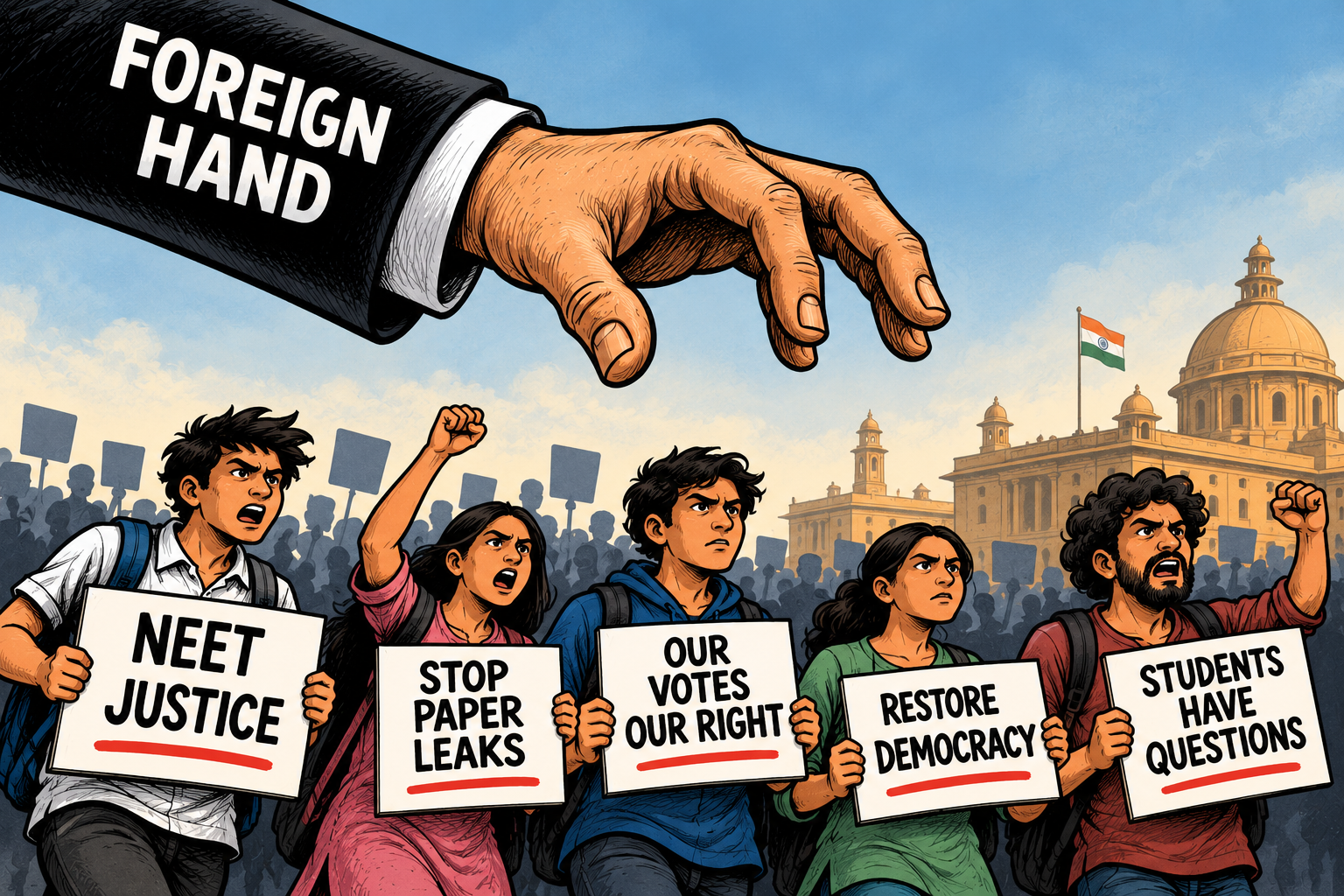
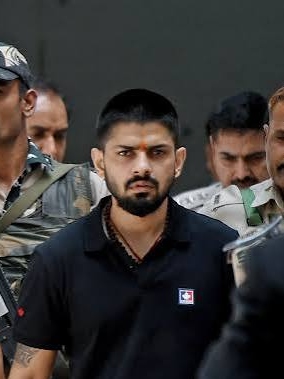
  • CJP's Abhijeet Dipke said that Opposition parties give legitimacy to elections which they call 'rigged' by participating in them. He asked the parties to boycott upcoming elections
  • The Election Commission postponed two youth-focused voter-awareness programmes in Uttar Pradesh that Chief Election Commissioner Gyanesh Kumar was due to address. The Commission said the postponement was due to scheduling factors and denied any connection with the controversy over differences within the poll panel
  • A public-interest petition was filed in the Supreme Court seeking action against CEC Gyanesh Kumar over alleged decisions concerning the Special Intensive Revision that were taken despite objections recorded by two other Election Commissioners. The petition also seeks an SIT probe into the alleged deletion of voters and challenges decisions allegedly taken without majority concurrence
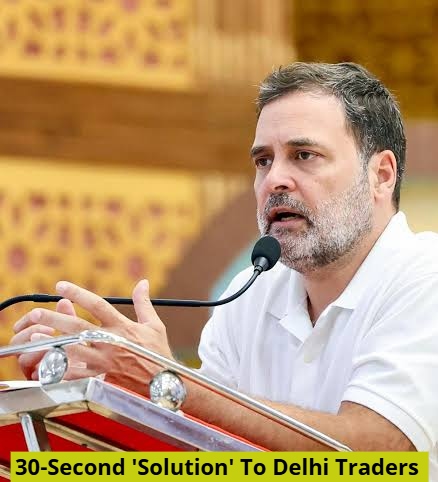
  • Congress held nationwide protests demanding the removal of Chief Election Commissioner Gyanesh Kumar over the SIR controversy, with demonstrations reported in several states. In Assam, Congress leader Gaurav Gogoi and others were detained during a protest, while demonstrations in some other locations saw clashes with police
  • The Supreme Court declined to entertain a PIL seeking Hindi as one of the official languages of the court. The petition had sought a commission to examine the use of Hindi in Supreme Court proceedings
  • The Supreme Court acquitted a man convicted of rape after finding that the lower courts had impermissibly accepted part of the prosecutrix's testimony while rejecting another part of the same evidence. The court said a conviction cannot rest on selectively accepting and rejecting the same testimony
  • West Bengal Chief Minister Suvendu Adhikari announced a package for farmers including special financial assistance for potato growers, assured paddy procurement and electricity subsidies of up to ₹30,000 annually for more than four lakh farmers. He also announced plans for 125 days of rural employment and one lakh jobs
  • ndia is considering requiring thermal power plants to blend up to 5% imported coal with domestic coal to address falling inventories and tight supplies, according to government sources. Nearly 40% of India's coal-fired plants were reported to have less than three days of coal stocks, while September spot power prices have risen to their highest monthly average since 2022
  • India's foreign-exchange reserves fell $14.881 billion to $765.901 billion in the week ended September 18, according to RBI data, marking the sharpest weekly decline since November 2024. Foreign-currency assets accounted for most of the fall
  • Benchmark equity indices recovered from Thursday's sharp sell-off, with the Sensex rising 315 points to 73,896 and the Nifty gaining 77 points to 23,141 at Friday's close. The broader market showed a mixed trend
  • India added six medals at the Asian Games, including a shooting gold for Suruchi Singh and Kamaljeet in the 10m air-pistol mixed team event. Gulveer Singh won silver in the men's 10,000m, while Baranica Elangovan and Manpreet Kaur won bronze medals; India also reached the men's and women's kabaddi finals
  • India's mixed-doubles table-tennis pair of Diya Chitale and Manush Shah won bronze at the Asian Games, while Indian squash players secured three further medal places.
  • Nine passengers were charred to death when the AC sleeper bus they were travelling in caught fire on Yamuna Expressway near Jewar
Abhijeet Dipke of Cocokroach Janata Party called upon all Opposition parties to boycott the "rigged" elections in India so that they are not given a veil of legitimacy
oppn parties
Focus On Administering The Second Dose

By Linus Garg
First publised on 2021-10-29 01:49:22

About the Author

Sunil Garodia Linus tackles things head-on. He takes sides in his analysis and it fits excellently with our editorial policy. No 'maybe's' and 'allegedly' for him, only things in black and white.

It is distressing that more than 10cr people have missed their second Covid vaccine dose appointment in India. As it has been proved by tests the vaccines work optimally only after the second dose has been administered, India’s chances of achieving herd immunity will get reduced if such a large number of people do not take the second dose. Also, lately there has been talk of administering a booster dose to supplement the first two doses. If so many people refrain from taking the second dose, how will the booster dose be administered?

What has prompted these people from coming forward to take the first dose? Experts have given the usual reasons like vaccine hesitancy, misplaced fears of side effects or complacency due to incorrect belief that a single dose is enough could be the reasons for this omission. But it could also be due to the fact that when it was the time to take the second dose, the vaccine shortage made them make the rounds of vaccine centres without avail. This might have put them off. Also, some might have suffered serious adverse side effects from the first dose and are scared in taking the second. Then there is also the vile misinformation campaign being run by vested interests in numerous WhatsApp groups and over social media.

But whatever the reason, it puts them and the whole community under threat. Hence, the government must take steps to make them take the second dose without delay. It also needs to be found out that if the second dose will be effective if a long time has passed after they took the first dose. If not, these people will have to take both the doses again. The government must start an awareness campaign and also begin a disincentive process whereby those who are not fully vaccinated must not be allowed entry in public places. Although the protocol is in force in some places, checks are not done properly. This process has to be strictly implemented.