

NEET Again: A System That Learns Nothing
 The India Commentary view
View all posts by this Author
The India Commentary view
View all posts by this Author
By Our Editorial Team
First publised on 2026-05-13 11:55:31
About the Author
The India Commentary view
View all posts by this Author
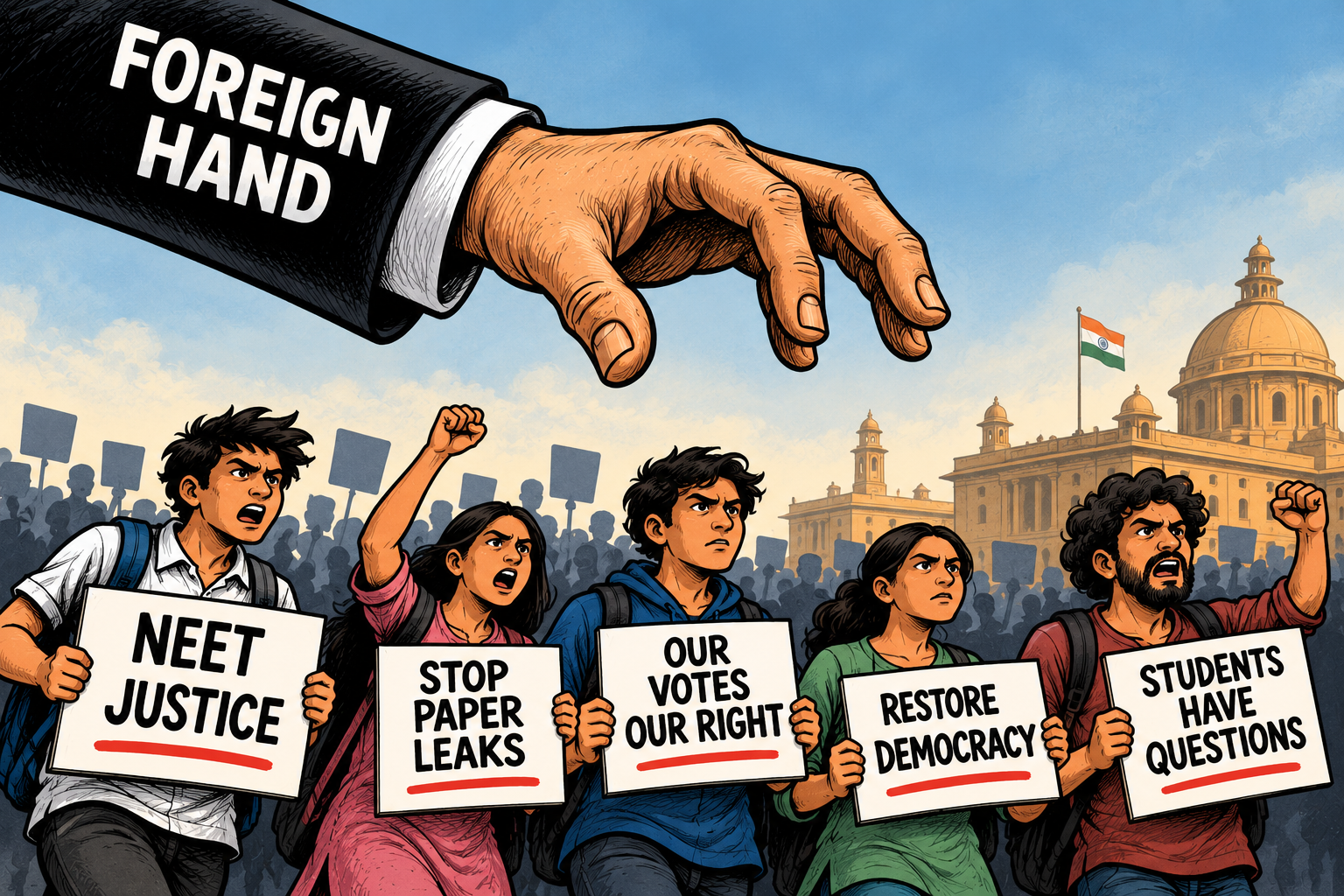
The cancellation of NEET-UG 2026 is a national embarrassment that should have been, and could have been, prevented. The paper leaked. The state failed. And the 22.7 lakh students who sat for the examination on May 3 now have nothing to show for years of preparation except an indefinite wait for a re-exam date.
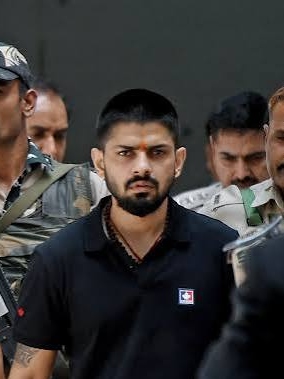
The facts are not in dispute. A guess paper carrying 150 questions, matching a reported 600 of 720 marks in the actual examination, was circulating on WhatsApp 42 hours before the exam. A PG hostel owner noticed the resemblance, took it to the police, and was turned away. He then went to the NTA. The IB and the SOG were activated. Eventually, 13 suspects were detained across Dehradun, Sikar, and Jhunjhunu, with the SOG finding that close to 120 Biology and Chemistry questions in the actual paper matched those in the circulating document.
The police's initial refusal to act on the whistleblower's complaint is the detail that must not be allowed to pass without consequence. This was not bureaucratic delay. This was a dereliction of duty at a moment when timely action could have saved the examination. Someone, somewhere, made the decision to send that man away. That person must answer for it.
Into this climate of institutional failure stepped Madan Dilawar, Rajasthan's Education Minister, to declare that the cancellation of NEET was not a matter of great concern. One can only wonder which planet's students Mr. Dilawar has in mind, because for the 22.7 lakh young Indians on this one â and for the families who bankrolled years of coaching, sacrificed and scrimp and saved for that one shot at a medical seat â it is the only thing that matters. A minister who oversees education in the state at the very centre of this scandal, and whose police turned away the whistleblower, calling this "not a big deal" is not just tone-deaf. It is a measure of how completely the political class has decoupled itself from the consequences it inflicts on ordinary citizens.
As for the NTA, it received whistleblower information on May 7, four days after the exam, and still took five more days to act. The CBI has now been handed the investigation, which is precisely what was done in 2024 after an identical scandal. The 2024 probe did not prevent 2026. There is no reason to believe the 2026 probe will prevent 2028, unless the government does something it has conspicuously avoided doing: structural reform of how national examinations are designed, secured, and administered.
India cannot build a world-class healthcare system on a broken meritocracy. NEET is the gate. If the gate is for sale, everything behind it is compromised. The government must stop treating each leak as an isolated incident and start treating NTA's systemic vulnerability for what it is, a crisis of institutional integrity. Mr. Dilawar's casual dismissal of that crisis tells us exactly why it keeps recurring.