

People Are Talking About the Language of Gen Z
 By our team of in-house writers.
View all posts by this Author
By our team of in-house writers.
View all posts by this Author
By admin
First publised on 2026-08-01 15:00:14
About the Author
By our team of in-house writers.
View all posts by this Author
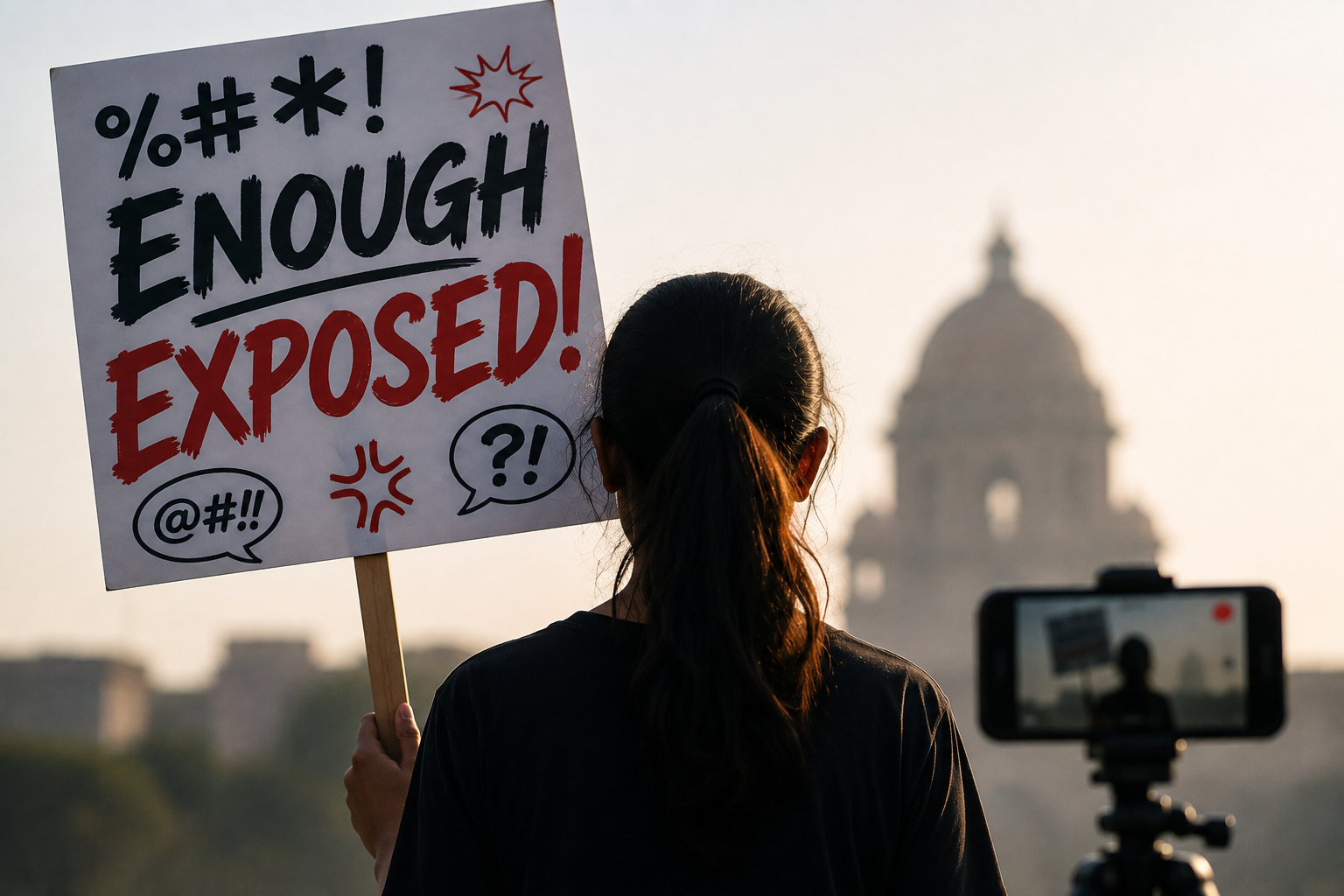
People are talking about the language young protesters used against the Prime Minister at Jantar Mantar, and about the inconvenient fact that it wasn't very different from what one hears any evening at a Delhi bus stop or a Kolkata para adda. People say Gen Z didn't invent invective. They just forgot to lower their voice around a camera, which in this country is the only real crime.
People say the slogans were vulgar. People also say vulgarity has never needed a generation to sponsor it, that it has simply never before been handed a smartphone.
People are talking about the Prime Minister's video message, the one where he called the students misguided children and asked that they be guided rather than prosecuted. People say this is magnanimity of a very specific kind, the kind that discovers compassion exactly when compassion has an audience.
People are talking about the 15-year-old girl booked for the remarks, and her apology video, hands folded, eyes lowered, begging the entire country for forgiveness as though the entire country had been personally wronged. People note that the police papers list her age as 25. People say a state that cannot decide whether its accused is a child or an adult should perhaps show a little less enthusiasm about deciding how severely she ought to suffer as either.
People say she apologised on camera to the whole nation, which is considerably more contrition than most ministers manage after considerably larger offences. People say a warning would have done. People ask why three sections of the Bharatiya Nyaya Sanhita were required first, just so the warning could arrive wrapped in maximum humiliation.
People say society has developed a sudden, touching interest in the vocabulary of fifteen-year-olds. People say society might usefully turn that interest inward, toward the staff room, the drawing room, the comment section, none of which have ever been booked, because none of them had the misfortune of being filmed.
People say the students were called a mob before anyone bothered calling them children, and children only after the apology had done its job. People note the order of those words is rarely an accident. It is usually the fastest way to find out who had already decided the punishment before anyone had decided the crime.
Log ladki ki umar poochte hain, uska FIR nahin, people say, admiring the precision of the outrage. People also note that a Prime Minister forgiving her in one video and a police station that booked her before that video was even recorded seem to be running on two entirely different clocks, and nobody in charge finds that strange enough to mention.
People say the protest, somewhere back at the start, was about examination papers leaking before the students who studied for them ever got a fair shot. People say by the time the cameras were done, the leak had been forgotten and the language had become the story, which is, conveniently, always how the story prefers to end.
People are waiting to see whether the girl's case quietly disappears the way these things usually do, once the outrage industry has moved its cameras elsewhere. People say they hope so. People say guidance works best before an FIR, not after it.