Manisha Bhanwala Has Ended a Sixteen-Year Wait, and Indian Wrestling Must Now Earn the Moment
 Linus tackles things head-on. He takes sides in his analysis and it fits excellently with our editorial policy. No 'maybe's' and 'allegedly' for him, only things in black and white.
View all posts by this Author
By Linus Garg
First publised on 2026-10-30 16:03:12
About the Author
Linus tackles things head-on. He takes sides in his analysis and it fits excellently with our editorial policy. No 'maybe's' and 'allegedly' for him, only things in black and white.
View all posts by this Author
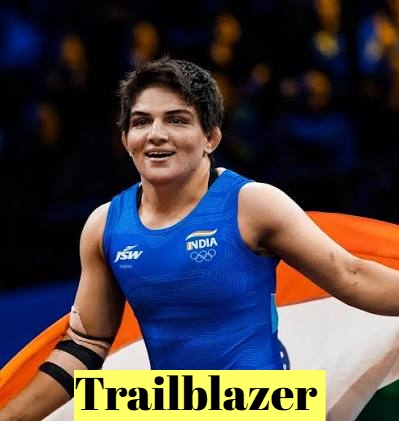
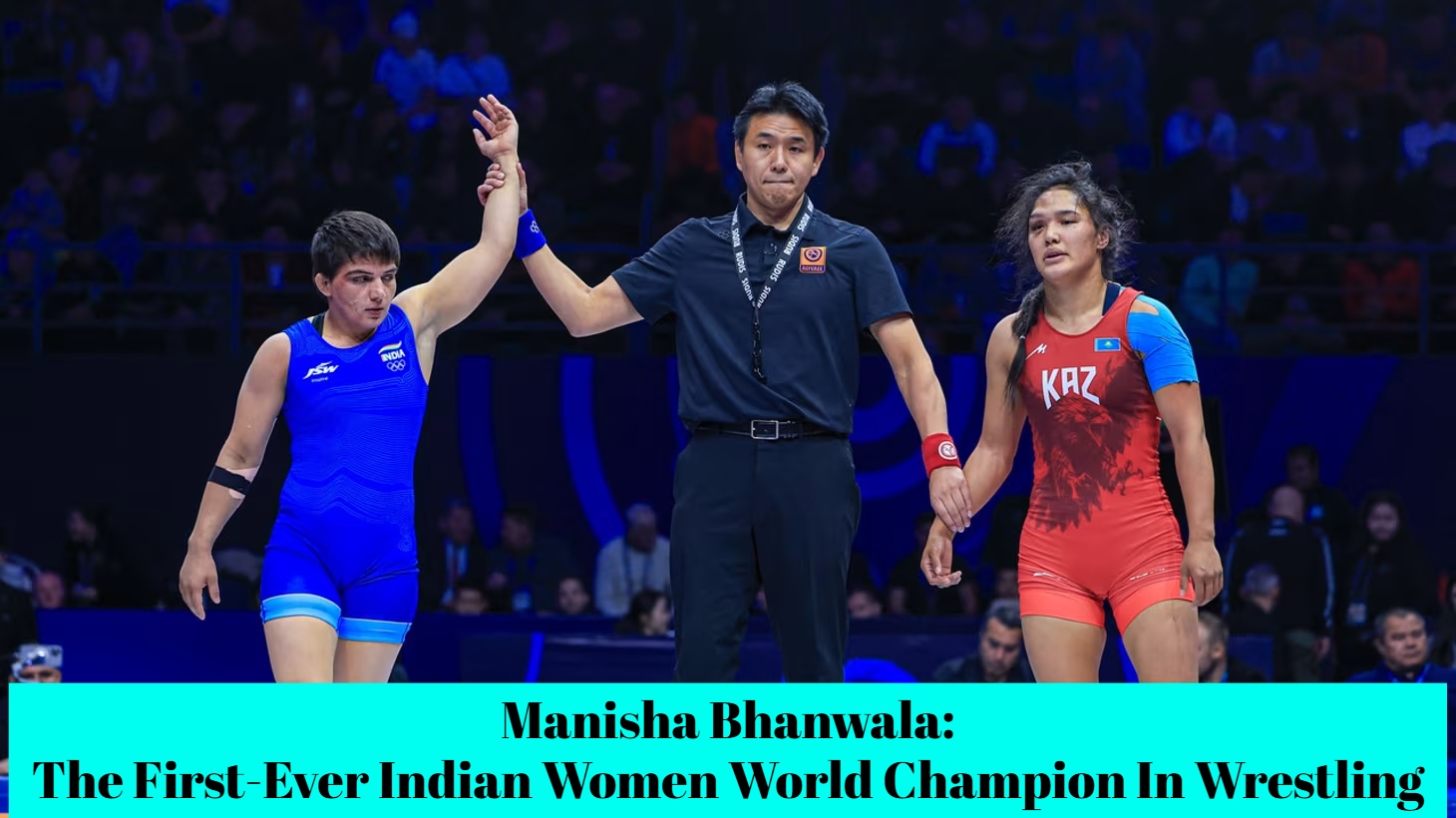
Manisha Bhanwala is a world champion. She won the women's 59kg freestyle gold at the 2026 World Championships in Astana by beating the USA's Abigail Nette 8-6, after recovering from a 0-6 deficit. She is the first Indian woman to win a senior world title, and only the second Indian wrestler overall after Sushil Kumar in 2010. The record is exact and the achievement is real.
Consider the final as a legal argument. Six points down, a wrestler has two choices. She can protect her dignity and accept the verdict of the scoreboard. Or she can attack the case on the evidence, point by point, until the verdict changes. Manisha chose the second. This was not luck. It was preparation meeting pressure and holding.
The comeback was also not an accident of temperament. In March 2025 she won the Asian Championships gold at 62kg, beating North Korea's Kim Ok-ju 8-7. That bout, too, was won from a 2-7 deficit. Two finals, two deficits, two recoveries. A pattern like that is not drama. It is a method.
Her path also deserves honest accounting. At the 2023 World Championships in Belgrade she lost to Sweden's Sara Lindborg. Champions are made by what they do after such days. She went back to the mat, changed weight classes and kept working. She wrestled in the non-Olympic 59kg category after previously competing at 57kg and 62kg. That flexibility is a mark of seriousness, not indecision.
A note of caution is necessary, and it should not be read as a diminishment. 59kg is not an Olympic weight. The gold is a world title in every sense that matters to the sport's record books. It is not, however, a guarantee of an Olympic medal, and commentators who treat the two as the same are doing the athlete no favours. The harder question is whether she can carry this form into an Olympic category when the next cycle demands it.
The wider Indian campaign gives the nation reason for measured pride. India's final tally in Astana was one gold, two silvers (Kajal Dhochak and Neelam Sirohi) and one bronze (Tanu Sharma at 72kg). Four medals in the women's competition is a strong return. It also shows that the gold was not a solitary miracle but the top of a rising structure.
That structure is where the real work lies. A gold medal does not build a training hall, hire a physiotherapist or fund a wrestler's travel to a camp. Federations and sports ministries are quick to claim a champion's success and slow to account for the years in which she received little. The right response to Astana is not a garlanded reception. It is a published, audited plan for coaching, sports science and competition exposure for every woman on the circuit.
The credit belongs first to Manisha, her coaches and her family. The obligation now falls on the institutions that will be photographed beside her. India has waited sixteen years for a senior world champion. It should not need sixteen more to prepare for the next one.