

Rs 56.75-Crore Affidavit From Adani Power Needs a Public Explanation
By A Special Correspondent
First publised on 2026-11-17 10:51:19
About the Author

A notarised affidavit seeking to revise the stated cost of a 1,500 MW hydropower project from Rs 5,675 crore to Rs 56.75 crore has reduced its proposed wildlife conservation contribution from Rs 227 crore to Rs 2.27 crore. Adani says the smaller figure relates only to preliminary surveys. The Maharashtra government's handling of the revision demands scrutiny.
A 1,500 MW pumped-storage hydropower project in Maharashtra has raised serious questions about corporate accountability and environmental regulation. How did a project whose estimated cost was recorded as Rs 5,675 crore in Union Environment Ministry documents come to be represented as a Rs 56.75-crore project in a subsequent notarised affidavit submitted by Adani Green Energy Limited?
The difference has enormous financial implications. The Maharashtra State Board for Wildlife had stipulated a contribution equivalent to 4 per cent of the project cost towards conservation of the Sahyadri Tiger Reserve. On the original estimate, this amounted to Rs 227 crore. Following the revised figure, the contribution fell to approximately Rs 2.27 crore, a difference of Rs 224.73 crore.
The company denies deliberately understating the project cost. It maintains that Rs 56.75 crore represented preliminary site investigation and survey expenses, approximately 1 per cent of the total project cost. That explanation must be examined against the documentary record.
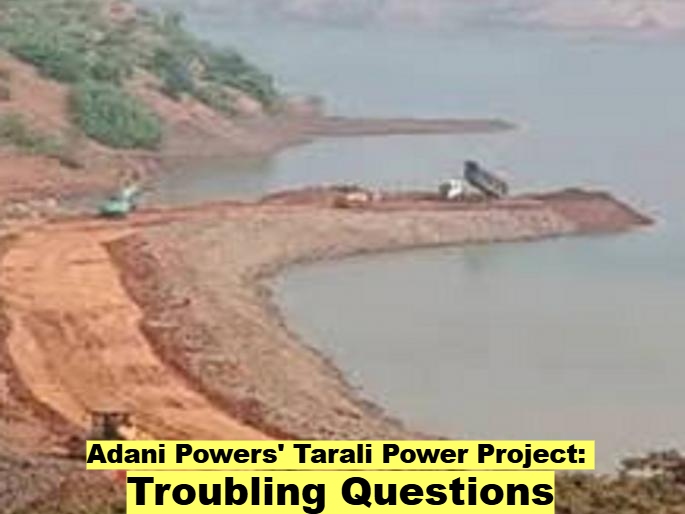
The affidavit that changed the calculation. The Tarali Pumped Storage Project in Satara district is a proposed 1,500 MW facility spread across approximately 150.74 hectares in four villages. The Union Environment Ministry's environmental clearance documentation dated February 11, 2025, recorded the estimated project cost at Rs 5,675 crore.
On February 23, 2026, the Maharashtra State Board for Wildlife imposed 15 conditions, including the 4 per cent conservation contribution. The Principal Chief Conservator of Forests (Wildlife), Maharashtra, subsequently asked the company to deposit Rs 227 crore.
On September 8, 2026, Adani Green Energy's Chief Operating Officer, Naresh Telgu, submitted a notarised affidavit asking the authorities to consider Rs 56.75 crore as the project cost. On October 12, the PCCF's office communicated acceptance of the revised figure and asked the company to deposit Rs 56.75 lakh immediately, with the balance payable after approval from the National Board for Wildlife (NBWL).
The company made the initial deposit.
Adani's explanation. The company says the revised figure concerned only preliminary site investigations and surveys, not the overall construction cost. It also maintains that the project is on privately owned land and does not involve diversion of forest land.
But an important question remains. If Rs 56.75 crore represented only preliminary investigation expenses, why did the affidavit ask the authorities to consider it as the project cost? Why was that figure accepted for calculating the conservation contribution when the Environment Ministry's documentation recorded the overall project estimate at Rs 5,675 crore?
The company must produce the relevant financial and technical documents. The forest department must explain the basis on which it accepted the revised calculation.
The responsibility of the forest department. The Maharashtra forest department initially calculated the conservation contribution at Rs 227 crore but subsequently accepted a figure that reduced the proposed amount by almost 99 per cent.
Who examined the affidavit? Was an independent assessment obtained? Did the authorities verify whether the revised figure represented the entire project or merely preliminary activities? And was the recalculation consistent with the applicable rules and wildlife board conditions?
Rohan Bhate, Satara's Honorary Wildlife Warden, raised the issue through official grievance channels. On November 6, the Union Environment Ministry directed the Maharashtra Forest Department to investigate the matter on priority.
The investigation must be independent and its findings made public. Since the department's own administrative decision is under scrutiny, placing the inquiry under an independent senior authority would help establish public confidence.
The political dimension. The controversy has also drawn criticism from Congress. General secretary Jairam Ramesh has described the revision as a major scandal and reiterated the demand for a Joint Parliamentary Committee investigation into the Adani Group.
Political scrutiny is legitimate, but a JPC demand cannot substitute for examination of the documents. The immediate requirement is an independent investigation into the affidavit, the October 12 communication and the basis for recalculating the conservation contribution. Any wider parliamentary inquiry should be considered on the evidence that emerges.
The separate stop-work controversy. On November 13, Maharashtra's Forest Department ordered work at the Tarali project site to stop immediately, alleging that work had commenced without mandatory prior approval from the NBWL.
Adani has disputed regulatory non-compliance, pointing to its environmental clearance and pollution control consent. It says its wildlife clearance proposal is under consideration.
These are separate issues and must not be conflated. Environmental clearance and pollution control consent do not automatically establish wildlife clearance. Equally, the stop-work order does not prove that the revised project-cost declaration was improper. The authorities must establish whether all necessary permissions were obtained before construction began.
The conservation implications. The difference of Rs 224.73 crore in the proposed conservation contribution is substantial. Such resources could potentially support habitat protection, anti-poaching operations, wildlife monitoring and conflict mitigation around the Sahyadri landscape. The government should disclose how the proposed contribution is to be utilised and what conservation programmes depend on it.
India needs private investment in renewable energy and infrastructure. But the energy transition cannot become an excuse for weakening environmental safeguards or treating conservation obligations as negotiable accounting entries.
Adani Green Energy must be given a fair opportunity to establish its position. If its explanation is supported by the documents, it should be accepted. If misleading information was submitted or officials failed to exercise due diligence, appropriate action must follow.
The central question remains straightforward: how did a Rs 5,675-crore project acquire a Rs 56.75-crore figure for calculating its conservation contribution, and who authorised the change?
The public deserves a transparent answer.