

oppn parties The RBI Has Given Customers A Switch. It Must Also Give Them A Default

News Snippets

  • BJP and Shiromani Akali Dal revive alliance for Punjab polls. The two parties formally reunited under the NDA for the 2027 Assembly election, six years after the Akali Dal walked out over the farm laws
  • Opposition questions delay in convening Parliament's winter session. Congress deputy leader in the Lok Sabha Gaurav Gogoi sought an explanation for the delay, noting that the winter session is usually held in November or early December
  • Rahul Gandhi alleges Rajiv Gandhi's security was deliberately withdrawn. In a conversation with Sonia Gandhi and Priyanka Gandhi Vadra, the Congress leader claimed that his father's security was removed deliberately and that this created the conditions for his assassination
  • Supreme Court stays Kerala government's restructuring of police associations. A Bench of Justices B V Nagarathna and Sanjeev Sachdeva stayed the Kerala High Court Division Bench ruling that had upheld the State's decision to abolish the Kerala Police Officers' Association and redistribute its members between two other associations
  • Delhi's pollution-control machinery faces another winter delay. An investigation by The Indian Express found that 59 of the 70 promised electric and CNG mechanical road-sweeping machines are now expected only in December 2026 or January 2027. The delay means the capital is entering the peak pollution period without much of the equipment intended to control road dust, with shipping disruptions cited as a reason.
  • Banking system liquidity slips into deficit for the first time since June. Banks borrowed a net Rs 12,825 crore from the RBI as of November 21, with tax outflows and the central bank's liquidity-absorption operations contributing to the squeeze. The RBI injected Rs 1 lakh crore through short-term operations on Monday to ease the immediate pressure, while overnight borrowing costs moved above the policy rate
  • Shaina Manimuthu and T Gnana Dattu win National Under-19 badminton titles. Karnataka's Shaina retained the girls' singles crown, defeating Lakshya Rajesh 15-10, 15-12. Telangana's Gnana Dattu won the boys' title, beating Akhil Reddy Bobba 17-15, 15-11 in the final
  • Priyansh Arya smashes 181 as Delhi thrash Tamil Nadu in Syed Mushtaq Ali Trophy. Arya struck 181 off 68 balls, including 19 sixes and seven fours, as Delhi posted 275 for five. Tamil Nadu were bowled out for 159, giving Delhi a 116-run victory and making Arya's innings one of the standout performances of the domestic T20 season
  • Priyansh Arya smashes 181 as Delhi thrash Tamil Nadu in Syed Mushtaq Ali Trophy. Arya struck 181 off 68 balls, including 19 sixes and seven fours, as Delhi posted 275 for five. Tamil Nadu were bowled out for 159, giving Delhi a 116-run victory and making Arya's innings one of the standout performances of the domestic T20 season
  • India win men's hockey series in New Zealand 1-0. India completed the three-match Century of Sporting Unity Series unbeaten, with one victory and two draws. Captain Sanjay scored in all three matches, finishing with three goals as India marked the centenary of sporting ties between the two countries
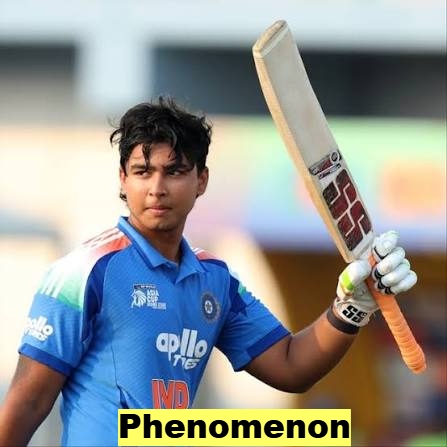
  • Vaibhav Sooryavanshi rewrites List A cricket records with 28-ball hundred and 52-ball double century. The 15-year-old India A opener smashed 204 off just 53 balls, including 28 sixes and seven fours, against the UAE in the Rising Stars Asia Cup in Doha. He broke the records for the fastest List A century and double century, previously held by Jake Fraser-McGurk and Chad Bowes respectively. India A chased down the target of 250 to win by seven wickets
  • World Chess Championship: Defender D Gukesh drew the first game against J Sindarov
  • The Samajwadi Party and Congress completed their first round of seat-sharing negotiations for the 2027 Uttar Pradesh Assembly elections, with representatives of both parties describing an agreement as close and scheduling another meeting for Tuesday
  • he Supreme Court directed West Bengal's 19 appellate tribunals dealing with Special Intensive Revision appeals to prioritise voters whose names had been deleted from electoral rolls and defer, for the time being, challenges seeking the removal of included voters. Of the 38.31 lakh appeals, 22.21 lakh seek restoration of deleted names and 16.10 lakh challenge inclusions
  • The Supreme Court granted bail to Kashmiri separatist leader Nayeem Ahmad Khan in a terror-funding case investigated by the National Investigation Agency, after more than nine years in judicial custody
Vaibhav Sooryavanshi scores the fastest 100, 200 in List-A cricket /////// BJP announces pact with Akali Dal in Punjab, Ami Shah says Bada Bhai will be chief minister
oppn parties
The RBI Has Given Customers A Switch. It Must Also Give Them A Default

By Our Editorial Team
First publised on 2026-11-25 15:47:29

About the Author

Sunil Garodia The India Commentary view

The Reserve Bank of India's draft safeguards against electronic banking fraud are a step in the right direction. They are not yet enough. The proposals depend on customers acting before they are defrauded, and the Trusted Person Mechanism does not reach UPI.

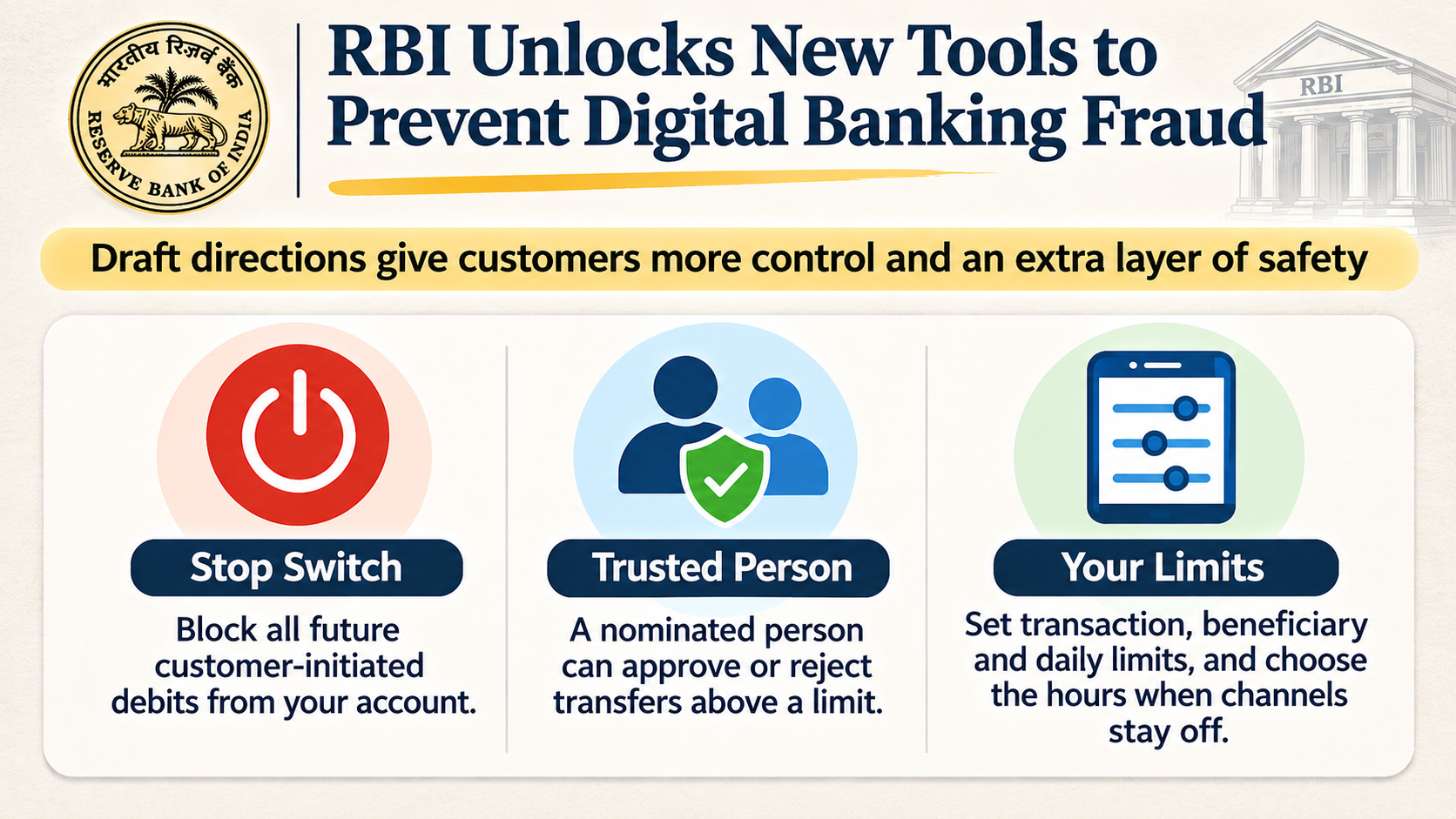
The draft, issued on Monday, would let customers disable digital channels and set limits per transaction, per beneficiary and per day. A Stop Switch would block all outward customer-initiated debits, bar new mandates and stop UPI being registered on new third-party apps. A voluntary Trusted Person Mechanism would require a second approver, within one hour, for transfers above a threshold the customer sets. Comments are open until December 14, and implementation is proposed from July 1, 2027.

Several features deserve credit. Channels would be disabled by default at onboarding, and a newly enabled channel would face a 24-hour ceiling on transfers. Banks that fail to provide these tools would be treated as negligent. A trusted person who stays silent counts as a rejection, which is the right default.

The flaws are plain. The RBI's own discussion paper says nearly 92 per cent of the value of reported digital frauds lies above Rs 50,000. The paper does not say whether that counts individual transactions or the total lost in each complaint, but either reading points to losses concentrated in higher-value cases. Yet the Trusted Person Mechanism excludes UPI altogether, though the April paper exempted only merchant payments. The mechanism does cover the other rails, but the band between Rs 50,000 and the UPI ceiling is left bare. A Rs 90,000 fraud carried out by UPI would never reach the second approver. The mechanism also acts on a single transaction, so a transfer split into smaller payments can stay under any threshold.

The deeper flaw is who must act. There are two philosophies of consumer protection. One gives customers tools and makes them responsible for switching them on. The other designs the system so that vulnerable customers are protected even when they do nothing. The draft leans towards the first. Defaults protect new customers, but existing ones must opt in. In April the RBI floated making the trusted-person check mandatory for citizens aged 70 and above and for persons with disabilities. The November draft makes it voluntary for all, and does not say why.

A customer who knows about these mechanisms and has the skill to activate them is far less likely to fall for a fraudster in the first place. The majority for whom the safeguards are designed will either never hear of them or lack the technical ability to start them. The draft's extra checks for vulnerable customers apply only when an enrolled customer tries to leave the mechanism.

One more gap matters. The draft prescribes a 24-hour cooling period for changing the trusted person or the mechanism's threshold, and lets banks impose one before a channel is re-enabled. It prescribes none before a customer raises an ordinary transaction limit, which is the first thing a scammer on the phone will demand.

The RBI should use the consultation to fix this. It should explain the UPI exclusion and consider bringing person-to-person UPI payments within the mechanism when either a single transaction or cumulative daily outflow crosses the customer's threshold. It should revisit the mandatory check for those aged 70 and above and for persons with disabilities. It should require a cooling period before any protective limit is raised. And it should make banks report how many customers have actually activated these tools.

Reported digital payment frauds rose from 2.6 lakh in 2021 to 28 lakh in 2025, according to National Cyber Crime Reporting Portal figures cited in the RBI's discussion paper. A regulator facing numbers of that scale cannot rely on customers to protect themselves. The final directions must protect the customer who never touches a setting.