

The Spokesperson Who Ran Out of Things to Defend
 Linus tackles things head-on. He takes sides in his analysis and it fits excellently with our editorial policy. No 'maybe's' and 'allegedly' for him, only things in black and white.
View all posts by this Author
Linus tackles things head-on. He takes sides in his analysis and it fits excellently with our editorial policy. No 'maybe's' and 'allegedly' for him, only things in black and white.
View all posts by this Author
By Linus Garg
First publised on 2026-07-31 15:21:43
About the Author
Linus tackles things head-on. He takes sides in his analysis and it fits excellently with our editorial policy. No 'maybe's' and 'allegedly' for him, only things in black and white.
View all posts by this Author
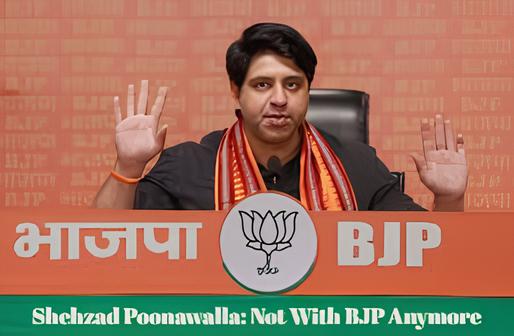
Shehzad Poonawalla has resigned as BJP national spokesperson, and true to the times, the resignation letter took a back seat to the bio edit. On July 31, 2026, he updated his X bio, stripping out any mention of the BJP and recasting himself as a lifelong follower of Prime Minister Narendra Modi. No press conference, no farewell op-ed explaining eighteen years of loyalty in retrospect. Just a quiet subtraction from a text field, the modern equivalent of a resignation letter slipped under the door.
The party, for its part, has said nothing. No official explanation has yet come from either Poonawalla or the BJP. His Instagram bio, in one of those small comedies bureaucratic inertia specialises in, still calls him National Spokesperson â apparently the news travelled to Twitter before it reached his own admin panel.
What we do have is a version of events fed to sympathetic outlets. Poonawalla has reportedly said he intended to step back from active politics after the 2024 Lok Sabha win, but stayed on to help the party through Delhi, Maharashtra and West Bengal. It is the standard exit narrative of Indian politics: not pushed, merely tired; not sidelined, merely fulfilled. Whether that account survives scrutiny from the reporters he spent years sparring with on television is another matter.
There is a symmetry here worth noting, if only because Poonawalla built a career on symmetry-noting. He entered the BJP in 2017 after a public and bitter break with the Congress, and that earlier rupture cost him his own family, with brother Tehseen Poonawalla publicly distancing himself from him at the time. Having now exited two major political parties within a decade, Poonawalla fits a familiar type in contemporary politics: the spokesperson-as-personality, whose relationship with a party is measured as much in television appearances as in organisational work, and who can therefore unwind that relationship just as publicly.
The one throughline he has preserved, carefully, in the edit: the Prime Minister's name stays in the bio even as the party's does not. In politics, biographies are rarely autobiographical; they are signalling devices. This one signalled exactly what Poonawalla wanted people to notice.