

Top Finish & 90M: Why Not Both
 Editor-in-Chief of indiacommentary.com. Current Affairs analyst and political commentator. Author of Cyber Scams in India, Digital Arrest, The Money Trap and The Human Hack
View all posts by this Author
Editor-in-Chief of indiacommentary.com. Current Affairs analyst and political commentator. Author of Cyber Scams in India, Digital Arrest, The Money Trap and The Human Hack
View all posts by this Author
By Sunil Garodia
First publised on 2026-07-27 03:10:01
About the Author
Editor-in-Chief of indiacommentary.com. Current Affairs analyst and political commentator. Author of Cyber Scams in India, Digital Arrest, The Money Trap and The Human Hack
View all posts by this Author
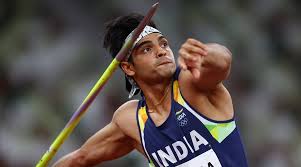
Neeraj Chopra has said, ahead of his Commonwealth Games campaign in Glasgow, that winning a title matters more to him than breaching the 90m mark. It is a defensible thing for an athlete to say, and it has the added virtue of being true within its own frame. A gold medal without 90m is indeed better than a fourth-place finish with it. But the frame itself is the problem, because it treats podium finish and big distance as a trade-off, as though an athlete must choose one at the cost of the other. That may have been a reasonable position to hold in 2018, when a throw in the mid-80s was enough to beat most fields on the planet. It is a considerably harder position to defend in 2026, when it is not.
The numbers speak for themselves. Rumesh Pathirage walks into these Games with a world lead of 92.62m this season. Arshad Nadeem, the reigning Olympic champion, has demonstrated that 92m is well within his competitive range, in a way that used to be true of Chopra's own throws at the mid-80s level. Anderson Peters and Keshorn Walcott, both former world champions, round out a field where 90m is no longer a personal milestone to be savoured once and mentioned in every subsequent interview, but a floor that separates contenders from also-rans. Chopra's own personal best remains 90.23m, achieved at Doha in 2025 and not touched since. In a field throwing what this one is throwing, a top finish and a big distance are converging into the same requirement, not diverging into separate ones.
This is not a new observation from this column. When Chopra finished eighth at the World Championships in Tokyo last year, breaking a streak of 26 consecutive top-two finishes, the argument here was that talent without progression turns stale fast, and that champions are defined by how they respond to a plateau rather than by the plateau itself. Zurich, before that, had already shown Julian Weber crossing 91m twice in the same competition while Chopra searched for a throw he could not locate. The pattern each time was the same: the rest of the world was not waiting for Chopra to rediscover his best days, it was building a new normal that made yesterday's personal best look like today's qualifying mark.
What has changed since those pieces is not the trend but the vocabulary Chopra now uses to describe it. Where once the gap looked like a temporary dip to be corrected with better conditioning, it is now being reframed as a matter of priorities, an explicit ranking in which distance comes second. Whether intentionally or not, that reframing also reduces the pressure of chasing a number immediately after a lengthy injury layoff. It also protects him from the trap of chasing a single mark at the cost of tactical composure on the day. Both of those are legitimate concerns for a 28-year-old managing an ageing body through a packed international calendar. But the reframing does not change what the scoreboard will actually demand of him in Glasgow, where Pathirage and Nadeem are not going to lower their standards out of respect for Chopra's stated priorities.
One possible reading is that emphasizing titles over distance also shields an athlete from being judged against a benchmark he has yet to reproduce consistently. Chopra has offered this framing before, most notably after Doha, when he called 90m just a number and medals the only thing that matters. That framing survived largely because it did not have to be tested against a field throwing 92m with any consistency. It is being tested now.
None of this is an argument that Chopra should throw recklessly for distance at the cost of the podium. It is an argument that the distinction he is drawing between the two has a shrinking shelf life. The generation of javelin throwers now sharing his field, several of them Asian and several of them younger, have simply stopped treating 90m as the outer edge of ambition. For Chopra to keep describing it as optional is not humility, it is a mindset that risks calcifying just as the sport around him raises its own floor. He has the technique and the medal cabinet to earn the benefit of the doubt for one more season. The sport has already raised its standard. Whether Chopra raises his with it will determine not whether he reaches another milestone, but whether he remains one.