

Beyond the Podium: What Glasgow 2026 Really Told Us About Indian Sport
 Holding an extreme view and carting the ball out of the park is what interests him most. He is a hard hitter at all times. Fasten your seatbelts and read.
View all posts by this Author
Holding an extreme view and carting the ball out of the park is what interests him most. He is a hard hitter at all times. Fasten your seatbelts and read.
View all posts by this Author
By Slogger
First publised on 2026-08-03 07:55:09
About the Author
Holding an extreme view and carting the ball out of the park is what interests him most. He is a hard hitter at all times. Fasten your seatbelts and read.
View all posts by this Author
There is a particular kind of medal tally that rewards a closer look than a glance. India's campaign at the Glasgow 2026 Commonwealth Games, which wrapped up on the 2nd of August, is exactly that. On the surface, the numbers are respectable but unspectacular: thirty-nine medals, thirteen of them gold, good enough for fourth place on the overall standings. Scratch beneath that surface, though, and a more interesting story emerges - one about a sporting nation quietly redrawing its own map.
To understand why this result matters, you have to understand what India was working with. The Glasgow edition trimmed its sporting programme considerably, and the cuts fell squarely on India's traditional strongholds. Wrestling, badminton, table tennis, hockey, shooting - the disciplines that have filled Indian trophy cabinets at Commonwealth Games for decades - were simply not on the card this time. For a contingent that has often built its medal tallies on the back of these sports, this should have been a diminished Games. Instead, India found other ways to win.
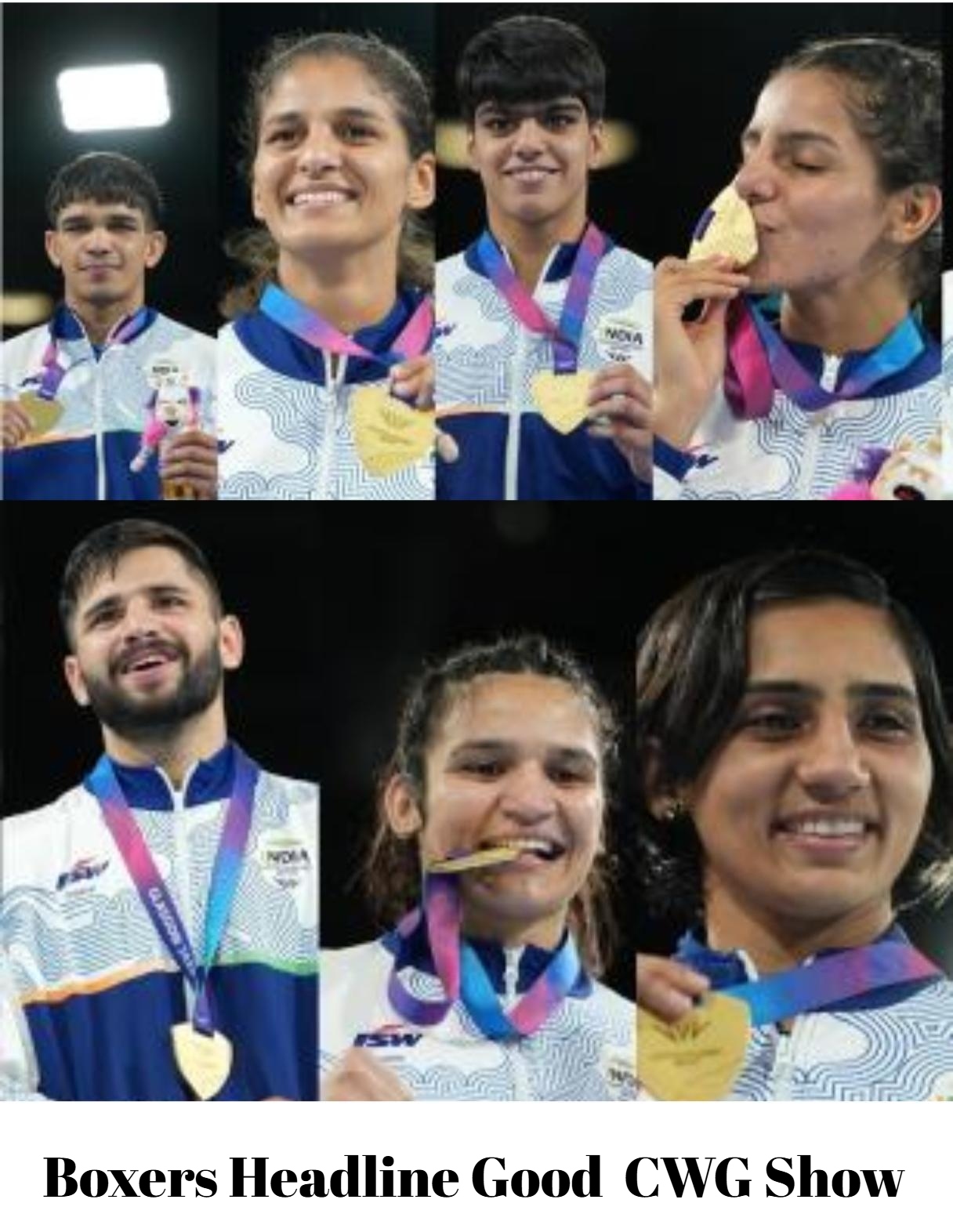
Chief among them was the boxing ring. India's boxers didn't just contribute to the medal count, they defined it. Ten medals came from the sport alone, including seven gold - the most golds any nation has ever won in boxing at a single Commonwealth Games. That is not a modest statistic to tuck into a footnote; it is the kind of number that boxing federations elsewhere will be studying closely. Athletics and weightlifting rounded out the effort with ten and eight medals respectively, giving India a genuinely three-legged campaign rather than one built around a single discipline.
There was a human story running underneath the medal count too, and it belonged largely to India's women. Eight of the country's thirteen gold medals were won by female athletes, a detail the Indian Olympic Association was quick, and right, to celebrate. Sakshi Chaudhary's emergence as one of the breakout stars of the Games, and Lovlina Borgohain's silver in the women's 75kg boxing category, were two of many threads in that narrative. This wasn't a token showing by a handful of individuals; it was a wide, structural presence that suggests something has genuinely shifted in how Indian sport develops its women athletes.
But if one storyline deserves to travel furthest beyond the headlines, it is India's para-sport campaign. In Glasgow, the para contingent won seven medals - three gold, two silver, two bronze - a haul that matches everything India had won across every previous Commonwealth Games combined. Six of those seven came from para athletics alone, ending a two-decade wait for an Indian podium finish in the discipline. There were even double podiums, in the men's 100m T47 and in both the men's and women's shot put F57. For a programme that has historically operated in the shadows of India's able-bodied sporting effort, this was less an improvement than an arrival.
So what does all this add up to, looking past the closing ceremony toward the next cycle?
The most obvious takeaway is that India's medal-winning identity is diversifying. For years, the country's Commonwealth Games story has been inseparable from shooting ranges and wrestling mats. Glasgow suggests boxing rings and athletics tracks now belong in that sentence too - not as occasional contributors, but as reliable engines of gold. That is a meaningful shift in how India's sporting establishment should think about investment and talent pipelines going forward.
The second is that the women's programme has stopped being an exception worth remarking on and started becoming the default expectation. When more than sixty percent of a country's gold medals come from its female athletes, that is not a coincidence born of a few gifted individuals - it points to coaching systems, grassroots pipelines, and institutional support finally catching up to talent that was always there.
The third, and perhaps most consequential, is the para-sport breakthrough. Matching two decades of cumulative medals in a single Games is the kind of result that either becomes a turning point or gets filed away as a pleasant surprise. Which of those it becomes will depend entirely on what happens between now and the next major para event - whether the investment that produced Glasgow's six para-athletics medals is sustained, or whether this remains a one-off high point.
And then there is the uncomfortable question sitting just outside the celebration: what happens when shooting, wrestling, badminton, table tennis and hockey return to the programme, as they likely will at some point? India's federation will have every reason to lobby hard for their reinstatement, because those sports remain the country's deepest wells of Commonwealth Games medals. Glasgow proved India can find gold without them. It did not prove India no longer needs them.
In the end, Glasgow 2026 will probably be remembered less for where India finished and more for how it got there. A campaign built on a boxing revolution, a women-led golden run, and a para-sport awakening is not the story of a country simply retaining its old strengths. It is the story of a country discovering it has new ones - and that, more than any single number on a medal table, is what will shape how India performs when the Commonwealth Games are next held in Amdavad in 2030.