

BJP And Akali Dal Reunite: Electoral Arithmetic Is Easier Than Winning Punjab's Trust
By A Special Correspondent
First publised on 2026-11-26 01:07:35
About the Author

The reunion of the Bharatiya Janata Party (BJP) and the Shiromani Akali Dal (SAD), six years after their bitter separation over the farm laws, has changed the political equation ahead of the 2027 Punjab Assembly elections. The two parties, which governed Punjab together for 15 consecutive years, are attempting to revive a partnership that once appeared indispensable to the state's politics. But while the electoral arithmetic may favour their coming together, winning back the trust of voters is a considerably bigger challenge.
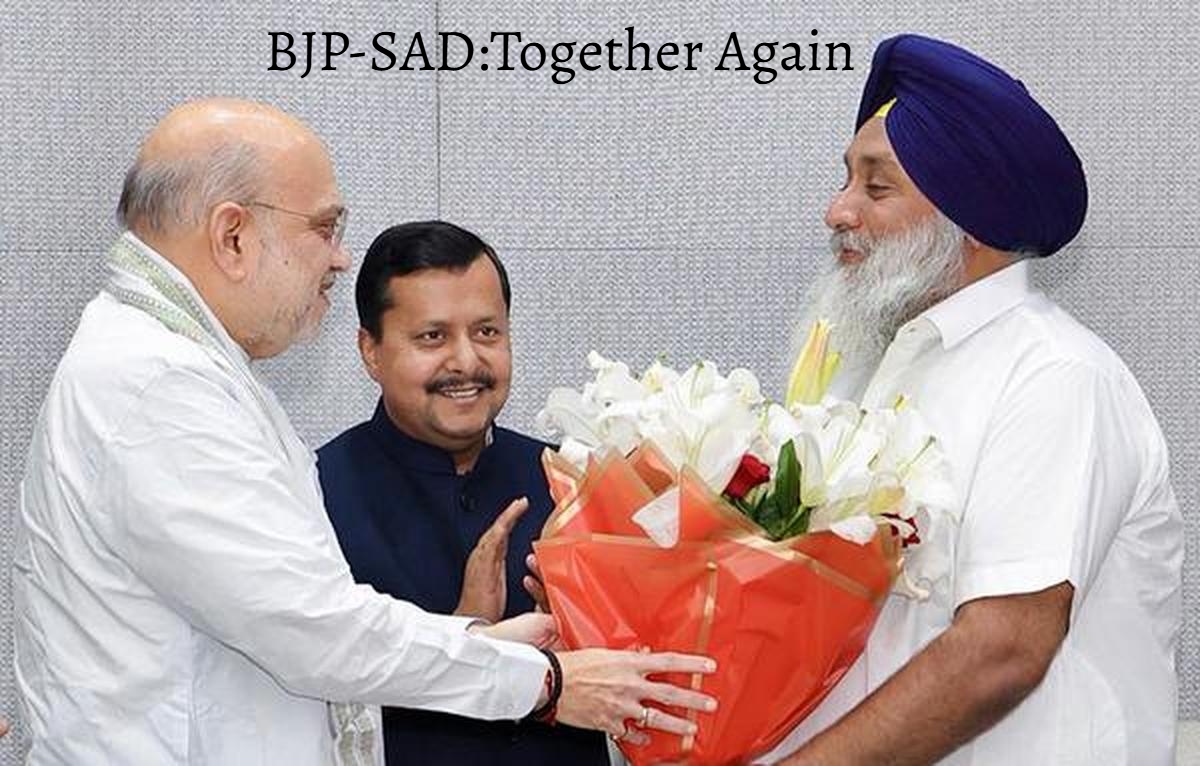
The announcement on November 24, made in the presence of Union Home Minister Amit Shah, BJP president Nitin Nabin and SAD president Sukhbir Singh Badal, marks the return of the Akali Dal to the NDA. More significantly, Shah has publicly described the SAD as the senior partner and indicated that the Chief Minister's post would go to the Akali Dal if the alliance comes to power. The message is clearly intended to reassure the regional party that this is not a BJP takeover disguised as an alliance.
Both parties need each other
The reasons for the reunion are not difficult to understand. The Akali Dal has suffered a serious erosion of its traditional support base, while the BJP has struggled to establish itself as a major political force beyond its urban constituencies in Punjab.
The two parties complemented each other during their long partnership. The SAD had considerable influence among rural Sikhs, particularly the Jat Sikh community, while the BJP enjoyed support among urban Hindus and traders. Their alliance also served as a political bridge between the state's two major communities.
Their separation in September 2020, following the Akali Dal's withdrawal from the NDA over the three farm laws, damaged both parties. The laws were repealed in November 2021, but the political consequences of the confrontation lingered.
The 2022 Assembly election exposed their weakness. The Aam Aadmi Party swept to power with 92 of the 117 seats, while the SAD was reduced to three seats and the BJP managed just two. The Congress, despite its own decline, won 18 seats. Neither former ally was remotely close to challenging the new political order.
The 2024 Lok Sabha election offered little encouragement. The BJP failed to win a single seat in Punjab, while the SAD managed only one. The reunion is therefore as much about political survival as it is about electoral ambition.
For the BJP, the Akalis offer access to rural constituencies and sections of the Sikh electorate where the party has struggled to make inroads. For the SAD, the BJP brings organisational resources, a national political platform and the advantage of having a government at the Centre. Their strengths are complementary, but whether they can be converted into a common vote bank remains uncertain.
Seat-sharing will be the first test
The old arrangement, under which the SAD contested 94 seats and the BJP 23, is unlikely to be repeated. The BJP has expanded its organisational presence since the split and is now seeking approximately 42 to 45 seats, leaving around 72 to 75 for the Akalis, according to reports on November 25.
The arrangement would represent a substantial increase in the BJP's share. While Amit Shah's assurance about the Chief Minister's post has given the SAD an important concession, the distribution of constituencies could create resentment among leaders and workers of both parties.
The BJP has its own ambitious state leadership and potential candidates in constituencies traditionally contested by the Akalis. Similarly, the SAD will be reluctant to surrender too much ground after having been publicly acknowledged as the senior partner.
The two parties have indicated that winnability will be the principal consideration. That sounds reasonable, but deciding which candidate is more likely to win in a constituency where both parties have an established presence could prove contentious.
The farmers' question cannot be wished away
The biggest political vulnerability of the alliance remains the farmers' movement. The SAD walked out of the NDA in 2020 in opposition to the farm laws, but the party's subsequent electoral performance demonstrated that its decision did not automatically restore the confidence of farmers.
The BJP, meanwhile, continues to face resistance among sections of the farming community. The repeal of the laws removed the immediate controversy but did not resolve broader concerns about agricultural profitability, minimum support prices, procurement and farm indebtedness.
The Akali Dal will have to explain how it can once again share political space with the BJP without compromising the position it adopted during the agitation. Merely invoking the repeal of the laws will not be enough. Farmers will expect concrete assurances and a credible programme addressing the future of agriculture in Punjab.
There are also sensitive Panthic issues, including the release of Sikh prisoners commonly referred to as Bandi Singhs, which could influence the Akali Dal's standing among sections of the Sikh electorate. The alliance will need to demonstrate that these concerns are being addressed rather than pushed aside for electoral convenience.
AAP and Congress face a changed contest
The immediate political challenge is for the AAP government led by Bhagwant Mann. The party's spectacular 2022 victory was built on the promise of an alternative to traditional Punjab politics. It must now defend its record on employment, drugs, law and order, agricultural distress and the state's financial condition.
A united BJP-SAD combine could make that task more difficult by offering voters an alternative with an established political history and complementary organisational strengths. It could also consolidate anti-incumbency votes that might otherwise be divided.
The Congress, too, will have to reassess its strategy. It remains a significant political force in Punjab, but internal cohesion and leadership will be critical if it hopes to prevent the reunited alliance from emerging as the principal challenger to AAP.
The contest may not, however, remain a straightforward three-way battle. Smaller political formations, including Waris Punjab De and factions of the Akali Dal, could influence the outcome in constituencies where religious identity, regional issues and local loyalties carry considerable weight.
A reunion is not a guarantee of revival
The BJP-SAD partnership undoubtedly makes the 2027 election more competitive. It brings together two parties with a history of governance and complementary electoral constituencies. It also gives the Akalis a route back into national politics while offering the BJP an opportunity to expand its reach in rural Punjab.
But electoral alliances are not mathematical exercises in which the vote shares of two parties can simply be added together. Voters who supported the BJP in urban constituencies may not necessarily support an Akali candidate, just as traditional Akali voters may not automatically accept the BJP's political agenda.
The Akali Dal must recover credibility among farmers and sections of the Sikh electorate. The BJP must demonstrate that its relationship with the farmers of Punjab has genuinely moved beyond the bitterness of 2020. Both must also ensure that their cadres work together rather than compete against each other.
The reunion has restored an old political arrangement. It has not restored the circumstances that once made that arrangement successful.
For the BJP and the Akali Dal, putting their differences aside was the easier part. Convincing Punjab's voters to do the same will determine whether this alliance becomes a genuine political revival or merely an exercise in electoral necessity.