

Seven Days To Reply, Five And A Half Hours To Fly
 Editor-in-Chief of indiacommentary.com. Current Affairs analyst and political commentator. Author of Cyber Scams in India, Digital Arrest, The Money Trap and The Human Hack
View all posts by this Author
By Sunil Garodia
First publised on 2026-11-26 03:07:12
About the Author
Editor-in-Chief of indiacommentary.com. Current Affairs analyst and political commentator. Author of Cyber Scams in India, Digital Arrest, The Money Trap and The Human Hack
View all posts by this Author
The government owes the country a proper explanation for stopping Saurav Das. It has named a procedure. It has not accounted for the timing, and on that question the whole controversy turns.
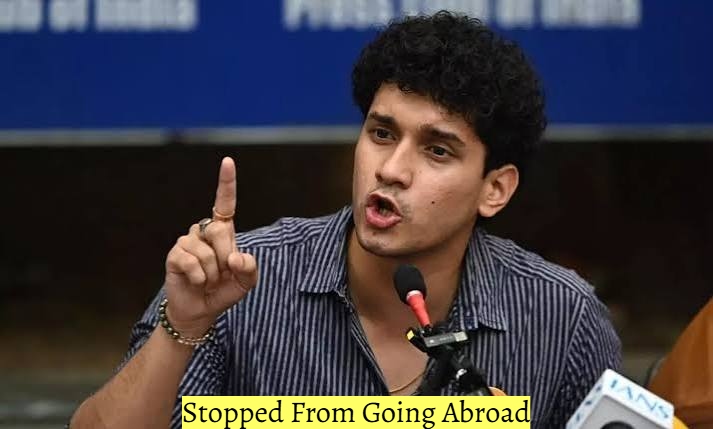
The sequence is stark. The Regional Passport Office in Chennai emailed Das a show-cause notice at 7.30 pm on November 23. His flight to London was due to leave at 1 am, and immigration officials at Delhi airport did not let him board. The Cockroach Janta Party leader was travelling to Britain to participate in an Oxford Union event and other engagements involving student organisations and academic institutions.
The notice says the office has inputs that the place of birth in his August 2019 application is incorrect. It says the passport may have to be impounded for suppression of material facts. It gives him seven days to reply with documents. He is also "advised not to use this passport till submission of response".
What the MEA has said
MEA spokesperson Randhir Jaiswal said on November 25 that the notice followed reports from law enforcement authorities. He described it as established procedure when a discrepancy comes to notice. Asked why this had surfaced seven years after the passport was issued, he replied in substance that it had come to light now and so the notice was issued.
That answer explains nothing. It does not say when the report reached the passport office. It does not say which agency sent it or what set off the inquiry. A date of receipt is a simple fact, and the government can disclose it without compromising any investigation.
There is a possible trigger on the public record. On October 30, the Madras High Court issued notice to Das on a public interest petition filed by a businessman, R. Ganesh Kumar. The petition asked the Union Home Ministry to examine his nationality and to cancel his passport and Aadhaar if he was found not to be a citizen. If this case set the inquiry in motion, the government should say so.
It must then explain the next 24 days. Why was no notice sent earlier in November? Why did it arrive on the very evening of his departure? Did the authorities know of the Oxford invitation when they sent it? These are questions of fact, and the files will answer them. The citizen cannot be expected to establish arbitrariness when the chronology and decision-making records are exclusively in the government's possession.
What the law requires
Section 10(3)(b) of the Passports Act, 1967 allows a passport to be impounded or revoked if it was obtained by suppressing material information or by giving wrong information. The government is fully entitled to examine such an allegation. A false declaration in a passport application is a serious matter, whoever makes it.
But a notice is only the start of that process. A show-cause notice seeks an explanation before a decision is taken, and it is not an order impounding a passport. Nor is an advice not to use a passport automatically a statutory suspension.
Section 10A does permit immediate suspension for up to four weeks, by order. Its text ties that power to likely action under Section 10(3)(c), which covers national security, sovereignty, foreign relations and the general public interest, and it also requires a public interest need. Section 10A(2) further requires the order to be communicated immediately to the concerned airport or immigration authority and to the passport authority.
Das's notice invokes clause (b). On November 25, his counsel told the Delhi High Court that no order or Look Out Circular had been shown to Das when he was stopped. If immigration officials prevented his departure, the government must identify the operative order, direction or other lawful authority. If it relies on Section 10A, it should produce the order and show when it was communicated.
An unnamed senior official reportedly told The Hindu that Das was held back because he had not replied to the notice. The same official spoke of mismatches in his date of birth, place of birth and father's name across documents, while the MEA's public account refers to the place of birth. If the official is right about the reason for the stoppage, a man given seven days to answer was penalised within hours for not answering.
The official's account is unverified. Das has reportedly said he saw the email only after being stopped at the airport. When the notice reached him, and when he read it, therefore remain relevant questions.
The courts have long treated foreign travel as part of personal liberty. The Supreme Court said so in Satwant Singh Sawhney in 1967. In Maneka Gandhi in 1978, it held that the procedure restricting that liberty must be fair, just and reasonable.
Sikandar Khan v. Union of India, decided by the Delhi High Court in 2017, shows what those principles mean in practice. The case arose under clause (c), unlike the present notice. The court set aside an unreasoned suspension, its extension and a vague show-cause notice. It ordered the passport returned and told the authorities not to restrain the petitioner from travelling, while leaving them free to act afresh on credible material.
Why the timing matters
Das says he has travelled abroad since 2019 without being stopped. He alleges that he is being targeted for his role in the CJP, which has been in open confrontation with the government. That allegation is not proof. A notice delivered hours before a politically visible visit will nevertheless invite it, and only facts can dispel it.
CJP leader Ratna Singh, also invited by the Oxford Union, could not make the trip either. Her case is different on the available facts. She has said her British visa was rejected, and that she saw no apparent direct interference in that decision. It should not be counted against New Delhi without evidence.
The MEA should now publish the dates: when the input was received, when it was examined and when the notice was approved. The Home Ministry, which controls immigration, should state the authority under which Das was turned back. The Delhi High Court is due to hear his petition on November 26, and the government should place a complete answer before it. Verification of a passport is lawful work, but its timing and method must withstand scrutiny.