
oppn parties Centre-State Cooperation Is The Need Of The Hour In Delhi

News Snippets

  • Supreme Court questions the continuing relevance of two-child norms. The Court observed that falling fertility rates have weakened the population-control rationale behind laws disqualifying people with more than two children from contesting local body elections. It referred the issue to a larger Bench for consideration
  • Supreme Court declines to shift Tirupati laddu case outside Andhra Pradesh. The Court rejected a plea seeking transfer of the trial, despite arguments that political statements by Andhra Pradesh's Chief Minister and Deputy Chief Minister could affect the fairness of proceedings
  • Supreme Court transfers Azam Khan's fresh ED bail plea to Allahabad High Court. The apex court declined to consider the Samajwadi Party leader's bail request in a fresh Enforcement Directorate case and directed that it be listed before a division Bench of the High Court on November 16
  • Two killed in Delhi building collapse; contractor booked. Two bodies were recovered after a building collapsed in Chawri Bazaar. Delhi Chief Minister Rekha Gupta said the contractor had been booked and the concerned junior and assistant engineers suspended
  • Uttar Pradesh voter rolls show a 2.4-crore discrepancy. A difference of approximately 2.4 crore names has been reported between the state's panchayat and rural Assembly voter lists. The Election Commission has ordered the two sets of rolls to be matched
  • Gujarat announces 3% dearness allowance hike. The state government announced a three-percentage-point increase in dearness allowance for government employees and pensioners ahead of Diwali
  • Sensex and Nifty post their strongest single-day gains in months. The Sensex surged 2,008.61 points, or 2.60%, to close at 79,310.01, while the Nifty 50 climbed 576 points, or 2.40%, to 24,536.60. Financial and automobile stocks led the rally, supported by falling crude prices and renewed foreign investor buying
  • Maaya Rajeshwaran reaches WTA-level quarter-final. The 17-year-old Indian defeated Poland's Weronika Falkowska 6-4, 6-3, becoming the first Indian woman since Sania Mirza in 2012 to reach a quarter-final at a WTA Tour-level singles event
  • Tanvi Patri reaches Youth Olympics badminton final. The 15-year-old defeated Japan's Yuzuno Watanabe in the semi-final, assuring India of a medal and becoming the first Indian badminton player to reach the girls' singles final at the Youth Olympics
  • India beat Pakistan 3-2 in SAFF Championship. India defeated Pakistan in a closely contested match, having led 3-0 before conceding two late goals. The victory was reported as a significant result for India's second-string side
  • India beat Japan 4-1 to win a record sixth Asian Champions Trophy. India recovered from an early deficit to defeat Japan in the final at Mohali, extending its record as the tournament's most successful men's team
  • The Supreme Court issued notice to the Centre and the Election Commission on a petition challenging Section 16 of the Chief Election Commissioner and Other Election Commissioners Act, 2023, which grants the CEC and Election Commissioners protection from legal proceedings for acts performed in their official duties. The petition argues that such blanket immunity could leave citizens without an effective remedy for alleged wrongdoing by the Commission
  • The Supreme Court told voters whose names were deleted from Delhi's draft electoral rolls not to be apprehensive about seeking re-enrolment through Form 6, after the Election Commission assured it that such applicants would not be prosecuted merely because their names had appeared in earlier rolls
  • Congress leader Rahul Gandhi opened the party's campaign for the 2027 Punjab Assembly elections with an Insaaf rally in Sangrur, Chief Minister Bhagwant Mann's home district, accusing the AAP government of failing to control drugs, gangster violence and corruption. Congress president Mallikarjun Kharge outlined six commitments, including a drug-free Punjab, protection of farmers, employment for young people and action against corruption
  • Rahul Gandhi accused the AAP government of running Punjab through a remote control from Delhi and questioned Bhagwant Mann's ability to tackle drug abuse, making personal allegations about the Chief Minister's conduct during their time together in Parliament
Stock markets on fire due to US results, Sensex gains 2008 points to reach its highest level in 8 months
oppn parties
Centre-State Cooperation Is The Need Of The Hour In Delhi

By Sunil Garodia
First publised on 2020-06-15 13:02:17

About the Author

Sunil Garodia Editor-in-Chief of indiacommentary.com. Current Affairs analyst and political commentator. Author of Cyber Scams in India, Digital Arrest, The Money Trap and The Human Hack

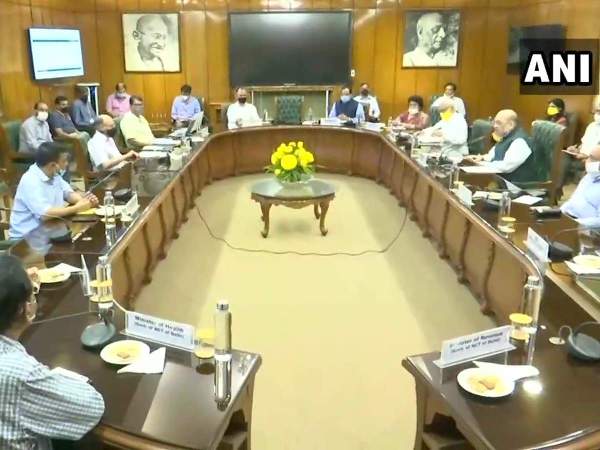
Despite the initial bravado shown by Arvind Kejriwal in tackling the Covid crisis, it is clear that his government has allowed the matter to slip out of its control. But the AAP government alone cannot be blamed for the sorry state of affairs. Given its importance as the national capital and the fact that the Centre handles the policing in the region, the Centre should have kept an eye on the situation. That Home Minister Amit Shah attended the state disaster management authority meeting yesterday and promised all help to the Delhi government is good, but a lot of vital time was wasted by delaying the action. The Delhi government was showing its frustration for a long time now by either sealing the borders or trying to reserve beds in Delhi government hospitals for Delhiites only (it was later quashed by the LG). Kejriwal and his ministers also started making statements that clearly showed that the medical infrastructure in Delhi was not sufficient to cater to the number of cases that were expected to grow exponentially.

That was the time the Centre should have lent a helping hand. The fortnight that has passed since the hospital reservation order has worsened the situation. The Centre will now provide 500 converted railway coaches that will add another 8,000 beds to Delhi's health infrastructure; there will be house-to-house surveys in containment zones for contact tracing; a high-level committee has been constituted to submit a report on rates to be charged by private hospitals for testing and treatment; funerals, cremations and burials will be streamlined and new guidelines will be issued; five senior officials will be deputed by the Centre to help Delhi with the health crisis; a joint Centre-state team will inspect facilities in all Covid-19 hospitals; oxygen cylinders, ventilators and other health supplies will be provided by the Centre. In addition to this, the testing rate will be doubled in two days and tripled in 6 days.

These are all necessary measures and hence welcome. These are extraordinary times and both the Centre and the state government must work together to ensure that the fight against Covid-19 is carried out properly. Every entity has to put in its best effort and hence private hospitals must not think of fleecing patients or making enormous profits. Their participation is vital to ensure that patients do not suffer if beds are not available in government hospitals. The authorities must fix a rate that gives them reasonable profits and make them a part of the fight. If the joint effort of the Centre and the state government bears fruit, it might even act as the new model of federal cooperation in India. The Centre should monitor the situation closely and must be proactive in helping not only the Delhi government but also the other states where the situation is not in control. But the Delhi government, too, has to tighten its belt and do much better than what it has done until now.

picture courtesy: ANI