

Farm Dispute: The Government, Not The Supreme Court, Will Have To Find A Solution
 Editor-in-Chief of indiacommentary.com. Current Affairs analyst and political commentator. Author of Cyber Scams in India, Digital Arrest, The Money Trap and The Human Hack
View all posts by this Author
Editor-in-Chief of indiacommentary.com. Current Affairs analyst and political commentator. Author of Cyber Scams in India, Digital Arrest, The Money Trap and The Human Hack
View all posts by this Author
By Sunil Garodia
First publised on 2021-01-11 09:48:33
About the Author
Editor-in-Chief of indiacommentary.com. Current Affairs analyst and political commentator. Author of Cyber Scams in India, Digital Arrest, The Money Trap and The Human Hack
View all posts by this Author
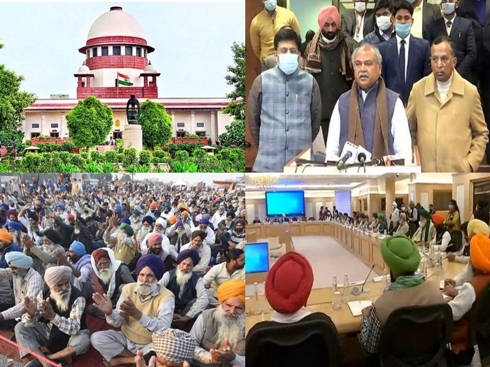
The trick which the government is trying to play with the farm unions by saying that they should approach the Supreme Court if they have any reservations over the new farm laws is not going to work for the simple reason that as of now, the farm unions are not disputing the constitutional validity of the new laws. Their agitation is against the government policy in introducing the laws which they think will adversely affect their livelihoods and their main grouse is that they were not consulted before the new laws were rushed in. These are matters which no court, or even a court-appointed and monitored committee, can settle. These are political matters and will have to be settled politically. The farmers want a complete repeal of the laws and even the Supreme Court has warned the government that it will put the laws on hold if the government does not do so or does not arrive at an amicable settlement with the farm unions.
Eight rounds of talks have yielded nothing. If anything, these talks have resulted in both sides hardening their stands with the government unwilling to repeal the laws and the unions insisting on it. As of now, the issues regarding stubble burning, contentious clauses in the Electricity Bill, clause by clause discussion on the bills and other matters that were initially talked about as being the real problem issues have all receded into the background as the fight has now essentially boiled down to whether the government will repeal the laws in their entirety or not.
Hence, nothing is probably going to work even in the next round of talks that are slated for the 15th of this month. Both sides will again meet only to disagree to agree and leaders from both sides with again issue the same statements. It is clear by now that the government idea of wearing down the protestors is not working and the agitation will go on as long as the bills are not repealed.
So what does the government do in such a situation? It should now do what it failed to do before introducing the ordinances and then the bills. It should indulge in wide consultations with the unions. It should let them know what it wants (although much of it is there in the new bills) and seek suggestions from them on how to go about it. Since it is willing to discuss the new farm laws clause by clause, let it now redraft the laws after suggestions from the unions. If nothing comes out of such an exercise, at least the nation will know that the unions are not only against the new bills but are completely against reforms. Then, the government will be free to break the monopoly of the middlemen from a few states with all the legal ammunition at its command. But it has to listen to the unions first.