

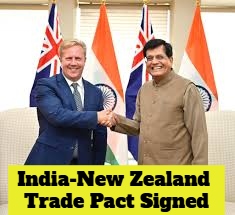
India Signs Trade Pact With New Zealand
By A Special Correspondent
First publised on 2026-04-27 14:00:32
About the Author

India's newly signed free trade agreement with New Zealand is less about ceremony and more about direction. Concluded in under a year, it reflects a country that is growing more comfortable with trade liberalisation, as long as it does not come at the cost of domestic stability. What appears, at first glance, to be a limited bilateral deal carries a wider message about India's evolving economic posture.
The headline feature is simple. Tariffs are coming down sharply on both sides. Indian exporters now get almost complete duty free access to the New Zealand market, removing a barrier that often made them less competitive. Sectors like textiles, leather, engineering goods and processed food stand to gain the most. The opportunity is clear, but so is the pressure. With protection lowered, performance will matter far more than policy.
For New Zealand, the attraction lies in access to a vast and growing consumer base. Its strengths in agricultural products, wool, timber and specialised food exports find a natural market in India. At the same time, India has not thrown open the gates indiscriminately. Sensitive areas such as dairy remain protected, a reminder that political and economic realities still shape how far any agreement can go. It is a cautious opening, not a reckless one.
The more interesting part of the pact lies beyond goods. Provisions around investment, services and professional mobility suggest that both countries are looking at a deeper relationship. For India, this means capital inflows and opportunities for skilled workers. For New Zealand, it offers a foothold in a large, expanding economy and a chance to reduce reliance on a narrower set of trading partners.
In pure numbers, trade between the two countries has been modest. That is precisely why this agreement matters. It is not just about expanding what already exists, but about creating the conditions for something larger to take shape. It also fits into a broader shift in Indiaâs thinking. There is a visible move towards engaging more actively with developed economies through targeted trade deals, rather than standing back out of caution.
There is a strategic layer to this as well. At a time when global trade is becoming more uncertain and supply chains are being redrawn, countries are seeking dependable partnerships. This agreement places India and New Zealand within that framework. It signals a shared interest in stability, diversification and long term economic alignment.
The real test, however, lies ahead. Trade agreements can open doors, but they do not guarantee success. Indian exporters now have better access than before. Whether they can translate that into sustained presence in a competitive market will determine how this deal is judged.
The framework is in place. What follows will depend on how effectively it is used.