
oppn parties The Cockroach and the Constitution

News Snippets

  • Home Ministry confirms ITBP chiefs face-off claim with Chinese troops and says that it happens when the Chinese diverge from established patrolling patterns
  • Voting took place on Friday for 28 Legislative Council seats across Uttar Pradesh, Bihar, Karnataka and Maharashtra, covering graduates’ and teachers’ constituencies. Counting is scheduled for October 27, with the contests attracting attention ahead of the next round of state-level political battles
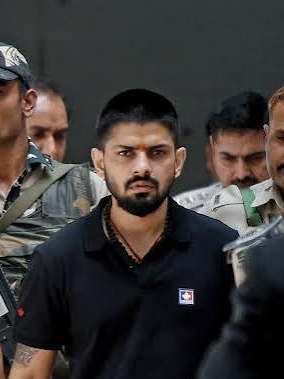
  • Delhi Police detained student activists and civil-society members during a march towards the Election Commission headquarters against the Special Intensive Revision of electoral rolls and demanding Chief Election Commissioner Gyanesh Kumar’s removal
  • The Delhi High Court dismissed a petition by All India Students’ Association president Neha Bora challenging a police notice requiring her to furnish a ₹10,000 personal bond and a surety to maintain peace. The court also directed that the material relied upon by the authorities be furnished to her
  • Kolkata Police arrested two more people, including the treasurer of the Chorbagan Durga Puja committee, in connection with the stampede that killed 19 people on October 17, taking the total number of arrests to nine. West Bengal Chief Minister Suvendu Adhikari said human error was primarily responsible for the Chorbagan stampede, while stressing that the retired judge leading the inquiry would determine the circumstances and findings
  • Haryana’s three-day electricity employees’ strike ended on Friday after Chief Minister Nayab Singh Saini assured union representatives that the government would oppose parallel power-distribution licences for Gurugram and Nuh. Energy Minister Anil Vij said the state would invoke Section 108 of the Electricity Act and seek a review of the regulator’s decision, which had triggered the strike and disrupted power supplie
  • The India Meteorological Department warned that a low-pressure system over the Bay of Bengal could intensify into a cyclone by October 26 and move towards the north Andhra Pradesh–south Odisha coast. The forecast indicated the possibility of thunderstorms and heavy rain in parts of southern West Bengal from October 28, although the system’s eventual intensity and track remained uncertain
  • The Union government proposed changes to its Periodic Labour Force Survey to improve measurement of digital-platform workers and unpaid activities, including caregiving, household production and volunteer work
  • India’s private-sector business activity expanded at its fastest pace in four months in October, according to the preliminary HSBC Purchasing Managers’ Index compiled by S&P Global. The composite index rose to 56.7 from September’s 55.9, driven by stronger services activity, but employment was unchanged, ending a nine-month run of hiring growth
  • The ₹30,213-crore initial public offering of Jio Platforms closed on Friday with an overall subscription of 22.19 times, attracting bids worth approximately ₹4.90 lakh crore. Institutional investors subscribed to their reserved portion 70.55 times, while the issue received more than 13.8 million applications, setting a record for an Indian public offering
  • A dispute over the India–UK trade agreement emerged after a trade association representing major liquor companies asked the Indian commerce minister to clarify whether bulk Scotch whisky imports qualified for the reduced 75% tariff agreed under the pact
  • Indian equity markets fell for a fourth consecutive trading session on Friday, with the Nifty 50 closing at 22,600, down 0.39%, and the Sensex at 73,123.83, down 0.17%. Both benchmarks recorded weekly losses as Brent crude approached $114 a barrel, intensifying concerns about inflation, corporate earnings and imported energy costs
  • Asian Para Games: India collected nine gold medals on the penultimate day to take its medal tally to 114, including 30 gold, 35 silver and 49 bronze, the highest in these games. India remained fourth on the table
  • India defeated Zimbabwe by nine wickets in the first women’s ODI in Vadodara, taking a 1–0 lead in the three-match series. Pratika Rawal scored an unbeaten 100, while Shree Charani claimed career-best figures of 4/23 as Zimbabwe were dismissed for 197 and India reached the target in 27.1 overs
  • Ishan Kishan was ruled out of the second T20 international against New Zealand after sustaining a low-grade strain in his right adductor muscle during the opening match. The BCCI said its medical team was monitoring his recovery but did not specify when he might return
Indo_-Tibetan Border Police chief Shatrujit Kapur says there have been ,utliple face-offs with Chinese troops across the Line of Actual Control
oppn parties
The Cockroach and the Constitution

By Our Editorial Team
First publised on 2026-05-26 10:42:08

About the Author

Sunil Garodia The India Commentary view

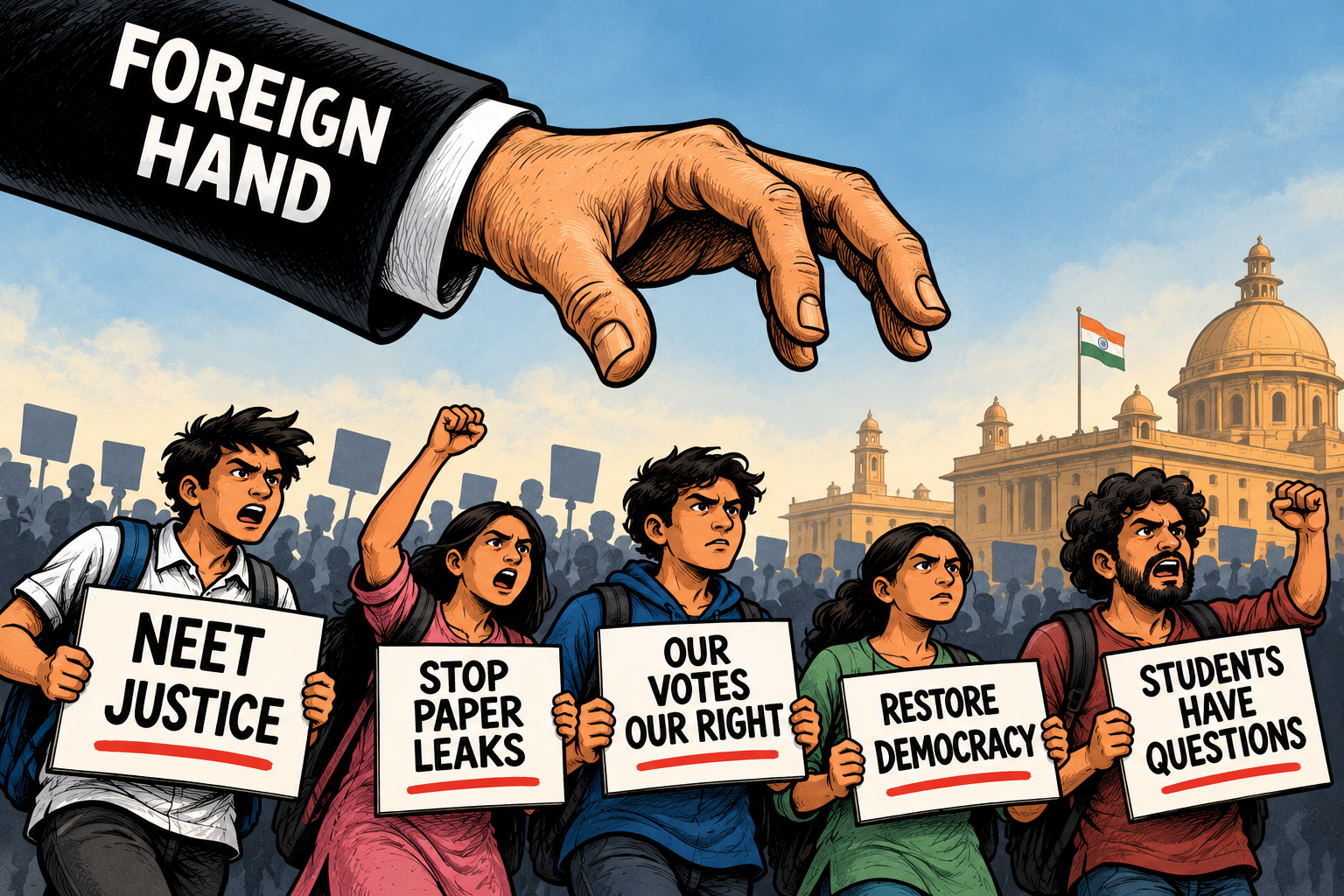
The Chief Justice of India called unemployed youth cockroaches. The government then blocked the satirical party they formed in response, citing national security. Between those two acts lies everything that is wrong with how the Indian establishment currently relates to its own citizens.

Begin with the remark. On 15 May 2026, CJI Surya Kant, irritated by a frivolous petition, said that youngsters who could not find employment or a place in their profession were 'like cockroaches' - some becoming media, some social media, some RTI activists, all of them attacking the system. His clarification the next day - that he had meant only those who enter professions with fake degrees - did not repair the damage. It never does. The word had already travelled at the speed of injury. The clarification followed at the speed of a press note.

The clarification also fails on its own terms. Cockroaches are not corrected or rehabilitated. They are exterminated. That is what the word means. That is what it has always meant. A Chief Justice can legitimately express displeasure at frivolous petitions. He cannot, without institutional cost, describe a class of citizens as vermin - regardless of which subset he subsequently claims he had in mind.

Then came the Cockroach Janta Party. Abhijeet Dipke, a political communications student in Boston, founded it on 16 May. Within four days it had surpassed the BJP and the Congress on social media. Twenty million Instagram followers. Over 350,000 sign-ups. The satire had a demand list - free media, jobs, anti-defection reform - that was not satirical at all. It was a political indictment wearing a costume.

The government's response was to invoke national security. The IB advised the blocking of the CJP's X account. The website was taken down. Accounts were hacked. A PIL sought a CBI probe. The CJI, when the matter came before him, said there was no grave urgency in the CJP petitions. Correct. There was no urgency in them. The urgency was entirely in the government's overreaction.

That overreaction has a context. The Indian establishment has watched Bangladesh's student movement bring down Sheikh Hasina. It has watched Nepal's youth rewrite political arrangements. It knows what a generation of educated, unemployed, digitally organised young people is capable of when it decides it has been patient long enough. The cockroach, as India's intelligence bureau surely knows, is remarkably difficult to exterminate. It has survived conditions that finished off considerably larger creatures.

India's democratic framework has, historically, been capacious enough to absorb dissent and satire without treating them as threats. That capacity is being tested. The Supreme Court exists to protect the constitutional right to free expression - including the right to mock power, to form satirical parties, to call yourself a cockroach if the Chief Justice has already done it for you. When the state invokes national security against a meme party, the problem is not the meme. The problem is the state.

The young will not be exterminated. They will not be fumigated. They will, however, remember who tried.