


The FCRA Amendment Rules Are Not an Escalation. They Are a Confession.
 The India Commentary view
View all posts by this Author
The India Commentary view
View all posts by this Author
By Our Editorial Team
First publised on 2026-07-06 06:34:25
About the Author
The India Commentary view
View all posts by this Author
The Foreign Contribution (Regulation) Amendment Rules, 2026 are being read as a new expansion of executive control over civil society. That reading understates the problem. The rules do not create the discretion the government now holds over which NGOs get to exist. They formalise a discretion the ministry has already been exercising, informally and at enormous scale, for over a decade. The paperwork has simply caught up with the practice.
Home ministry data settles this. Of the 52,159 organisations ever granted FCRA registration since 2012, only 14,455 hold active licences today, 27.7 per cent. The remaining 72.3 per cent have been cancelled outright or allowed to lapse as deemed expired. Nearly 20,000 have lost their licences in the last twelve years alone. A regime that has already extinguished three-quarters of everything it ever approved does not need new rules to exercise control. It needs new rules to make that control look procedural rather than discretionary when challenged.
The state-wise breakdown makes the informality of the existing system harder to defend, not easier. Bihar has cancelled or allowed to expire over 85 per cent of registered organisations, Uttar Pradesh nearly 84 per cent, while Maharashtra retains barely 29 per cent of its registered base. Such disparities suggest enforcement that is far from uniform, whether because of administrative capacity, differing enforcement priorities, or other factors that have never been transparently explained. A law that produces an 85 per cent cancellation rate in one state and a 29 per cent rate in another is not applying one rule twice. It is applying discretion twice, under one name.
The security justification for the sharpest edge of this regime deserves more scrutiny, not less. An Intelligence Bureau dossier is reported to have linked a set of Tamil Nadu NGOs, including some involved in protests against the Kudankulam nuclear project, to foreign non-profits, alleging the protests were engineered to sabotage development. This dossier has functioned for years as a template justification, an unverified, unlitigated intelligence document cited to explain cancellations well beyond the organisations it originally named. If true, the allegations describe criminal conduct that belongs before a court, tested through evidence and cross-examination, not absorbed into a compliance framework governing every NGO irrespective of its work or location. A rule that cannot distinguish between a protest group under intelligence suspicion and a legal aid clinic elsewhere is not a security measure. It is a bureaucratic instrument wearing one, because the justification itself may not survive judicial testing.
None of this means the underlying problem is invented. Foreign money in Indian civil society needs an audit trail, and the 2015 wave of cancellations for failure to report expenditure against declared purpose was a legitimate correction. The real question is not whether the state may regulate foreign funding. It is whether a ministry that has already cancelled three in every four licences it ever issued, unevenly across states, partly on an intelligence dossier never tested in open court, should now get a rulebook letting it pre-classify an organisation's activities and demand its staff's personal social media accounts before any money changes hands.
The 2026 Rules will be defended as tightening what was loose. The more accurate description is that they are writing down, as procedure, what discretion had already decided as practice. If that discretion has been exercised informally for years, scrutiny cannot stop with the 2026 Rules. It must also extend to the thousands of cancellations that preceded them.
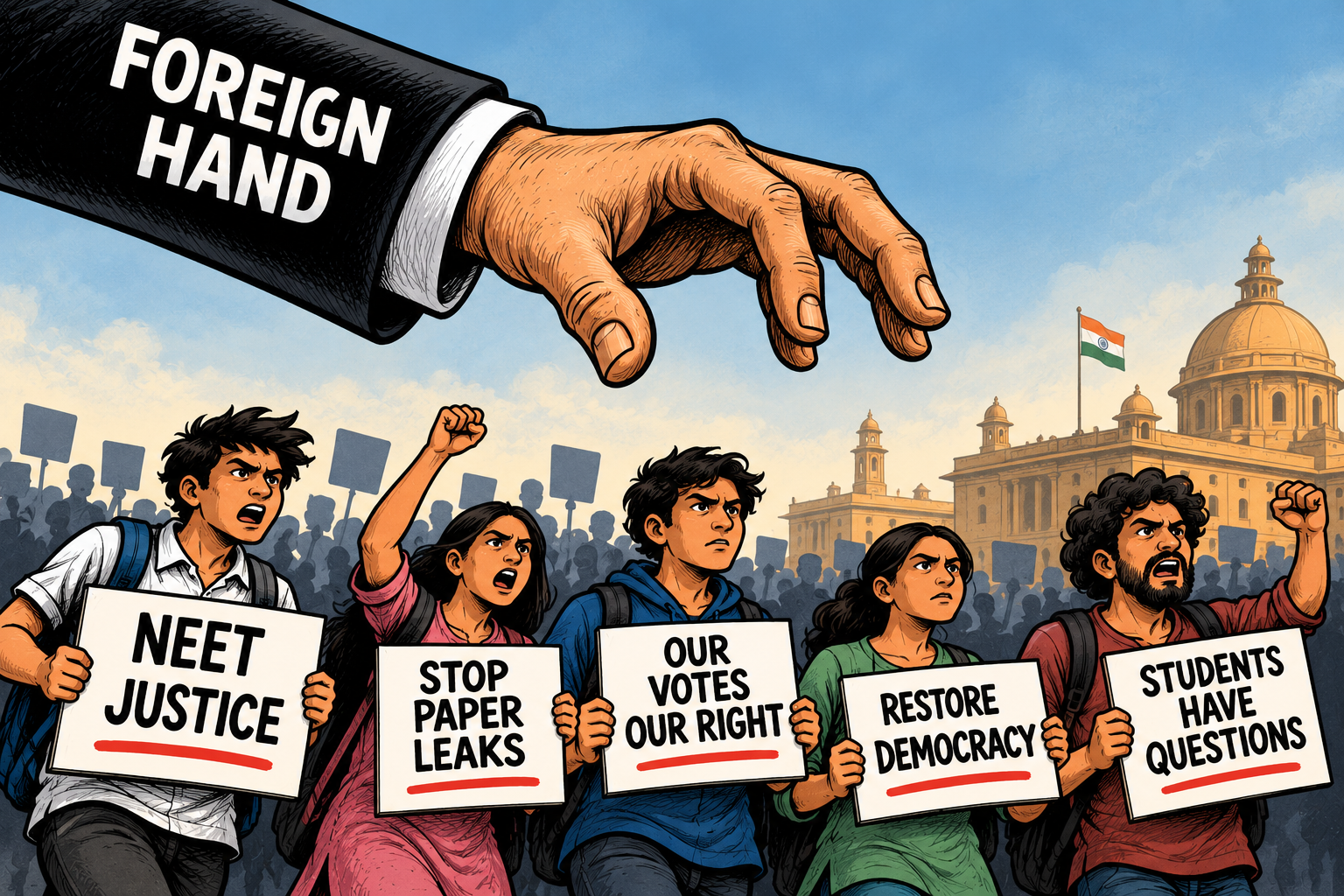
The lead image is AI-generated