

When Free Money Comes With a Link, Be Suspicious
 Editor-in-Chief of indiacommentary.com. Current Affairs analyst and political commentator. Author of Cyber Scams in India, Digital Arrest, The Money Trap and The Human Hack
View all posts by this Author
Editor-in-Chief of indiacommentary.com. Current Affairs analyst and political commentator. Author of Cyber Scams in India, Digital Arrest, The Money Trap and The Human Hack
View all posts by this Author
By Sunil Garodia
First publised on 2026-06-18 07:57:22
About the Author
Editor-in-Chief of indiacommentary.com. Current Affairs analyst and political commentator. Author of Cyber Scams in India, Digital Arrest, The Money Trap and The Human Hack
View all posts by this Author
A message arrives on your phone. It appears professional. It carries a logo. It claims to come from a trusted bank. Most importantly, it promises money.
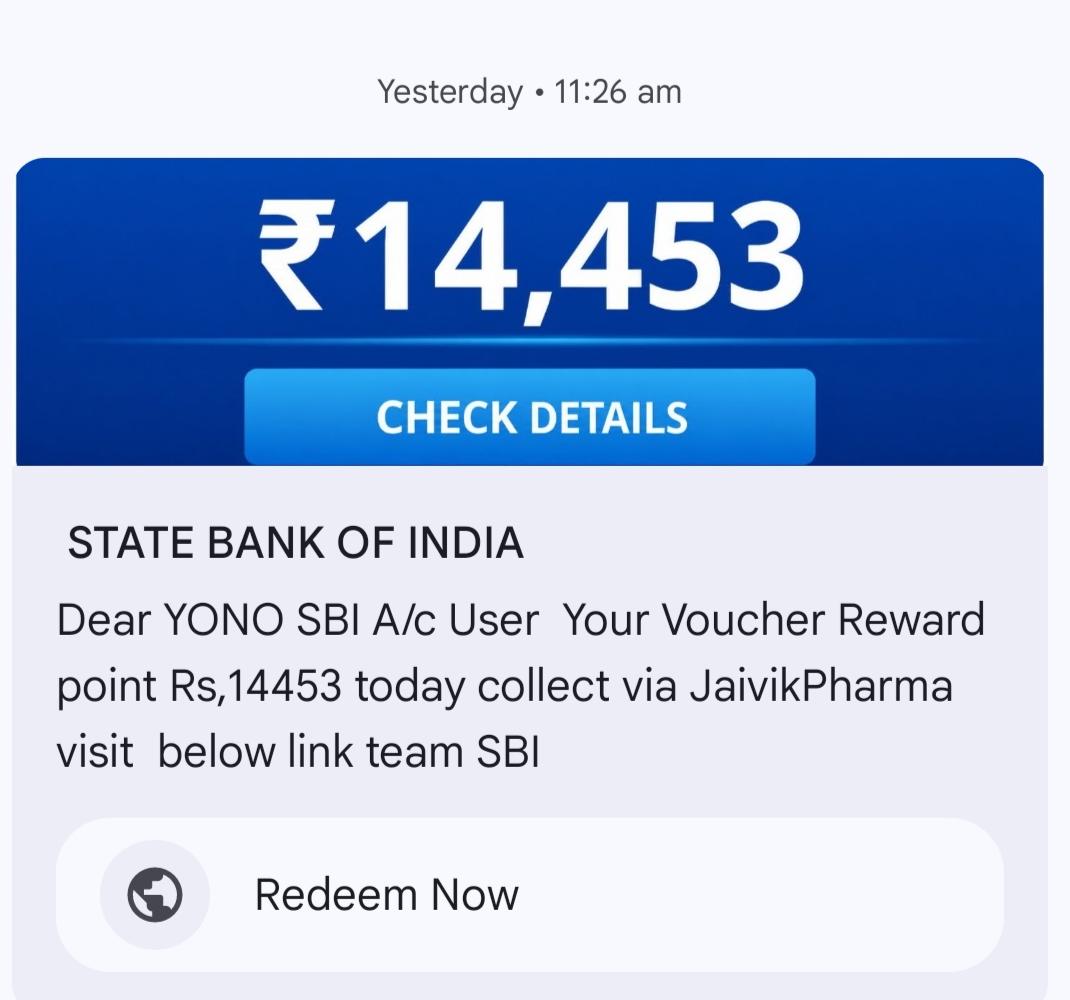
"Dear YONO SBI A/c User. Your Voucher Reward Point Rs 14,453 today collect via link below."
For many people, the temptation is immediate. A single tap could supposedly unlock thousands of rupees in rewards. In reality, that tap may be the beginning of a financial nightmare.
The latest wave of phishing scams no longer relies on crude SMS messages filled with spelling mistakes. Fraudsters are increasingly exploiting Rich Communication Services (RCS), a messaging technology that makes messages appear more legitimate through branded profiles, logos, and interactive buttons. To the average consumer, these messages can look indistinguishable from genuine communications.
The scam follows a familiar pattern. The victim receives a message claiming that reward points, vouchers, cashback, tax refunds, or account benefits are waiting to be claimed. A link or button invites immediate action. Once clicked, the victim is directed to a fake website designed to resemble that of a bank, payment platform, or government agency. The site then harvests credentials, card details, OTPs, or installs malicious software.
The psychology behind the fraud is simple. Scammers know that fear and greed are powerful motivators. Traditional phishing messages often relied on fear: account suspension, KYC expiry, blocked services. The newer generation relies on greed. Instead of threatening losses, it promises gains.
The example above illustrates several warning signs. The message originates from an entity unrelated to banking. The language is awkward and unprofessional. The reward amount appears unusually large. Most importantly, the recipient is asked to claim the benefit through an external link rather than through the official banking application.
Consumers should remember a basic rule. Banks do not distribute rewards through random third-party links. Legitimate reward points, vouchers, and cashback offers can always be verified directly through the bank's official application, website, or customer service channels.
The rise of such scams also exposes a broader challenge. Digital trust is becoming easier to manufacture. Logos can be copied. Brand names can be imitated. Verification badges can create a false sense of security. As communication platforms become more sophisticated, consumers may assume that messages appearing professional must also be genuine.
That assumption is dangerous.
The safest response to any unsolicited reward message is simple: do not click. Open the official banking app independently and check whether the offer exists. If it does not appear there, it almost certainly does not exist anywhere else.
Cyber fraud increasingly succeeds not because technology fails, but because trust is manipulated. In the battle against digital scams, scepticism remains one of the most effective security tools available to ordinary citizens.
Before tapping that attractive "Redeem Now" button, ask a simple question: if someone is really giving away Rs 14,453, why are they so desperate for me to click a link first?