Bengal: Let the Left Book Stalls Be
 Editor-in-Chief of indiacommentary.com. Current Affairs analyst and political commentator. Author of Cyber Scams in India, Digital Arrest, The Money Trap and The Human Hack
View all posts by this Author
By Sunil Garodia
First publised on 2026-10-20 04:34:24
About the Author
Editor-in-Chief of indiacommentary.com. Current Affairs analyst and political commentator. Author of Cyber Scams in India, Digital Arrest, The Money Trap and The Human Hack
View all posts by this Author
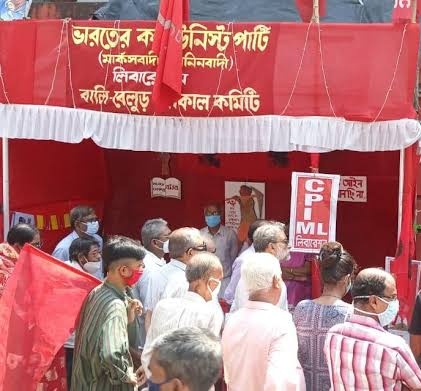
Every Bengali knows the sight. Outside the pandal, past the food stalls and the balloon sellers, a table with a red cloth, Marx, Lenin and Tagore in cheap editions, and a volunteer ready to argue politics with anyone who stops. For decades, this has been part of the pujo landscape, as ordinary as the dhaak. It is now being treated as a threat.
This follows the campus confrontations at Jadavpur University and the Satyajit Ray Film and Television Institute. At SRFTI, students said they felt unsafe after attacks by right-wing groups on two consecutive Sundays. The same atmosphere has now reached the pavement. BJP workers allegedly vandalised an under-construction book stall in Dhakuria, days after Chief Minister Suvendu Adhikari urged Durga Puja committees to deny the Left space. A local leader of the CPI(ML) Liberation said his party had run a stall at the Dhakuria bus stand since at least 1985, and he was injured in the incident.
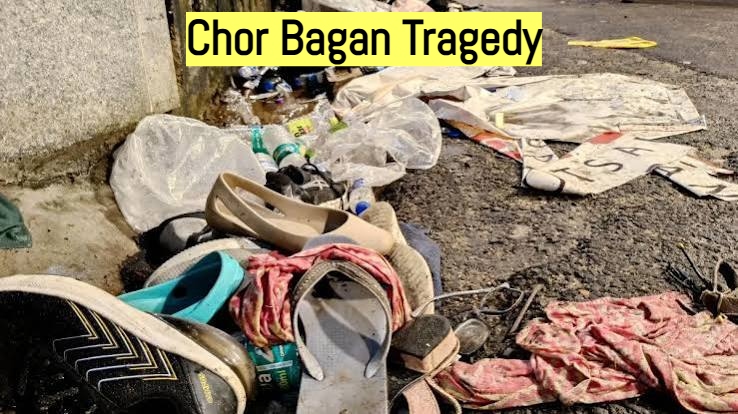
It did not stop there. A CPI(M) stall in Bijpur, North 24 Parganas, was allegedly set on fire, and similar vandalism or obstruction was reported from Jorabagan, Shibpur, Kulpi and elsewhere. One puja committee in Entally put up a banner urging people to "slay the Left" and kept a CPI(M) stall away. On Saturday, a large police team and Kolkata Municipal Corporation officials went to a CPI(M) book stall in Jadavpur and ordered its removal. The same weekend, a stampede at the Chorbagan puja killed 19 people. A government that could find men to clear a book stall could not find enough to manage that crowd.
The government's stated objection is that parts of the Left selectively target Sanatan Dharma. That is a political charge, and it deserves a political answer. Rebut the pamphlets, write a better book, or set up a stall of your own. A bulldozer is not an answer, and neither is a denied permit or a burning table.
The principle is simple. In a democracy, every party and ideology may propagate its views, and exhibitions and book sales are among the oldest, most peaceful ways of doing it. The BJP has its own literature outlets, and so do the RSS, the Congress and the Trinamool. Nobody has to buy anything, and nobody is forced to read. The public decides. If the Left's books are dull or its arguments stale, buyers will walk past, as they have done in large numbers since 2011. Those who believe in their own ideas should be confident enough to let them compete.
The Calcutta High Court seems to see it the same way. Hearing the CPM's complaint from Bongaon, Justice Sougata Bhattacharya asked the police for a report on the permissions granted. He observed that the party was not setting up a lottery shop. A book stall is not a gambling den or a nuisance. It sells printed ideas, which are the raw material of any free society.
Some will say a puja is a religious occasion and politics should stay away. But the pujo has never been apolitical. Pandal themes comment on migration, protest and war, committees take government grants, and every party sends leaders to the inaugurations. Bengal's pujo is a public festival, and the public has always argued in its lanes. Allowing political stalls does not diminish the goddess. Selectively banning them diminishes the festival.
There is a lesson in the choice of target. Books are easy to bulldoze because they cannot fight back. But a state that acts against book stalls ahead of crowd control has misplaced its priorities, and it gives its critics an easy story.
The permission system for stalls exists to manage footpaths, traffic and safety. It should be applied evenly to every party's stall, not used to decide whose ideas may be displayed. The government should say so plainly, restore any permissions that were wrongly withdrawn, and prosecute those who assaulted volunteers and burned stalls. Bengal has argued in print for two centuries. It would be a shame if it learned to stop.