

Passport: The Document That Proves Nothing
 Editor-in-Chief of indiacommentary.com. Current Affairs analyst and political commentator. Author of Cyber Scams in India, Digital Arrest, The Money Trap and The Human Hack
View all posts by this Author
Editor-in-Chief of indiacommentary.com. Current Affairs analyst and political commentator. Author of Cyber Scams in India, Digital Arrest, The Money Trap and The Human Hack
View all posts by this Author
By Sunil Garodia
First publised on 2026-06-25 13:56:51
About the Author
Editor-in-Chief of indiacommentary.com. Current Affairs analyst and political commentator. Author of Cyber Scams in India, Digital Arrest, The Money Trap and The Human Hack
View all posts by this Author
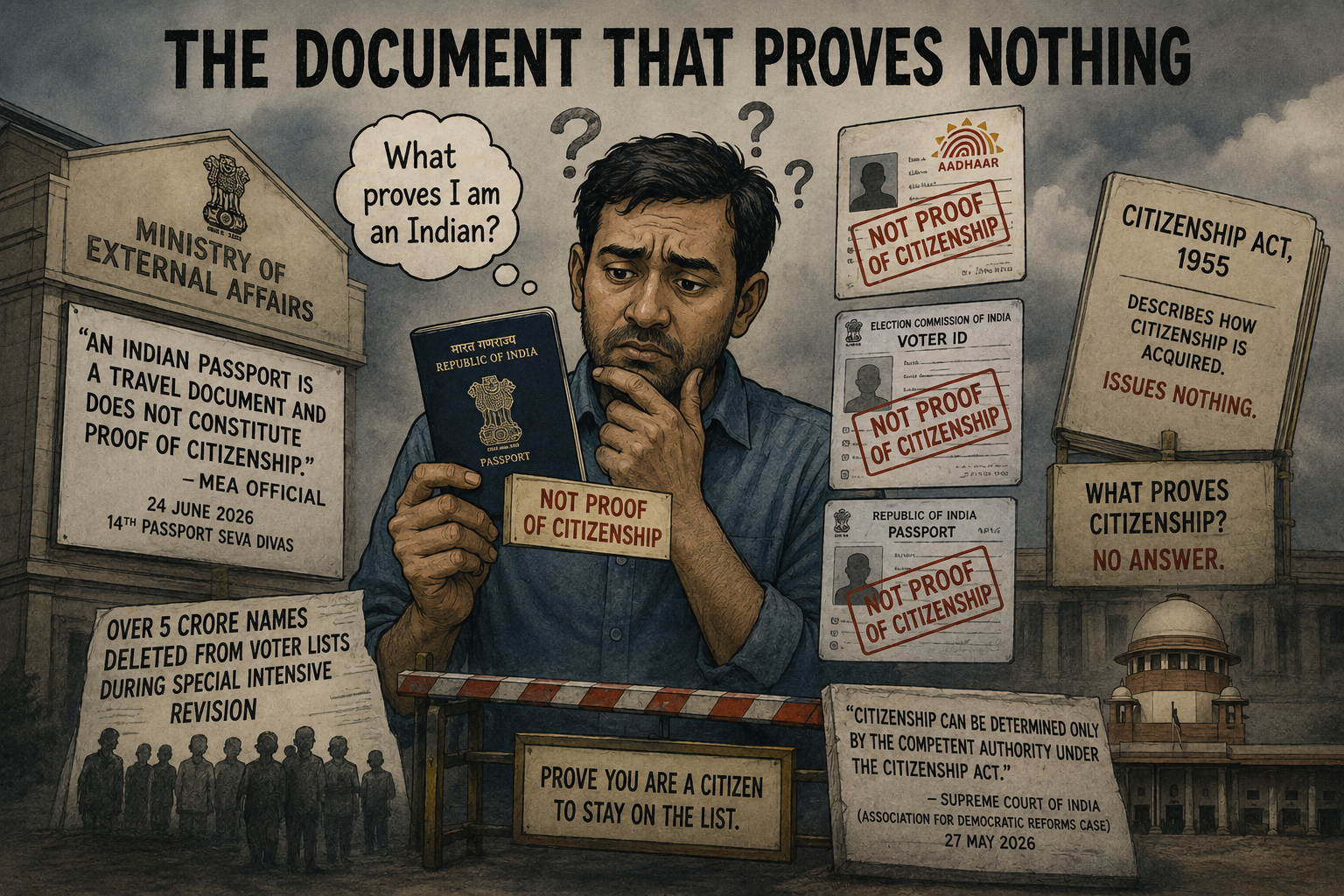
On 24 June 2026, a senior Ministry of External Affairs official stated at the 14th Passport Seva Divas that an Indian passport is a travel document and does not constitute proof of citizenship. The reaction was swift and largely outraged. It should not have been. The official was not making policy. He was describing law that has been settled for decades.
The Passports Act, 1967 was never a citizenship statute. Its purpose is to regulate travel. Section 20 of the Act makes this explicit: it permits the Central Government to issue an Indian passport to a non-citizen in specified circumstances. A document available to non-citizens cannot logically serve as conclusive proof of citizenship. The Citizenship Act, 1955, which actually governs the acquisition of nationality by birth, descent, registration, and naturalisation, does not designate any document as universally conclusive proof of citizenship. It describes routes. It issues nothing.
The courts have said so repeatedly. In Maneka Gandhi v. Union of India (AIR 1978 SC 597), a seven-judge bench treated the passport as the vehicle of the fundamental right to travel under Article 21, not as a certificate of nationality. The Bombay High Court, as far back as 2013, made clear that possession of a passport does not establish citizenship. More recently, while rejecting bail for an alleged Bangladeshi national who had produced Aadhaar, PAN, and voter ID, Justice Amit Borkar held that citizenship must be tested strictly under the Citizenship Act and that commonly held identity documents do not discharge that burden. The Supreme Court's judgment of 27 May 2026 in Association for Democratic Reforms v. Election Commission of India added the definitive cap: the Election Commission may assess citizenship only for the limited purpose of electoral eligibility; it cannot adjudicate citizenship as a legal status; and final determination rests with the competent authority under the Citizenship Act alone.
The public reaction conflated two separate things: the legal accuracy of the statement and its political consequences. The statement is accurate. The consequences are serious. India does not presently have a universal, standardised, conclusive citizenship document. Aadhaar establishes identity and residence. The voter ID establishes prior registration. The passport establishes entitlement to travel. None was designed to certify citizenship. None does.
This gap was manageable so long as citizenship was not a live administrative question for ordinary residents. The Special Intensive Revision of electoral rolls has made it one. Over five crore names have been deleted from rolls across twelve states. Those persons have been effectively asked to prove citizenship. The government has simultaneously confirmed that nothing they routinely carry in their pockets answers that question. When asked in Parliament what does prove citizenship, the Home Ministry pointed to the Citizenship Act. The Act describes how citizenship is acquired. It does not say what evidence a person must produce to establish it before a competent authority.
The High Level Committee on Demographic Changes, constituted in May 2026, will presumably have to confront this directly. So will the courts, as deletion-related citizenship disputes work their way up through the Foreigners Tribunals.
The MEA official was right. The law he described is the problem. A state that has no universal proof of citizenship, and that is simultaneously conducting a mass citizenship-linked verification exercise, is not merely technically incomplete. It is asking people to prove something it has given them no instrument to prove. That is not an administrative oversight. It is a constitutional failure waiting to be named.
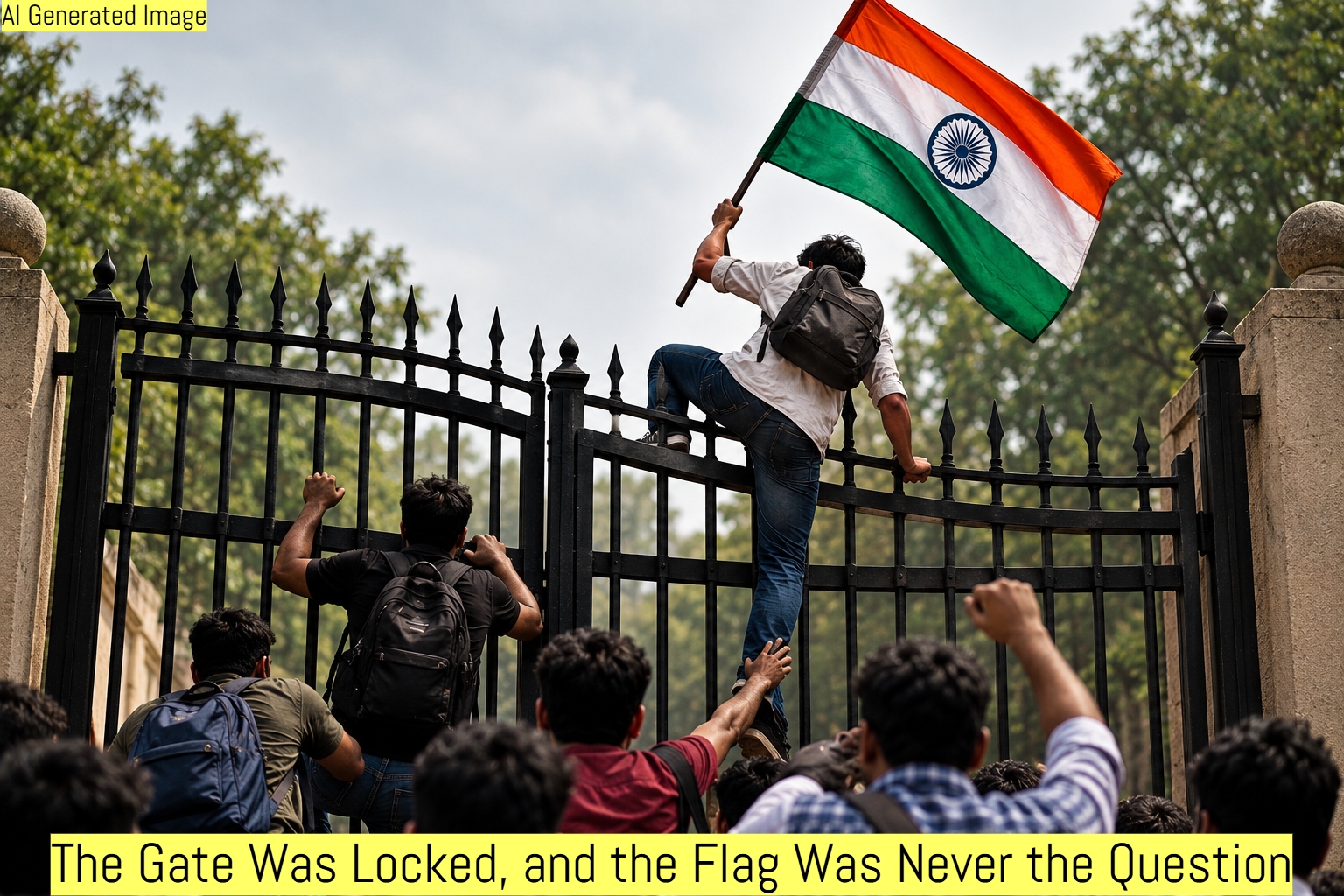
The lead image is AI-generated