Tiranga Rally Is Excellent. Breaking The Law Was Not
 Editor-in-Chief of indiacommentary.com. Current Affairs analyst and political commentator. Author of Cyber Scams in India, Digital Arrest, The Money Trap and The Human Hack
View all posts by this Author
Editor-in-Chief of indiacommentary.com. Current Affairs analyst and political commentator. Author of Cyber Scams in India, Digital Arrest, The Money Trap and The Human Hack
View all posts by this Author
By Sunil Garodia
First publised on 2026-10-15 06:10:22
About the Author
Editor-in-Chief of indiacommentary.com. Current Affairs analyst and political commentator. Author of Cyber Scams in India, Digital Arrest, The Money Trap and The Human Hack
View all posts by this Author
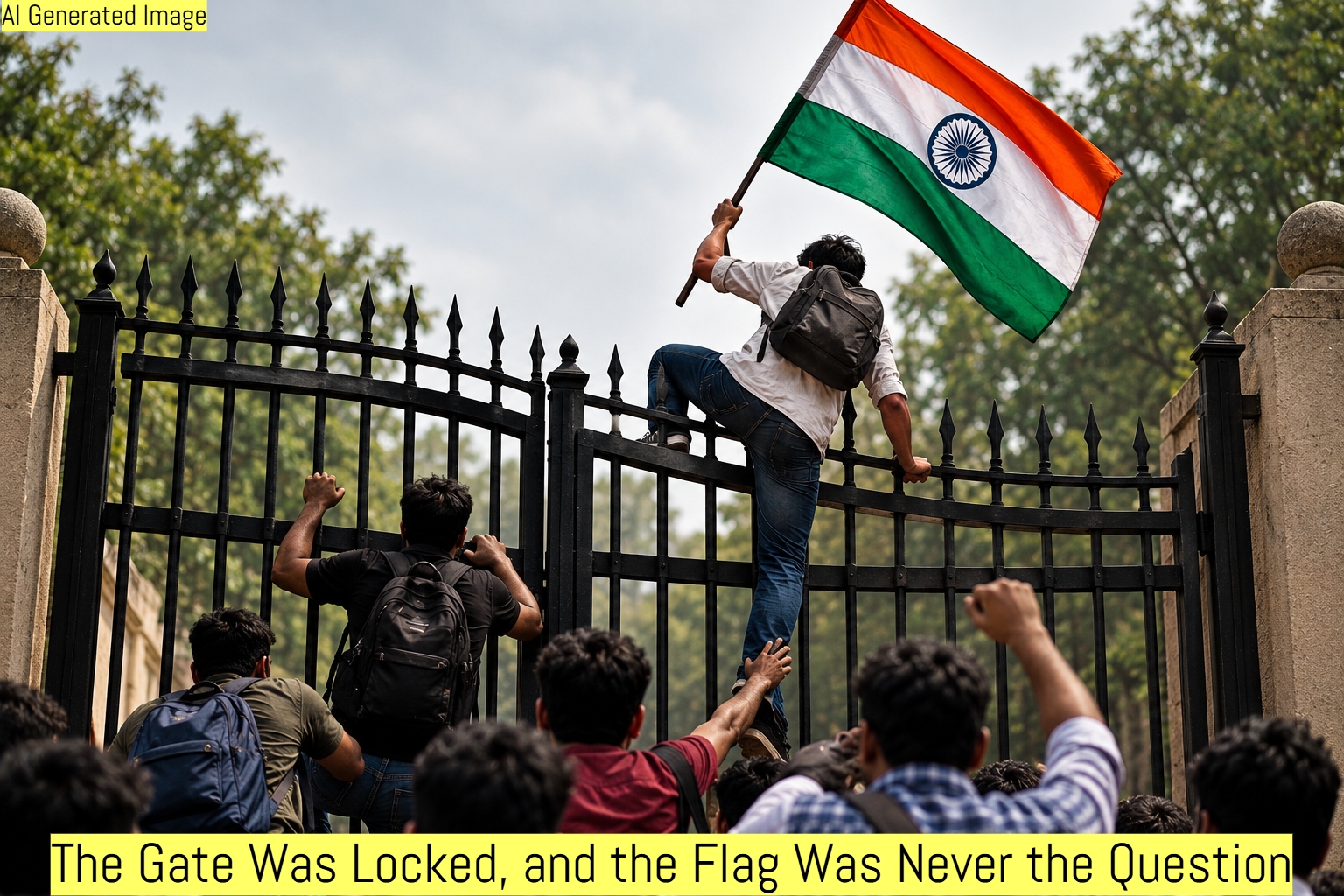
Within hours of the Cockroach Janta Party's entry into Jantar Mantar on Tuesday, a question of law was converted into a question of patriotism. The CJP, the Congress and a willing section of the commentariat have embraced this conversion with such enthusiasm that the original facts now need restating. The gates were locked. The barricades were in place. A group of activists, including the party's co-convenor and spokesperson, climbed over both, entered premises they had been told they could not enter, unfurled the national flag and raised slogans before being detained. Delhi Police registered a case of trespass, and two activists were remanded to five days of judicial custody by a Special Executive Magistrate. The controversy that followed shifted attention from how the protesters entered to what they carried.
That is the sleight of hand at the heart of the controversy. Love of country does not confer a right to disregard the law, and the national flag does not turn an act of defiance into an act of constitutional virtue. Anyone who climbs a locked gate carrying the Tricolour has still climbed a locked gate. The flag does not open it, erase the circumstances of entry or place its bearer beyond the reach of the law. To portray the detention as punishment for unfurling the Tricolour is to substitute a stirring image for the conduct that made the confrontation possible.
The most inconvenient fact for the CJP is the undertaking the organisation gave to a court only days earlier, reportedly promising not to breach public order or create disturbances. An undertaking to a court is a solemn commitment made in a judicial proceeding, and it cannot be treated as a tactical assurance to be abandoned when circumstances turn inconvenient. Whether the entry breached the undertaking must be judged against its precise terms. But a party that invokes constitutional rights against the government cannot treat its own commitments to a court as disposable.
There is, of course, another uncomfortable fact. Jantar Mantar was de-notified as a protest site by the Union home ministry only a day earlier, after the CJP had given written intimation of its proposed protest, and the timing deserves scrutiny. Scrutiny of an executive decision is not, however, a licence to defy it physically. The CJP could challenge the notification in court and seek interim relief. Police had also named alternative venues, including Ramlila Ground, Burari Ground and the CBD Ground in Shahdara. Whether the de-notification was justified, and whether the alternatives were adequate, are questions the government should be made to answer, though neither explains why the CJP chose to climb the barricades.
Nor does the subsequent custody settle the matter. Its legality and proportionality must stand on their own footing, and even if it is ultimately found excessive, that would not retrospectively make the entry lawful, just as the registration of a case does not establish guilt. These are elementary distinctions, yet the public argument has been pushed towards a far simpler proposition, that because the flag was unfurled the protesters must have been wronged, which asks symbolism to do the work of evidence.
Abhijeet Dipke's call for a Tiranga rally at Central Park in Connaught Place should be read in that light. A peaceful flag procession, subject to applicable permissions, is perfectly legitimate, and nobody has suggested otherwise. The announcement nonetheless changes the terrain of the argument, since the CJP is no longer required to explain the locked gates, the physical entry or the undertaking, and the public is invited instead to consider who could possibly object to Indians carrying their national flag. The police did not need to object to the flag to object to the manner of entry, and the law does not become anti-national because those accused of violating it happen to carry a national symbol. By shifting the debate to patriotism, the CJP gains a moral advantage that the underlying facts do not confer.
Three questions suffice for any protest, whoever conducts it and whatever it carries: whether access to the place was lawful, whether assurances given to a court were honoured, and whether the grievance against executive action was pursued through the remedies available. These questions cannot be answered by invoking the national flag, any more than the flag can answer them. The CJP may challenge the de-notification in court, question the administration's motives and contest the legality of its detention. What it cannot reasonably demand is that the symbolism of its protest should exempt its conduct from scrutiny.