


When Street Power Tries to Override Constitutional Process
 Editor-in-Chief of indiacommentary.com. Current Affairs analyst and political commentator. Author of Cyber Scams in India, Digital Arrest, The Money Trap and The Human Hack
View all posts by this Author
Editor-in-Chief of indiacommentary.com. Current Affairs analyst and political commentator. Author of Cyber Scams in India, Digital Arrest, The Money Trap and The Human Hack
View all posts by this Author
By Sunil Garodia
First publised on 2026-09-25 03:09:35
About the Author
Editor-in-Chief of indiacommentary.com. Current Affairs analyst and political commentator. Author of Cyber Scams in India, Digital Arrest, The Money Trap and The Human Hack
View all posts by this Author
There is nothing wrong with demanding the resignation of a minister. Ministers are political actors. They answer to the government that appoints them, to the legislature, to their political parties and ultimately to the electorate. If sustained public pressure leads an Education Minister to resign, that is part of democratic politics. Political movements are entitled to demand it and governments are entitled to decide whether to yield. The position of the Chief Election Commissioner is different. The Cockroach Janata Party has now given CEC Gyanesh Kumar 48 hours to resign and threatened nationwide protests if he does not. That is not merely another political demand. It seeks to make street mobilisation a substitute for the constitutional process governing the removal of the head of an independent constitutional authority.
The immediate backdrop is serious and cannot simply be dismissed. An investigation by The Indian Express, published on September 23 by journalist Ritika Chopra, reported that Election Commissioners Sukhbir Singh Sandhu and Vivek Joshi had formally objected at least 14 times over ten months to decisions and orders concerning the Special Intensive Revision of electoral rolls. The reported objections concerned matters including changes to Form 6, centralisation of electoral-roll database controls, voter-deletion appeals in West Bengal and the failure to add some eligible voters to the rolls in Goa. The Election Commission subsequently said that all decisions, including those relating to SIR, had the approval of all three commissioners. These are serious issues and deserve examination. But the seriousness of the allegations does not alter the constitutional status of the office being targeted.
The Constitution itself makes that distinction clear. The proviso to Article 324(5) says that the Chief Election Commissioner shall not be removed from office except in like manner and on like grounds as a Judge of the Supreme Court. Section 11(2) of the Chief Election Commissioner and Other Election Commissioners Act, 2023, repeats the same protection. This is not a procedural convenience designed to protect an individual CEC. It is an institutional safeguard intended to protect the Election Commission from arbitrary removal by political forces. The Chief Election Commissioner is therefore not in the same category as a minister whose political survival can depend upon the intensity of a street campaign. The distinction exists precisely because the Election Commission must sometimes take decisions that political parties dislike.
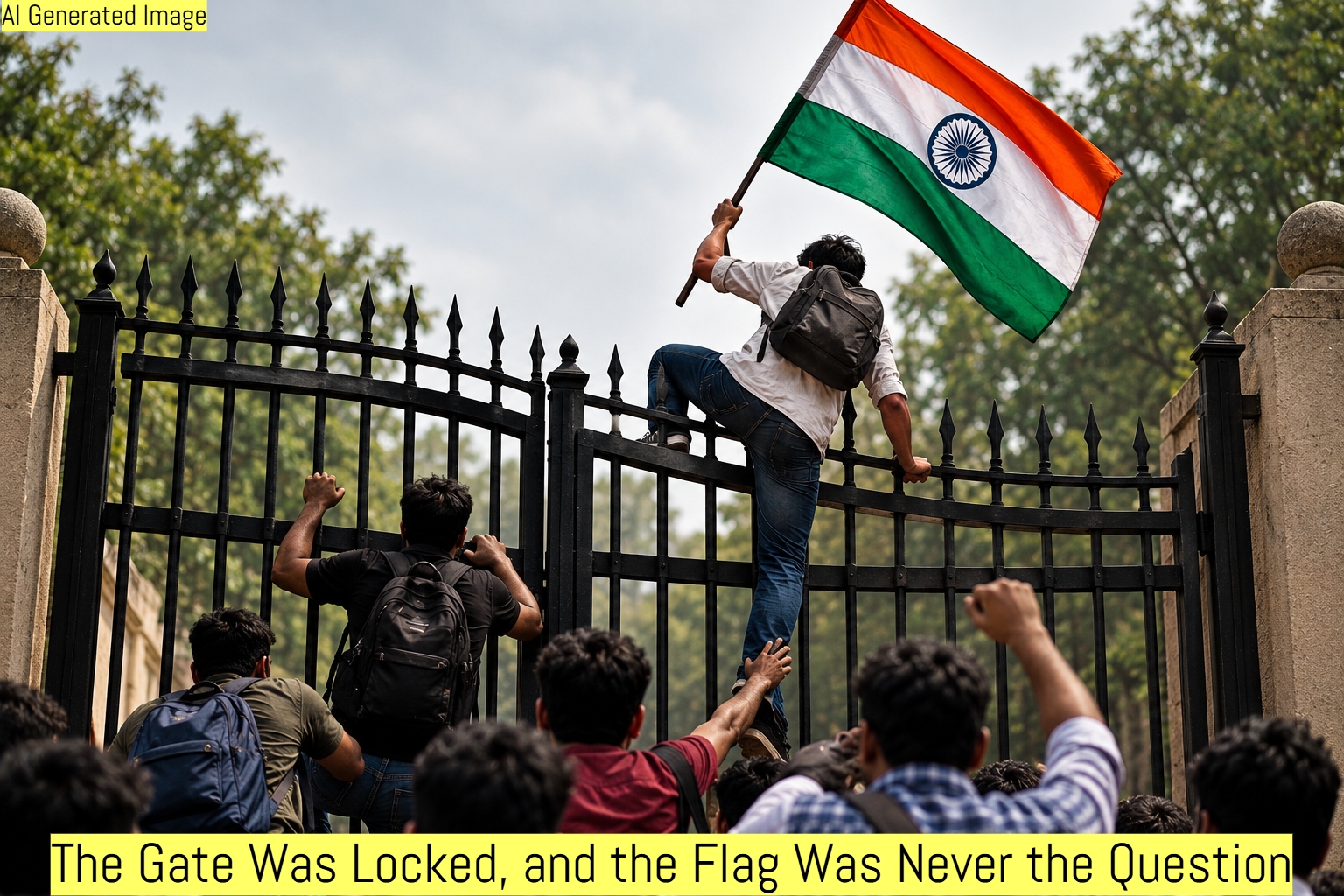
That is what makes the CJP's 48-hour ultimatum troubling. The organisation is perfectly entitled to demand that Gyanesh Kumar resign. It is entitled to campaign against him, organise peaceful demonstrations, challenge Election Commission decisions before the courts and demand that Parliament consider the constitutional removal process. It is even entitled to announce a nationwide political campaign. The problem is not that protest is unlawful. The problem is that a political organisation is giving a constitutionally protected office-holder a deadline and declaring that failure to comply will trigger mass mobilisation. The danger lies in turning that combination of deadline and agitation into a de facto removal mechanism. If this becomes an accepted political method, the next Chief Election Commissioner could face exactly the same treatment whenever a powerful political movement disagrees with the Commission's decisions.
The CJP has an obvious counterargument. The formal removal mechanism may be politically unrealistic, particularly when the government and its allies control the parliamentary numbers necessary to initiate and sustain such a process. If Parliament will not act, why should a political movement simply wait? That is a legitimate political question. But the answer cannot be that constitutional safeguards disappear when the prescribed route becomes inconvenient. If the removal mechanism is inadequate, the demand should be to use it or change the law. A political organisation can build public pressure for such change, take evidence to the courts, demand parliamentary scrutiny and campaign before the electorate. It cannot turn the difficulty of the constitutional route into permission to create an alternative based on an ultimatum.
Nor would Gyanesh Kumar's resignation settle the substantive questions now being raised. It would not establish whether the objections recorded by Sandhu and Joshi were justified. It would not determine whether voters were wrongly excluded from electoral rolls. It would not answer the questions raised about SIR or the functioning of the Commission's electoral-roll systems. It would simply change the person occupying the office. If the CJP genuinely believes that the electoral process has been compromised, establishing what happened should matter more than securing a resignation within 48 hours.
The proper response is therefore straightforward. The Election Commission should publicly explain the objections recorded by Sandhu and Joshi and, to the extent legally permissible, release the relevant notes along with its responses to them. It should explain why the disputed decisions were taken and whether the objections led to any changes in policy or procedure. Courts can be approached where questions of legality arise, and Parliament can examine whether the existing legal framework is adequate. If the material ultimately establishes misconduct or criminality, the appropriate legal processes should follow. None of this stops political parties from demanding answers. That is how a serious allegation against a constitutional institution should be tested: through evidence, disclosure and scrutiny, not by making a resignation deadline the only remedy. The CJP can protest. It can demand. It can campaign. It can litigate. It can attempt to persuade citizens that Gyanesh Kumar should leave office. But a 48-hour deadline announced at a press conference has no constitutional force. It is a political device, not a legal mechanism.
An independent constitutional institution must be accountable. It must not be untouchable. But accountability must operate through evidence, scrutiny and law, not through the proposition that the person at the top must resign because a political movement has given him 48 hours to do so. The gravity of the allegations against the Election Commission should not become an excuse for abandoning the constitutional safeguards designed to protect its independence.
If the CJP believes Gyanesh Kumar has violated the law, it should establish the case and pursue the constitutional remedy. If it believes the constitutional remedy is inadequate, it should campaign to change it. What it should not do is demand that a constitutional authority resign within 48 hours and then treat nationwide agitation as the enforcement mechanism. A protest can challenge a government. It can expose an institution. It can change public opinion. It cannot, by itself, rewrite the Constitution.