

When the Government Forgets It Is Not the Nation
 Editor-in-Chief of indiacommentary.com. Current Affairs analyst and political commentator. Author of Cyber Scams in India, Digital Arrest, The Money Trap and The Human Hack
View all posts by this Author
Editor-in-Chief of indiacommentary.com. Current Affairs analyst and political commentator. Author of Cyber Scams in India, Digital Arrest, The Money Trap and The Human Hack
View all posts by this Author
By Sunil Garodia
First publised on 2026-07-03 15:21:27
About the Author
Editor-in-Chief of indiacommentary.com. Current Affairs analyst and political commentator. Author of Cyber Scams in India, Digital Arrest, The Money Trap and The Human Hack
View all posts by this Author
The Bombay High Court did on Thursday what courts are supposed to do but rarely have the spine to do. Hearing the plea of Saeed Ahmad Abdul Wahid Chaudhary, general secretary of the Social Democratic Party of India, Justice Madhav Jamdar asked the Mumbai Police a question that should embarrass every government in this country, not just the one in Maharashtra. He asked whether citizens had been reduced to slaves of the government, and why a man who raised slogans against the ruling party and a Union minister could be externed from his own city for a year. The court quashed the externment order, held that the police action was vitiated and driven by mala fide intent, and reminded the police, in words worth framing in every police station, that they serve the public and not the chief minister or the prime minister.
This was not a passing remark from a minor bench on a minor matter. Governments, once elected, begin to believe that dissent against them is dissent against the country itself. Slogans against a party or a minister get treated as threats to public order, and protests held without police permission get treated as law and order emergencies serious enough to warrant externment or sedition charges. The Chaudhary case shows this pattern with unusual clarity. His FIRs date back to 2019, arising from protests against the Citizenship Amendment Act, the National Register of Citizens, and the Babri Masjid and Gyanvapi disputes. The externment order, as examined by the High Court, did not establish that his conduct justified such an extraordinary restriction. Yet the state machinery treated a citizen exercising his fundamental right as a threat worth exiling him from his own home ground for a full year.
The law on this question has never been ambiguous. In Kedar Nath Singh v State of Bihar, the Supreme Court upheld the sedition provision but narrowed it sharply, holding that criticism of government measures, however strongly worded, does not amount to sedition unless it incites violence or public disorder. In Balwant Singh v State of Punjab, the Court held that individuals raising slogans in a public place, without any call to violence, cannot be prosecuted merely for the content of those slogans. In Himat Lal K Shah v Commissioner of Police, Ahmedabad, the Court recognised that the right to hold public meetings and assemble peacefully flows from Article 19(1)(b), regulated reasonably but not extinguished at police discretion. In Mazdoor Kisan Shakti Sangathan v Union of India, the Court struck down blanket prohibitions on peaceful assembly and reaffirmed the right to protest as part of the fundamental rights architecture. In Anuradha Bhasin v Union of India, the Court held that indefinite restrictions on movement and communication, used to smother dissent, cannot pass constitutional muster. Each of these judgments says the same thing in different words. A government may dislike criticism, but disliking it is not a constitutional ground to silence it.
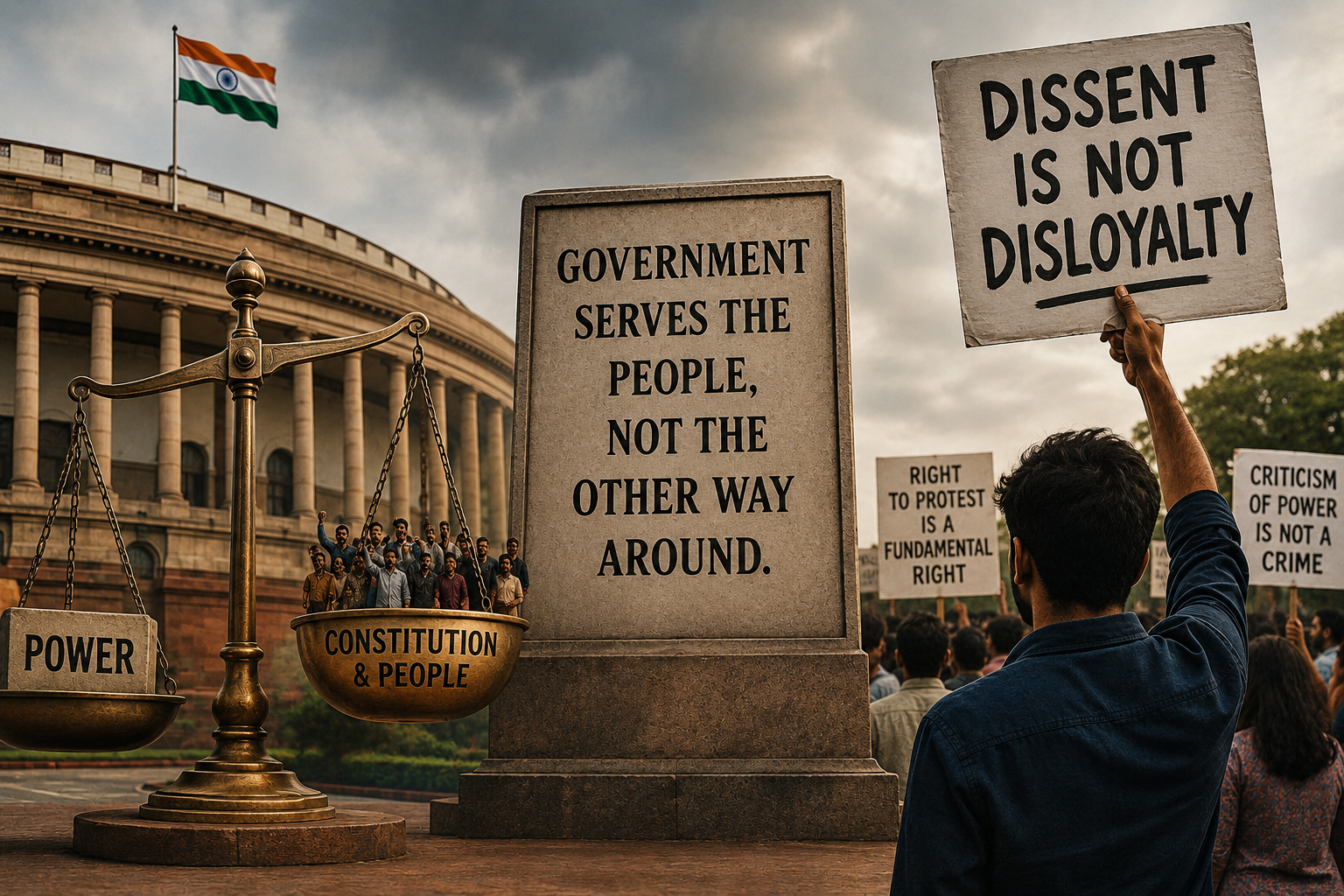
What makes the Bombay High Court's intervention important is not that it discovered new law. It is that it called out, in open court, the oldest instinct of those in power, the quiet substitution of the government for the nation, so that an attack on a minister or a ruling party becomes, in the telling of the police, an attack on India itself. Democratic governments derive legitimacy from electoral victory, but electoral legitimacy is not constitutional ownership of the State. Confusing the two is the first step towards treating dissent as disloyalty. This is not a Bharatiya Janata Party habit or a Congress habit. It is a ruling party habit, practised with equal enthusiasm by whoever holds power, at the Centre or in the states. Parties that position themselves as the loudest defenders of federalism and free speech when the Centre is the target have shown little patience for criticism directed at their own governments. The Aam Aadmi Party in Delhi, the Trinamool Congress in West Bengal, and the DMK in Tamil Nadu have each, at different points, moved with striking speed against critics and protesters within their own turf, even as their leaders demand that the Centre respect dissent unconditionally. Neither the Centre nor a state government owns a special constitutional immunity from criticism. The Constitution draws only one line on this question, Article 19(2), which permits reasonable restrictions in the interest of sovereignty, security, and public order. That line exists precisely so that governments do not get to invent their own reasons for silencing critics, whether the government sits in Delhi, Kolkata, Chennai or Mumbai.
None of this denies that the Union government carries a genuine constitutional responsibility for national security, a responsibility state governments do not carry in the same measure. That distinction is real, and courts have never pretended otherwise. But national security is a specific, narrow ground that must be demonstrated on facts. It is not a general licence to treat every protest against a Central policy as subversion. The moment it becomes a catch-all excuse for suppressing dissent, it stops being a constitutional safeguard. It becomes exactly the tool the Bombay High Court called out this week, one used to convert citizens into subjects.
Governments change. Prime ministers and chief ministers come and go, as do the parties that put them in office. The nation does not change with them, and a state does not cease to exist when the party ruling it loses an election. Every time a police force, acting on the wishes of its political masters, treats criticism of a government as criticism of the country, it inverts this basic constitutional fact. It tells citizens that their loyalty is owed not to India or their state but to whichever party happens to be in office that year. The Bombay High Court's question, whether all citizens have become slaves of the government, deserves to be asked in every High Court and every police headquarters in this country. Until every government, at the Centre and in the states, learns to distinguish between itself and the nation it has been elected to serve, that question will keep returning. The right to protest has not been obliterated from the Constitution. It has only been buried, again and again, under the convenient fiction that criticising the government is the same as betraying the country.
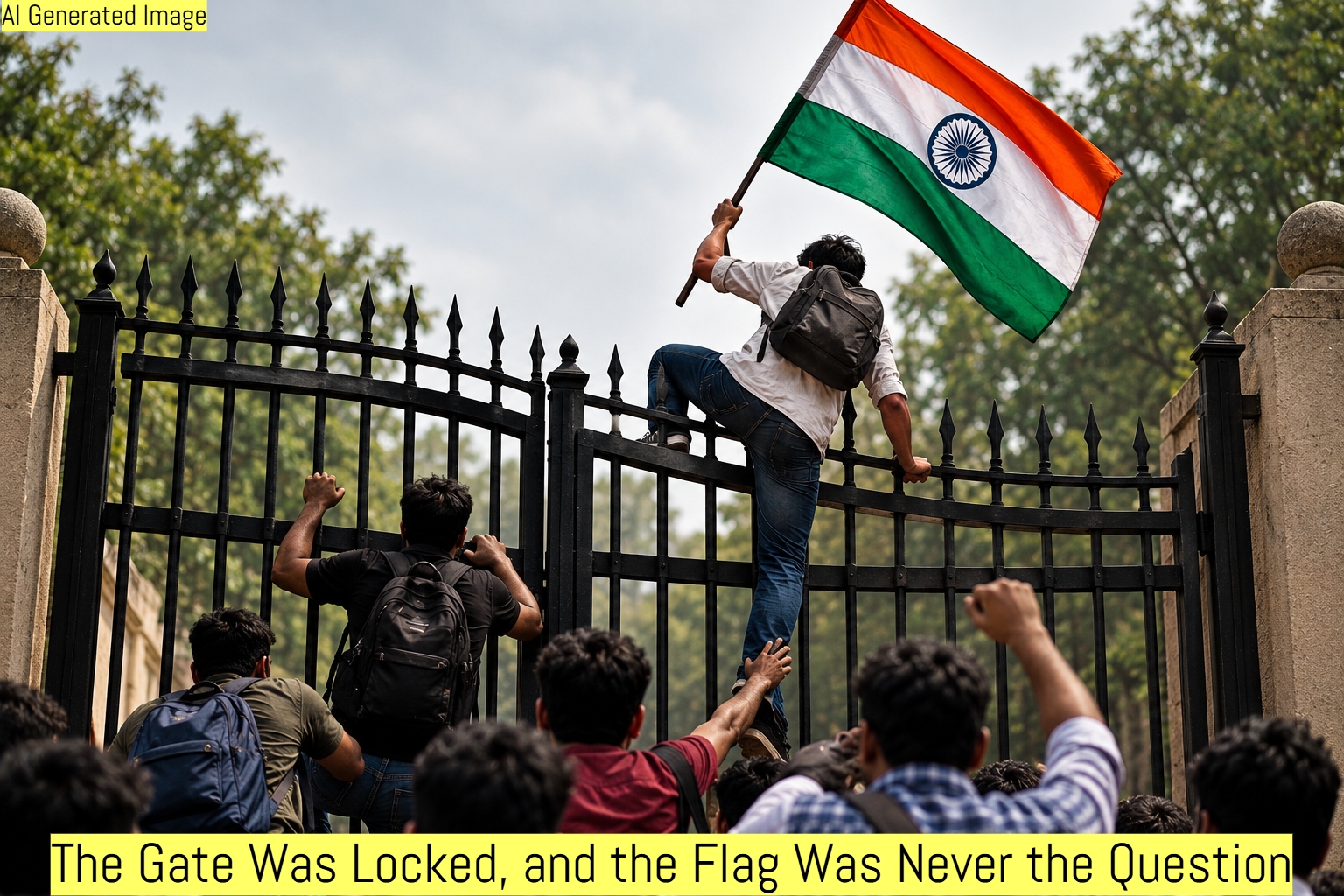
The lead picture is AI-generated