

When the Highest Court Calls You a Pest
 Editor-in-Chief of indiacommentary.com. Current Affairs analyst and political commentator. Author of Cyber Scams in India, Digital Arrest, The Money Trap and The Human Hack
View all posts by this Author
Editor-in-Chief of indiacommentary.com. Current Affairs analyst and political commentator. Author of Cyber Scams in India, Digital Arrest, The Money Trap and The Human Hack
View all posts by this Author
This is the first of a series of 5 articles on this subject.By Sunil Garodia
First publised on 2026-05-27 14:56:38
About the Author
Editor-in-Chief of indiacommentary.com. Current Affairs analyst and political commentator. Author of Cyber Scams in India, Digital Arrest, The Money Trap and The Human Hack
View all posts by this Author
There is a category of insults that does not merely demeans - it dehumanises. The word 'cockroach' belongs firmly in that category. When Chief Justice of India Surya Kant used it in an open courtroom on 15 May 2026, comparing unemployed youngsters to the pest, he may well have intended a narrow, technical point about fraudulent professionals. The intent, however, does not sanitise the language. Language has consequences independent of intent.
The CJI's clarification, issued a day later, insisted he was speaking exclusively about people who enter professions - the Bar, the media, public life - armed with fake or bogus degrees. Let us accept that at face value. Even so, the logic of the metaphor condemns the clarification. Cockroaches are not corrected, reformed, or rehabilitated. They are fumigated. They are crushed underfoot. The moment you reach for that image, you are not describing a regulatory problem; you are describing something to be eliminated.
The word also travels with historical baggage that a constitutional office-holder ought to know. Dehumanising language applied to despised groups has historically been the first step toward their suppression. Calling critics 'parasites' in the same breath compounds the offence. Parasites, like cockroaches, exist only to be destroyed. That a sitting Chief Justice would reach for such vocabulary in open court, whether in the heat of irritation or otherwise, is a matter that transcends the individual case.
There is a distinction between robust judicial language, which is entirely appropriate when a court expresses displeasure at frivolous litigation, and language that strips citizens of their humanity. The court may legitimately describe a petition as a waste of its time. It may not describe the petitioners' class as vermin. The distinction is not about sensitivity. It is about the constitutional relationship between the judiciary and the people whose fundamental rights it exists to protect.
The CJI later told a lawyer who raised the matter in court not to take the remark 'so sentimentally.' That instruction is, if anything, more troubling than the original remark. Citizens are not obliged to receive insults from the bench with equanimity simply because the speaker subsequently claims he meant something else. The Supreme Court of India commands deference because it is the guardian of the Constitution. That deference must be earned - and it is not earned by telling people their indignation is sentimental.
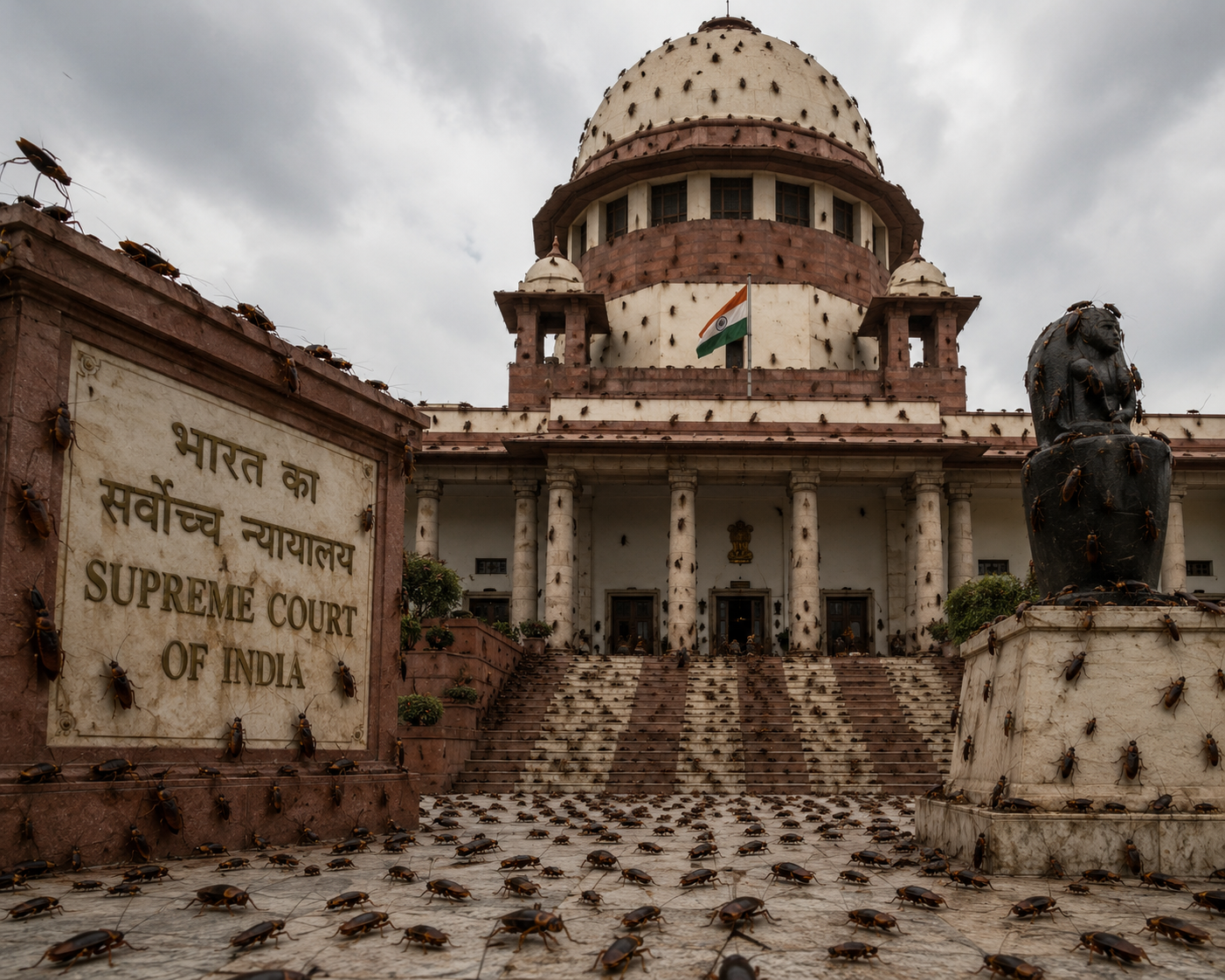
Note: The lead picture is not an actual picture of the Supreme Court but an AI-generated representative picture.