


When the Landlord Comes Calling
 Editor-in-Chief of indiacommentary.com. Current Affairs analyst and political commentator. Author of Cyber Scams in India, Digital Arrest, The Money Trap and The Human Hack
View all posts by this Author
Editor-in-Chief of indiacommentary.com. Current Affairs analyst and political commentator. Author of Cyber Scams in India, Digital Arrest, The Money Trap and The Human Hack
View all posts by this Author
By Sunil Garodia
First publised on 2026-05-23 16:13:10
About the Author
Editor-in-Chief of indiacommentary.com. Current Affairs analyst and political commentator. Author of Cyber Scams in India, Digital Arrest, The Money Trap and The Human Hack
View all posts by this Author
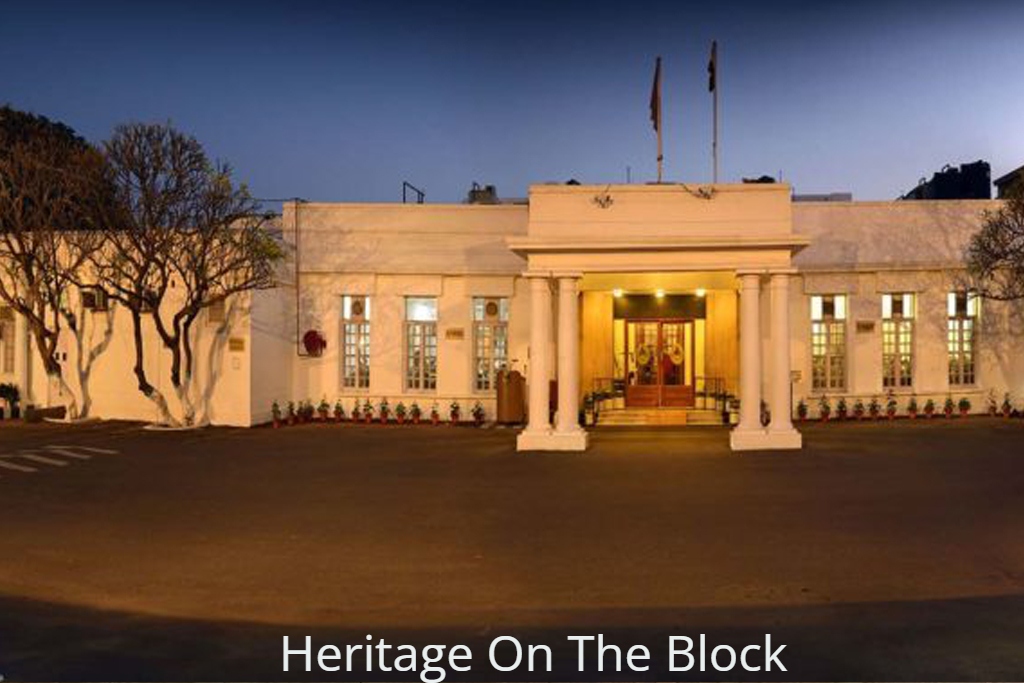
The Central government has issued a notice to the Delhi Gymkhana Club to vacate its 27.3-acre premises at 2, Safdarjung Road by June 5. Failure to comply will result in forced takeover. The government has invoked Clause 4 of the original lease deed, which allows it to resume the land if required for a public purpose. Its stated reason is defence infrastructure and public security in a strategically sensitive zone.
The legal position is unassailable. The land was always the government's. The lease always carried a resumption clause. The club always knew this. Courts will find little to intervene on.
But legality and ethics are not the same thing. The manner of this eviction raises questions that the government has not answered.
The Delhi Gymkhana Club has operated from this site since 1913. It is 113 years old, not a fly-by-night occupant. The order was issued on May 22. The deadline is June 5. That is fourteen days to vacate a 113-year-old institution spread across twenty-seven acres. This is not process. It is provocation. A ninety-day notice would have been legally sufficient, administratively sensible, and ethically defensible. Fourteen days serves no purpose except to maximise disruption.
The government says the land is critically required for defence infrastructure, governance facilities, and public-security projects in a highly sensitive and strategic area. It names nothing specific. It shows no plan. It presents no timeline of what will actually be built there.
This matters. "National interest" and "defence infrastructure" are serious claims. They carry weight precisely because they should not be used lightly. When a government evicts a century-old institution on grounds this vague, the burden of proof is on the government, not the evicted. The label of national security is being deployed here to foreclose scrutiny. That is a habit of governance that citizens should resist, regardless of who is being evicted.
The Safdarjung Road property sits within the broader zone of Central Vista redevelopment. If the honest answer is that this is an extension of that project, say so. If it is genuinely for defence, publish the plan. Transparency here is not a courtesy. It is an obligation.
The Gymkhana Club's moral authority to resist is weakened by its own history. In 2022, the National Company Law Tribunal found sufficient evidence of mismanagement and allowed the government to nominate fifteen directors to the club's general committee. An institution that had to be rescued from itself by the courts carries less standing to claim institutional sanctity.
Nor can the club claim public interest credentials. It is an exclusive institution in one of the most expensive zip codes in India, occupying prime public land at subsidised rates, serving a narrow membership of bureaucrats, diplomats, and business elites. The public sympathy argument does not hold water when the public was never allowed in.
None of this means heritage is irrelevant. Institutional memory has value independent of who holds the membership. Architecture, tradition, social continuity - these are not trivial. A 113-year-old institution is part of the urban fabric of Delhi whether one admires its exclusivity or not. Erasing it without a clear articulation of what replaces it is a loss that cannot be undone.
The government has not offered an alternative site. It has not indicated whether the buildings will be preserved. It has said nothing about the thousands of members whose connection to the institution spans generations. These are not legal obligations. They are ethical ones.
This is the second major government action against the Gymkhana Club in four years. Management takeover in 2022. Eviction in 2026. A pattern of institutional attrition is not the same as a single principled act of public interest reclamation. The government may have entirely legitimate reasons for both actions. But it has done nothing to dispel the impression that this is targeted rather than principled. That impression damages institutional trust far beyond the fate of one club.
The government's right to resume the land is not in question. What is in question is whether it has acted with proportionality, transparency, and institutional respect. On all three counts, it has fallen short.
Reclaiming public land from a private club is not inherently unethical. Doing so with a fourteen-day notice, a vague rationale, no disclosed plan, and no gesture towards the institution's heritage - that is ethically indefensible, regardless of the legal strength of the position.
A state that invokes national interest should be precise about what that interest is. Precision here is not weakness. It is accountability. The government has the law on its side. It should earn the ethics too.