


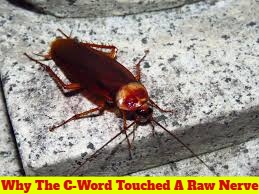
Why a Single Word Struck a Nation's Rawest Nerve
 Editor-in-Chief of indiacommentary.com. Current Affairs analyst and political commentator. Author of Cyber Scams in India, Digital Arrest, The Money Trap and The Human Hack
View all posts by this Author
Editor-in-Chief of indiacommentary.com. Current Affairs analyst and political commentator. Author of Cyber Scams in India, Digital Arrest, The Money Trap and The Human Hack
View all posts by this Author
By Sunil Garodia
First publised on 2026-05-29 11:53:28
About the Author
Editor-in-Chief of indiacommentary.com. Current Affairs analyst and political commentator. Author of Cyber Scams in India, Digital Arrest, The Money Trap and The Human Hack
View all posts by this Author
To understand why a single courtroom remark by the Chief Justice of India ignited such an eruption, one must understand the world that India's young people inhabit in 2026. It is a world of graduate degrees that do not translate into employment, of competitive examinations that are repeatedly cancelled after papers are leaked, of a jobs market where the queue is long and the door is narrow. Into this world, a judge of the highest court dropped the word 'cockroaches.' It landed on dry tinder.
India produces millions of graduates every year. The Centre for Monitoring Indian Economy has consistently recorded unemployment rates among educated youth that far exceed the national average. Young people who have spent years - and whose families have spent savings, sometimes borrowed - on degrees find themselves waiting: for government exam results that are delayed, for private sector jobs that are scarce, for a foothold in a system that was promised as a meritocracy and is experienced as a lottery. Their frustration is not laziness. It is the rational response to broken promises.
Against this backdrop, the CJI's words - even in the restricted reading he later offered - carried the force of an institutional verdict. Here was the apex court, the institution tasked with protecting citizens' rights, appearing to describe the struggles of young people as a nuisance, their critical voices as an infestation. Whether or not that was his meaning, it was heard as confirmation of a fear that many young Indians carry: that the establishment views them not as citizens with legitimate grievances but as problems to be managed.
The remark also fell at a moment when exam paper leaks have become a recurring national scandal. Competitive examinations - NEET, NET, various state service commissions - have been compromised repeatedly in recent years, robbing genuinely qualified candidates of their futures. Many had done everything right: studied, prepared, and played by the rules. They were then told the rules did not apply to those who mattered. The CJI's metaphor, aimed ostensibly at those who cheat, was received by many honest, struggling young people as an insult directed at them.
The Cockroach Janta Party's viral success must be understood in this context. It was not merely a meme. It was a generation holding up a mirror. The joke was the message: you have called us pests; we will show you how many of us there are. In a democracy that claims to derive its authority from the people, that is not a small thing to say.