


Why AG R. Venkataramani Called Telegram a Frankenstein
By A Special Correspondent
First publised on 2026-06-19 08:12:49
About the Author

Governments routinely accuse digital platforms of enabling crime, misinformation or social harm. They call them irresponsible, non-compliant or unsafe. They do not usually call them "Frankensteins."
Yet that was the word Attorney General R. Venkataramani used while defending the government's interim access-restriction order against Telegram before the Delhi High Court.
The choice was deliberate. It suggested that the government no longer views Telegram merely as a messaging service occasionally exploited by bad actors. It sees the platform as something qualitatively different: a digital ecosystem whose architecture itself makes regulation difficult and enforcement uncertain.
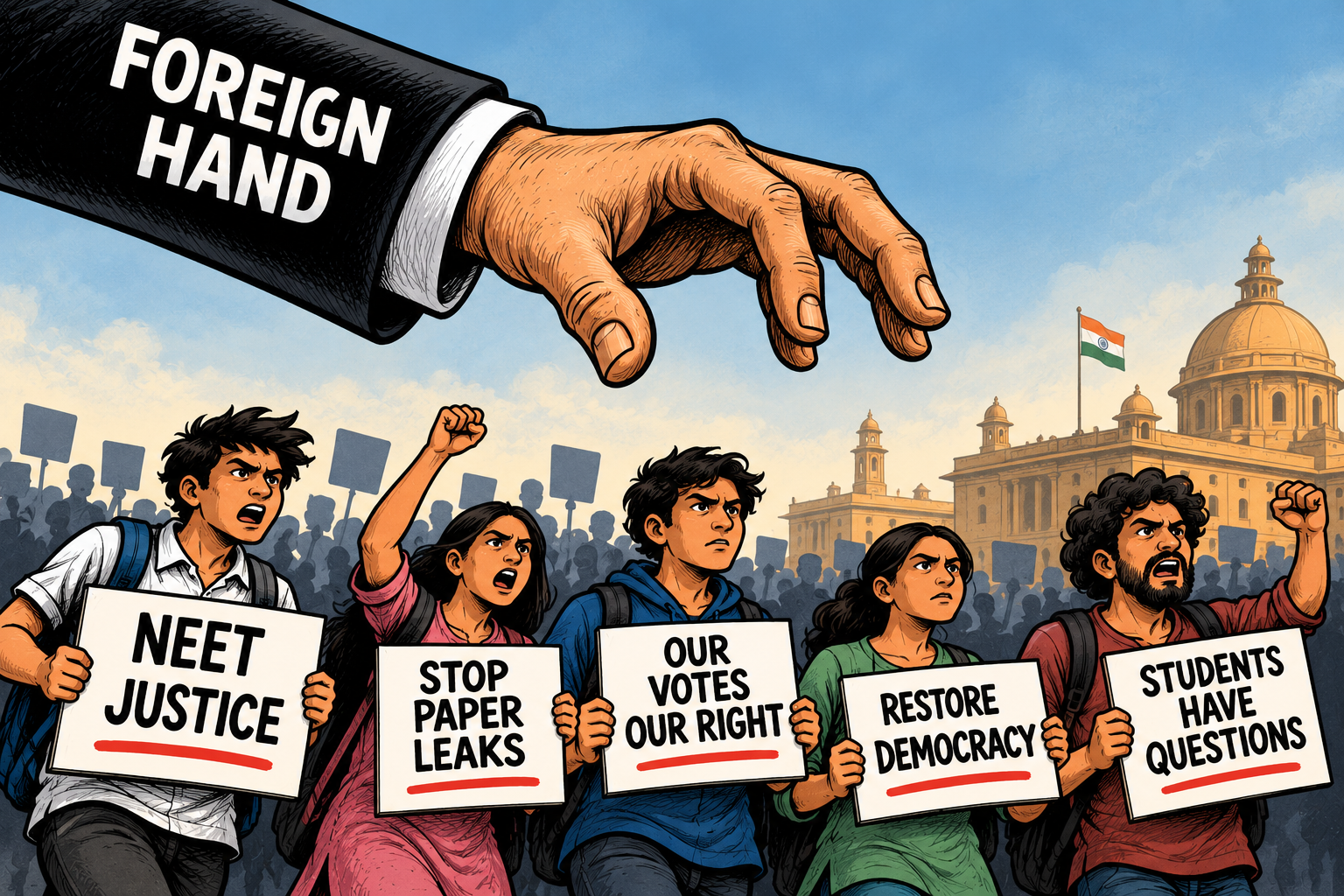
The controversy that brought the matter to court was the NEET-UG examination leak and the alleged role Telegram channels and bots played in circulating question papers before the test.
Whether the government's characterisation of the platform holds up to scrutiny is a separate question. But understanding why India's top law officer reached for such a loaded term requires looking past Telegram's reputation and examining how the platform actually works.
The Government's Case
The government's argument is not that Telegram has one dangerous feature. It is that the platform has assembled several individually unremarkable features into an unusually potent combination.
Large groups exist on WhatsApp. Bots exist across social media. Cloud storage and encryption are standard internet infrastructure. None of these technologies is unique to Telegram.
The concern, according to the Centre, is what happens when all of them sit within a single platform. A user can create automated bots, manage public channels broadcasting to hundreds of thousands of subscribers, store data remotely and communicate with relative anonymity - all without switching applications.
The government's position is that this makes Telegram not merely a communication tool but a communications infrastructure. In other words, the concern is less about what users say on Telegram than about the system that enables information to spread, replicate and persist. That distinction matters. Individual messages can be traced, moderated and removed. Infrastructure is harder to police.
In court, authorities pointed specifically to the ease with which restricted channels can be replicated. A channel taken down by authorities can re-emerge within minutes under a different name, often carrying the same content to many of the same subscribers. For regulators, it is a cycle without a clear exit.
Why Telegram Is Different
The comparison most people reach for is WhatsApp. The government argues that comparison misses the point. WhatsApp was built primarily around person-to-person and group communication. Telegram was built with large-scale broadcasting and automation as core functions. A Telegram channel can function like a miniature broadcasting station. A bot can automate distribution at scale. Content can be mirrored across channels faster than any human moderator could track.
For regulators, this creates a category problem. A platform that behaves partly like a messaging service and partly like a broadcaster does not map cleanly onto existing regulatory frameworks, most of which were designed for one or the other.
The Deeper Frustration: Attribution
The government's more persistent frustration appears to be about attribution. Investigators argue that Telegram's architecture makes it difficult to determine who created, distributed or administered unlawful content. Channels can disappear and reappear under different identities. Accounts can be removed. Evidence stored remotely may become harder to retrieve.
Privacy advocates frame the same features differently. What law enforcement calls limited traceability, civil liberties groups call protection from surveillance. The dispute is not merely technical. It is a substantive disagreement about what digital platforms owe to states and what they owe to users - and it will outlast any individual case.
Is the Government's Logic Sound?
This is where the argument deserves harder scrutiny. Telegram's architecture is not new. Its channels, bots and cloud-based features have existed for years and have supported legitimate political campaigns, educational communities, business communications and news distribution on a large scale. If Telegram's architecture is inherently incompatible with effective regulation, it is difficult to explain why that conclusion emerged only after the platform became associated with one of the government's most politically damaging examination controversies.
The answer, critics argue, may lie as much in politics as in technology. The alleged circulation of examination material on Telegram turned the platform from a regulatory nuisance into a politically explosive issue.
The controversy raised uncomfortable questions about examination security and institutional oversight. Directing attention toward Telegram's architecture is a cleaner narrative than examining why a national examination was compromised in the first place. That does not make the government's concerns technically wrong. A platform can facilitate serious misconduct without being the root cause of it. But those are different claims, and conflating them does not serve public understanding.
A Debate Bigger Than Telegram
The Delhi High Court's immediate task is to determine whether the government's response was proportionate and legally justified. The larger question will remain long after that verdict. Venkataramani's Frankenstein remark was more than courtroom rhetoric. It expressed a growing conviction among governments worldwide that digital regulation can no longer focus only on what people do online. It must also engage with how platforms are designed - whether certain architectures are, by their nature, resistant to accountability.
Encryption, automation, cloud storage and mass dissemination are no longer unusual features. They are the basic furniture of the modern internet. If the principle underlying the government's argument is accepted, almost any platform with these capabilities becomes a candidate for structural intervention. That would mark a significant shift in Indian digital governance - from regulating conduct on platforms to regulating the architecture of platforms themselves.
That is the debate the NEET controversy has accidentally opened. The future of Telegram may matter less than the precedent set for every other digital platform that follows.