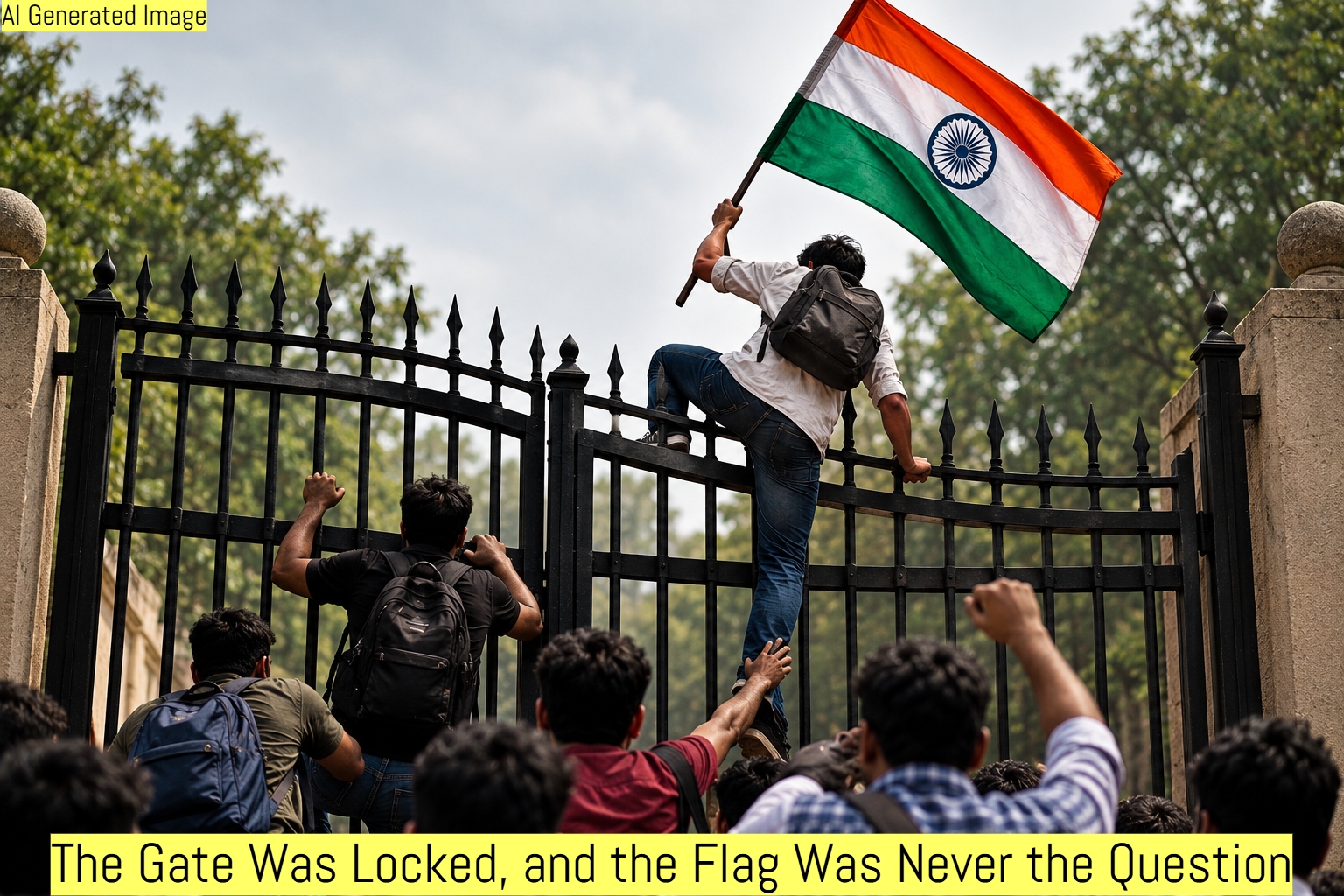



Vinesh Phogat Is Not Fighting a Man - She Is Fighting a Compromised System
 Editor-in-Chief of indiacommentary.com. Current Affairs analyst and political commentator. Author of Cyber Scams in India, Digital Arrest, The Money Trap and The Human Hack
View all posts by this Author
Editor-in-Chief of indiacommentary.com. Current Affairs analyst and political commentator. Author of Cyber Scams in India, Digital Arrest, The Money Trap and The Human Hack
View all posts by this Author
By Sunil Garodia
First publised on 2026-05-03 11:14:52
About the Author
Editor-in-Chief of indiacommentary.com. Current Affairs analyst and political commentator. Author of Cyber Scams in India, Digital Arrest, The Money Trap and The Human Hack
View all posts by this Author
Why did Vinesh Phogat, decorated Olympian and the face of the 2023 protests against former WFI chief Brij Bhushan Sharan Singh, have to publicly state that she was among his sexual harassment victims? The answer is not about a venue in Gonda. It is about what happens when the institution meant to protect an athlete continues to be shaped by the man she accused.
The Gonda detail is revealing precisely because it is so brazen. The Wrestling Federation of India has scheduled its National Ranking Trials - the event that determines who represents India in each weight category - in a district where Singh's political and social network is deeply entrenched. Phogat has alleged that referees and judges could be pressured, and that she fears for her safety. These are not the complaints of an athlete dissatisfied with a venue. They are the assessment of someone who understands how power actually functions in Indian sports federations - not merely through official positions, but through patronage, loyalty networks, and institutional memory that outlast any formal exit. Bhushan has been able to operate with impunity because he is an influential BJP leader in UP.
This is the real story. Bhushan's removal from the federation was formal, not structural. The elections that followed returned officials widely seen as aligned with him. That is not aberration; it is design. Sports bodies in India have long reproduced themselves through continuity of influence rather than change of control. Office-bearers may shift, but the ecosystem remains intact - embedded in committees, officiating panels, and administrative channels. Phogat is not confronting an individual. She is confronting a compromised system that continues to operate in his shadow.
The government and the sports ministry will be judged by what they do now, not what they say. Shifting the trials out of Gonda is the bare minimum; it is not the solution. The real test is whether selection processes can be insulated from factional control, and whether athletes who speak out are protected rather than exposed. If Phogat - an Olympian who risked her career to protest - can still feel unsafe within her own federation's events, the message to every young wrestler is unmistakable: speaking up does not end the battle; it ensures it never ends. That is the indictment the system must answer.